
How to Start Thinking in English

There is a gap between understanding English and thinking in it, and most learners stay stuck in that gap for years. This B1 lesson gives students three low-effort techniques to close it: journaling, shadowing, and a short daily reflection habit. They read about each one, work through ten vocabulary words in context, and discuss which advice actually works versus which sounds good but never does. The lesson ends with a week-long homework task that turns the conversation into real practice.
Lesson overview
- Practice using ten vocabulary words including “routine,” “reflect,” “frustrated,” and “gradually.”
- Learn about three techniques for thinking in English through a short reading with comprehension questions.
- Discuss which daily habits work in real life and give advice to someone still thinking in their native language.
- Build a personal English habit through a one-week homework task with reflection questions.
This lesson was first published in 2024. We’ve since updated it with stronger content and better activities for B1 learners.
| Level | Vocabulary | Reading time | Lesson Time |
| B1 / Intermediate | 10 words | 3 texts, 400 words total | 60 min |
Vocabulary
- hesitate
- vivid
- frustrated
- specific
- patient
- routine
- reflect
- manage
- gradually
- concentrate
Contents
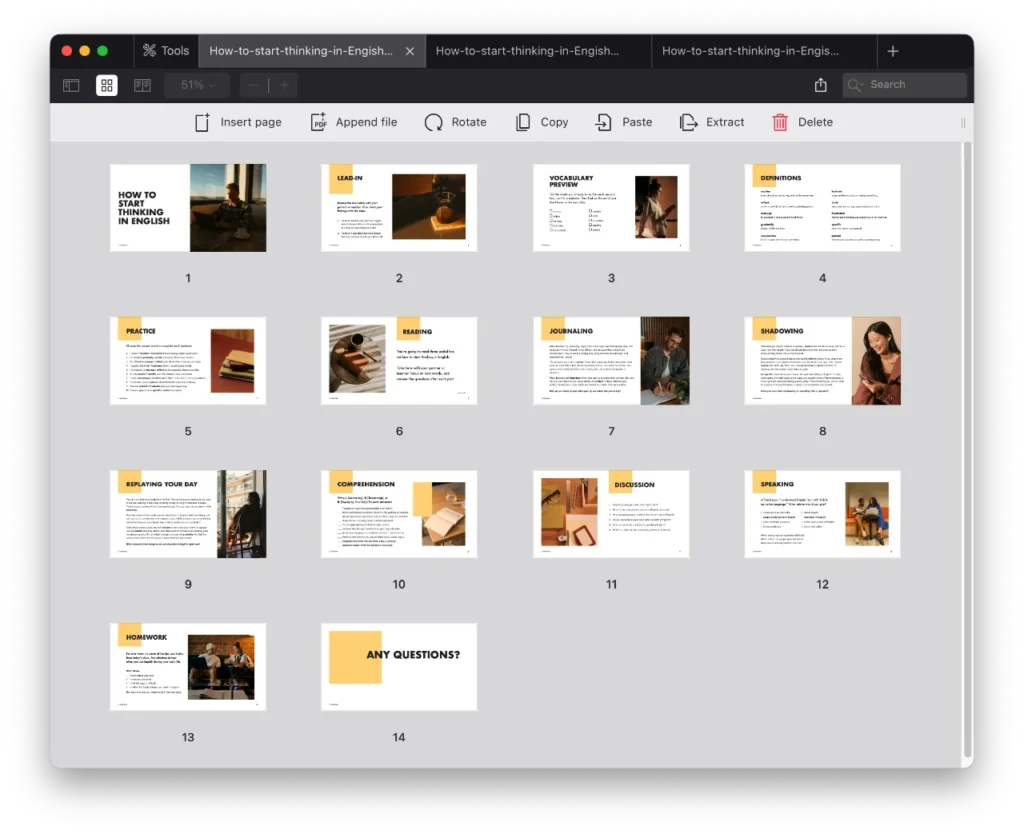
- Lead-In
- Vocabulary Preview
- Definitions
- Practice
- Reading
- Comprehension
- Discussion
- Speaking
- Homework
Start with the lead-in on the first slide. Students discuss why English matters to them and name things they don’t find important. Pairs work well here before a short class share. It sets a personal tone and gives you a sense of where students are in their learning. Don’t correct language at this stage. The goal is to get them thinking about their own habits before the lesson introduces new ones.
The vocabulary section is a self-check. Students tick the words they already know and write a sentence for each. For unknown words, they check the definitions slide. Give them two minutes, then ask them to compare with a partner. Words like “reflect” and “manage” can trip students up because they’ve seen them before in other contexts. Check that students understand the meanings used in this lesson specifically. The practice exercise on slide 4 asks them to choose the correct word in context. It works well as a pair task before you check answers together as a class.
The reading covers journaling, shadowing, and replaying your day. Each part is short and ends with a personal question. Take turns reading with your student, or ask them to read one section while you read another. Stop after each part and answer the question together before moving on. This keeps the reading conversational and stops it from feeling like a test. The comprehension activity on slide 9 asks students to sort statements by technique. Let them do this individually first, then check in pairs before going over it as a class.
Wrap up with the speaking activity on slide 11. Students give advice to a friend who understands English but still thinks in their native language. The prompts give them a starting point, but push them to say which advice they think actually works and which gets repeated too often. Students usually have strong opinions here, so the discussion tends to run well. Assign the homework on slide 12 before the class ends. Trying the habits for a week gives students real experience to bring back to the next lesson.
