
How to Have a Great Summer

There’s a version of summer where nothing much happens and somehow three months are gone. This C1 lesson is a direct response to that. Students read a practical, opinionated article about making summer deliberate, work through vocabulary that shows up constantly in informal and professional English, and then rewrite sentences across registers from literary to journalistic to corporate. The speaking activity at the end asks them to argue against the article, which tends to go well once they’ve spent the whole lesson with it.
Lesson overview
- Practice ten vocabulary items through definition-matching and sentence extension tasks
- Rewrite sentences across six different registers, from casual to literary to journalistic
- Develop critical thinking by arguing against the article in a structured devil’s advocate debate
- Discuss personal memories, seasonal habits, and the productivity culture around leisure time
| Level | Vocabulary | Reading Time | Lesson Time |
| C1 / Advanced | 10 words | 1046 words / 5 min | 60-70 min |
Vocabulary
- deliberate
- improv
- road-worthy
- lean in
- commit
- scenic
- live up to
- grind
- vague
- signature dish
Contents
- Lead-In
- Vocabulary
- Definitions
- Article
- Summary
- Pair-Work
- Practice
- Register Shift
- Quote
- Speaking
- Optional Video
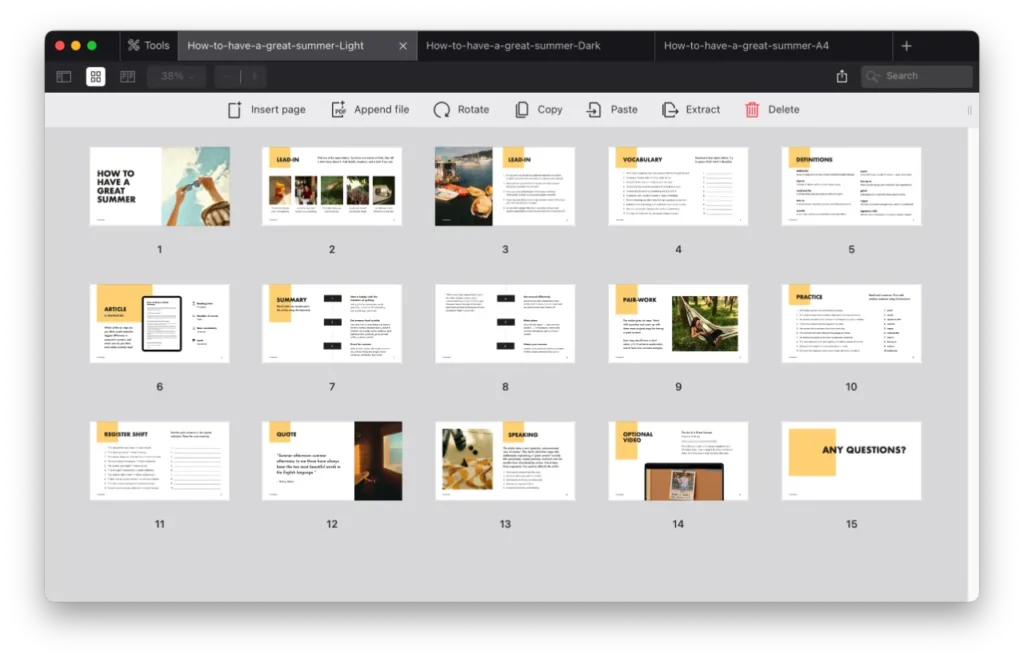
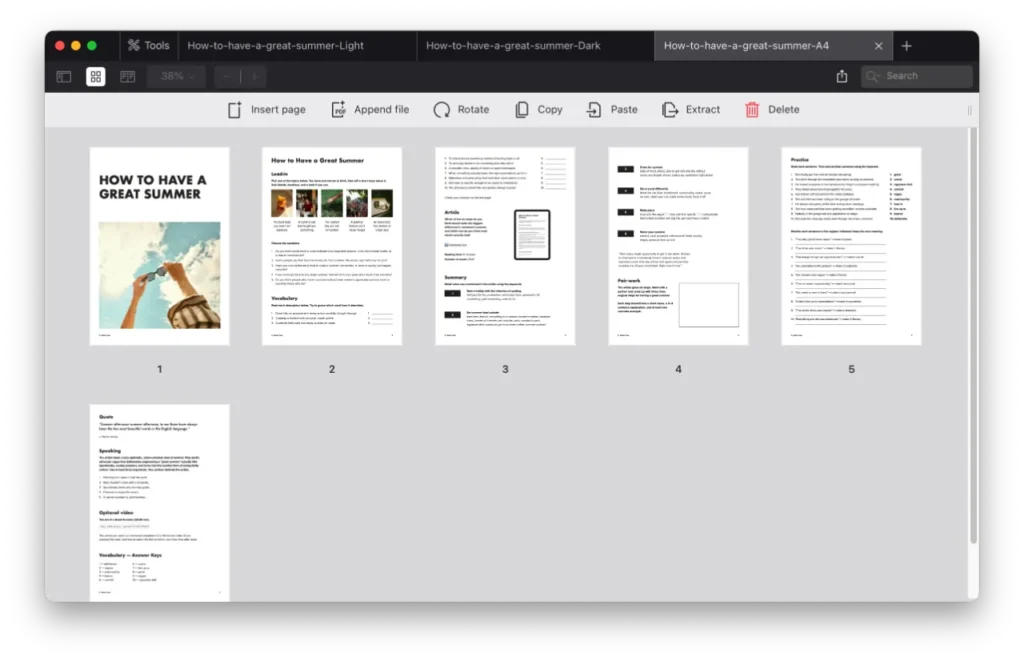
Start with the storytelling lead-in. Students pick one of five summer prompts and speak for a minute, adding details, emotions, and ideally a twist. Give them sixty seconds to think before anyone speaks. This works well because the open topics let students bring real experience in, and the twist instruction pushes them past surface-level answers. Pair them up or run it as open class depending on group size.
Move into the lead-in discussion questions. These are more reflective than most warm-ups, so leave space. Question four, about going back to a single summer moment, tends to open up longer turns. If students are quiet, ask a follow-up rather than rushing to the next question.
The vocabulary activity uses definition-guessing before students see the words. This is worth doing properly. Give students a minute to read all ten definitions silently and write guesses, then compare with a partner before you confirm answers. The words in this great summer C1 lesson, like “improv,” “lean in,” “road-worthy,” and “grind,” are high-frequency in spoken and informal written English, so they’re worth spending time on.
For the reading, students can work through the article at their own pace or you can assign sections. The summary retell in pairs is a good check for comprehension and gives quieter students a chance to speak without pressure. The pair-work activity, where students invent three extra steps, works best with a strict five-minute time limit. It stops them overthinking.
The register shift activity is the most C1-appropriate task in the lesson. Students rewrite the same sentence in a different register: poetic, literary, corporate, journalistic, formal, technical, motivational, dramatic. Run this individually first, then compare in pairs. Expect a lot of variation, which is exactly the point.
Close with the speaking debate. One student argues against the article’s six-step approach, the other defends it. The prompt gives five starter arguments, but push students past the starters if they’re ready. The debate works well as a final activity because students have read the article closely by this point and usually have a strong opinion about it.
