
Your New Robot Housekeeper
Robots cleaning your home sounds like science fiction, but Figure AI is already renting humanoid robots to households for around $500 a month. This B1 lesson plan looks at two short videos of the company’s F.03 robot tidying a bedroom and a living room. Students watch the videos, describe what the robots do step by step, and work through vocabulary for everyday objects. What makes this lesson land well is the comments section activity, where students read real reactions from people online and then write their own.
Lesson overview
- Watch two videos and narrate what the robots are doing in real time
- Describe household objects and actions using present simple and continuous
- Discuss opinions about robots at home and the future of household technology
- Compare your own descriptions with a written account of each video
| Level | Vocabulary | Video Length | Lesson Time |
| B1 / Intermediate | 20 words | 2:13, 2:27 min | 60-90 min |
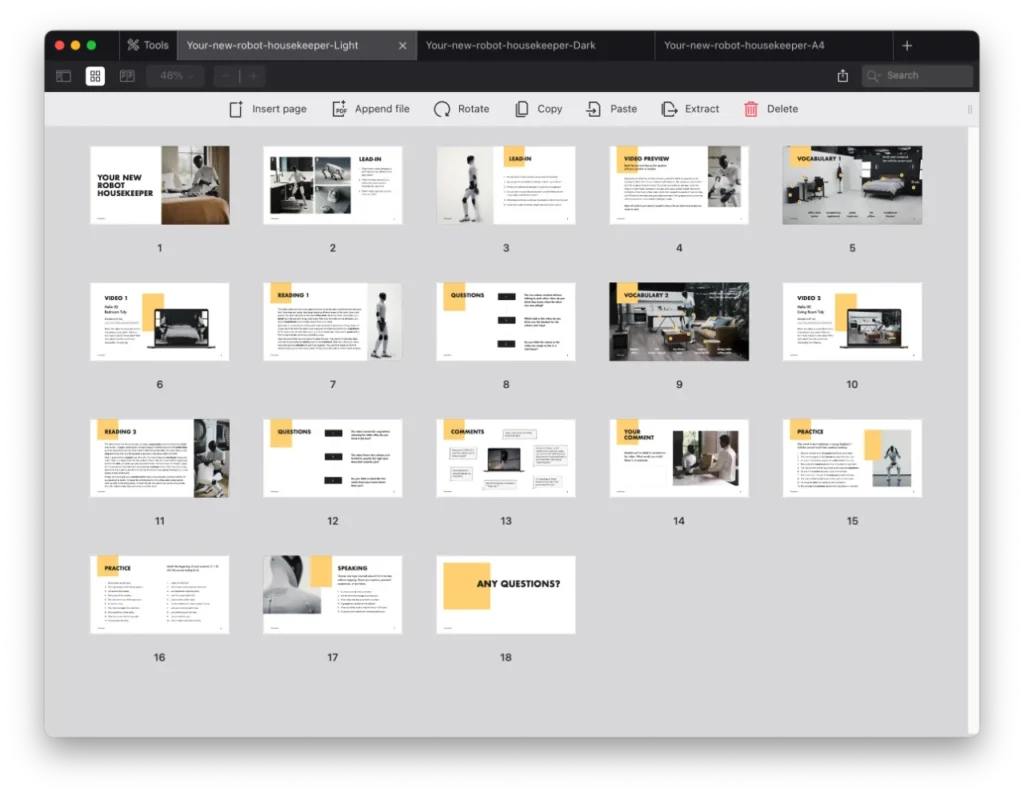
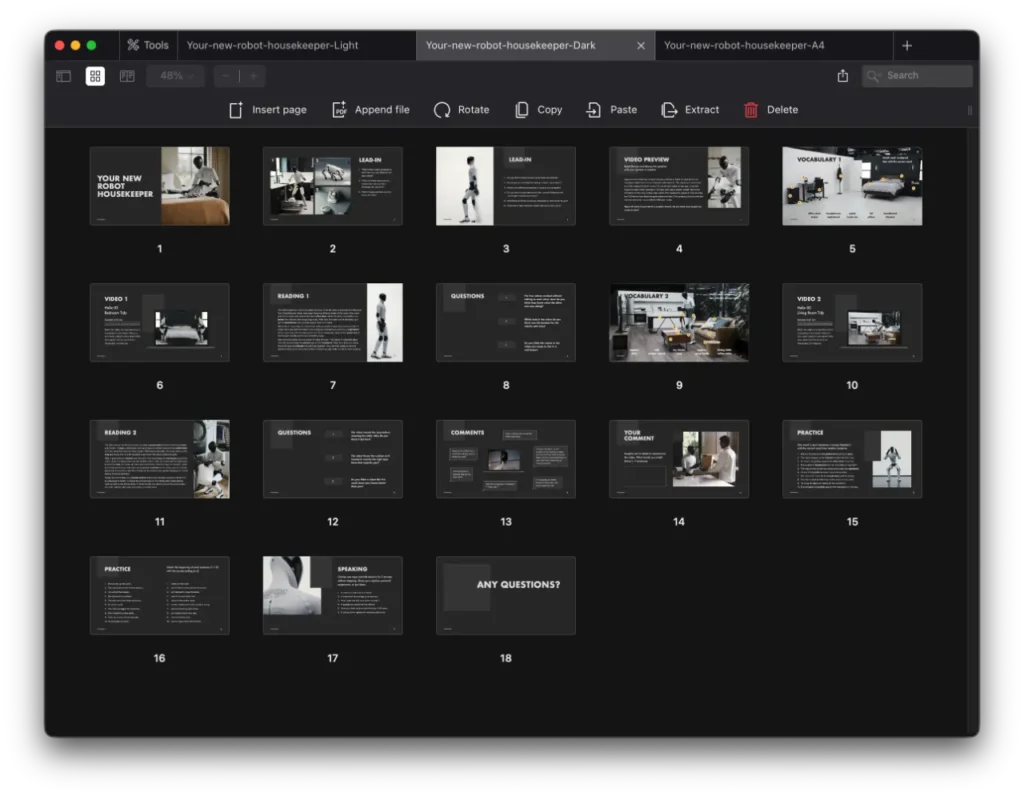
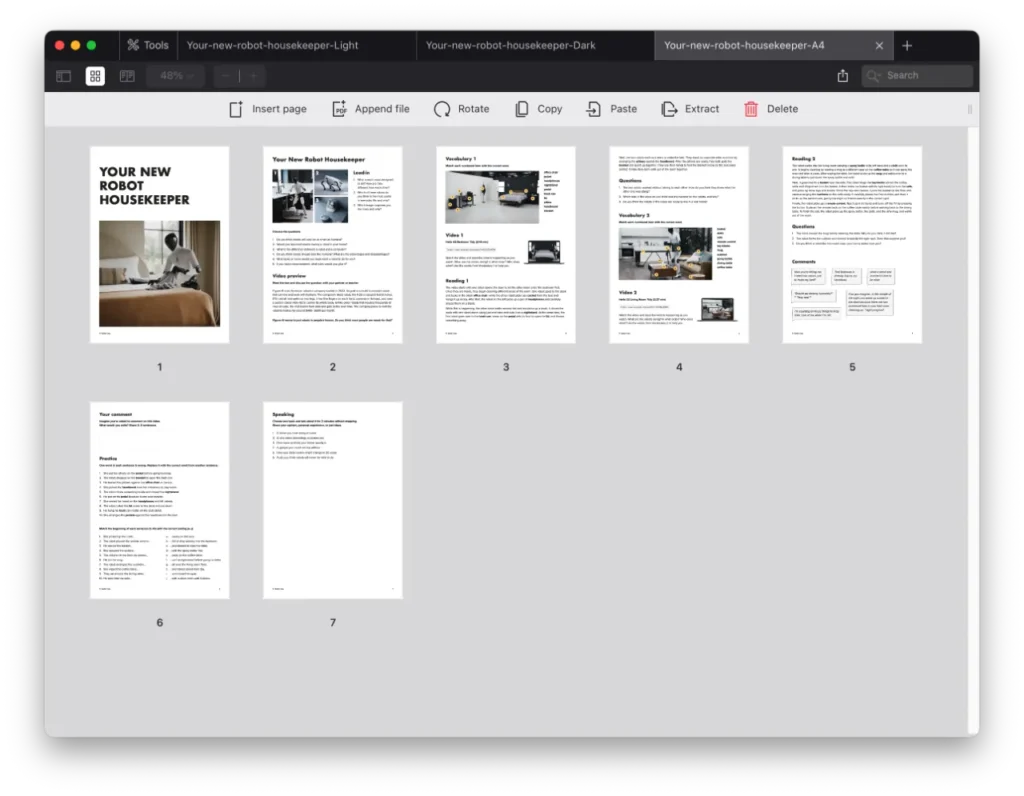
Vocabulary
- office chair
- jacket
- headphones
- nightstand
- pedal
- trash can
- lid
- pillow
- headboard
- blanket
- basket
- cloth
- sofa
- remote control
- toy blocks
- mug
- cushion
- spray bottle
- dining table
- coffee table
Contents
- Lead-in (images)
- Lead-in (discussion questions)
- Video Preview
- Vocabulary 1
- Video 1
- Reading 1
- Questions
- Vocabulary 2
- Video 2
- Reading 2
- Questions
- Comments
- Your Comment
- Practice (word replacement)
- Practice (sentence matching)
- Speaking
Start with the lead-in images at the front of the lesson. Put students in pairs and give them two to three minutes to talk about the three robots in the pictures. Most students have opinions about what robots can or cannot do, so this gets the class talking quickly. Move on to the six lead-in discussion questions and let pairs talk before sharing with the class. The question about the difference between a robot and a computer is worth extra time. Students often disagree, and the discussion sets up the whole lesson well.
Before the first video, go through the Vocabulary 1 matching activity together. These are all household objects from a bedroom, and students match numbers to words. Give them a minute alone, then check as a class. Play the first robot housekeeper video, which runs just over two minutes, and ask students to describe out loud what they see happening. Reading 1 gives a full written description of the video, so use it for comprehension follow-up or ask students to compare it with what they said. The three questions after Reading 1 work well in pairs before a short class discussion.
The second video on robot housekeepers follows the same format. Students work through Vocabulary 2 for living room objects first, then watch the video, then read the transcript, then discuss three more questions. Both sets of questions are open-ended, so stronger B1 students can push further while lower-level students still have something to contribute. Near the end of the lesson, students read six real YouTube comments about the household robots and write their own two to three sentences as if posting on the video. The comments are funny and vary a lot in tone, which gives students natural models to draw from. Close the lesson with the vocabulary practice activities, then pick one speaking topic from the final list for a short monologue or pair discussion.
