
How to Quit Coffee

Most adults who drink coffee every day have never actually chosen to depend on it. It just happened. This C1 lesson looks at caffeine withdrawal honestly, without the wellness-blog softening or the scare tactics. Students read a detailed article about what withdrawal does to the body, then work through vocabulary like taper off, rebound, and cold turkey before getting into the real conversations. The speaking scenarios push students to take positions on genuinely uncomfortable situations, not just discuss coffee habits in the abstract.
Lesson overview
- Practice withdrawal and dependency vocabulary through sentence-combining activities
- Discuss caffeine’s role in work culture and productivity expectations
- Analyze the article’s tone and the author’s deliberate choice of language
- Explore ethical and personal dilemmas around caffeine, health, and workplace pressure
| Level | Vocabulary | Reading Time | Lesson Time |
| C1 / Advanced | 10 words | 1403 words / 7 min | 60-80 min |
Vocabulary
- withdrawal
- disruptive
- mood swings
- sluggishness
- taper (off)
- cold turkey
- suppress
- abrupt
- rebound
- perk up
Contents
- Lead-in
- Agree or Disagree
- Vocabulary Preview
- Definitions
- Article
- Comprehension
- Discussion
- Practice
- Discussion
- Speaking
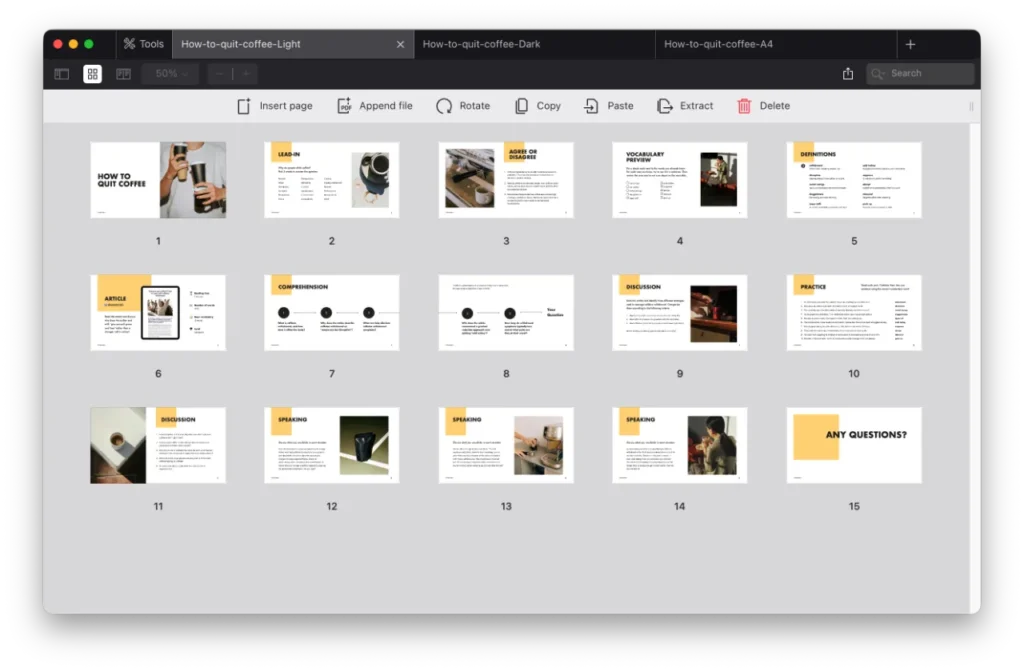
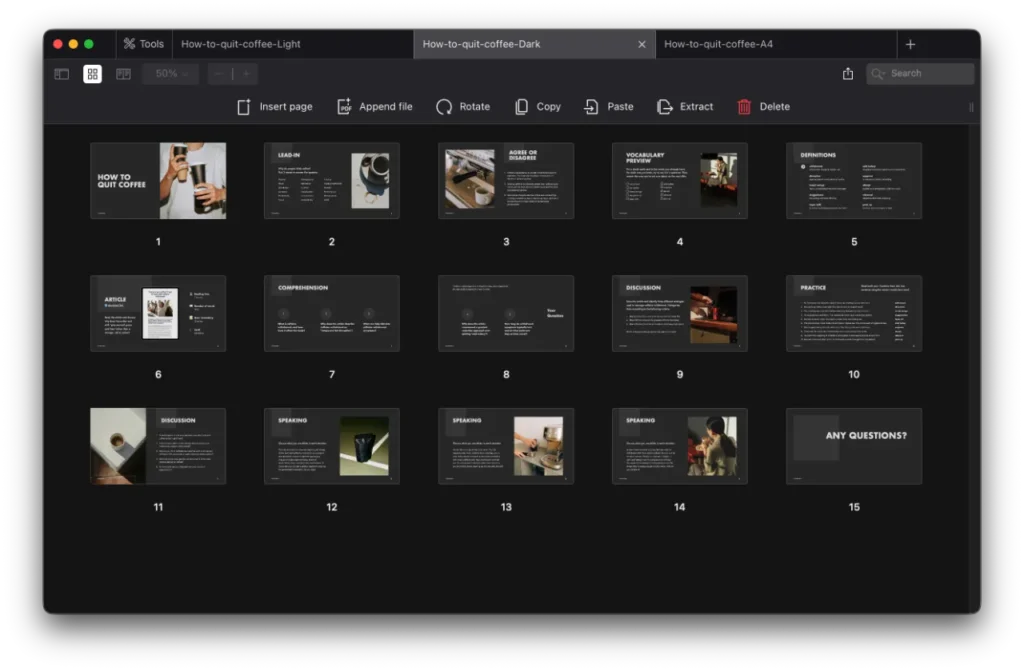
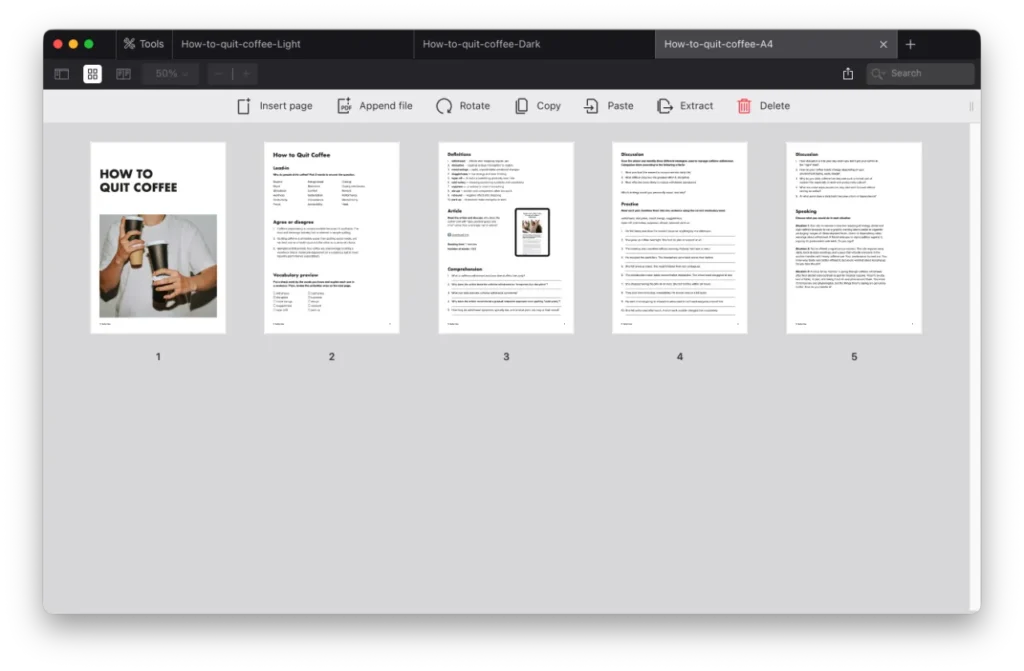
Start with the lead-in word sort. Students pick three words from the list to explain why people drink coffee. This sounds simple, but at C1 level it opens up fast. Words like “coping mechanism” and “ritual” tend to generate very different conversations than “convenience,” and that contrast is worth pausing on before you move to the article.
The agree/disagree statements in slide 2 are the real warm-up. Give students a couple of minutes to read them individually and mark their position, then open it up. These aren’t soft opinions. Statement one, about the food industry having no interest in people quitting caffeine, usually creates a strong split. Let the debate run for five or six minutes before moving on. It primes students for the article’s more measured tone.
The vocabulary preview is a self-check activity. Students mark what they already know, then see the definitions on the following slide. For a C1 group, most of this vocabulary will be partially familiar, and that’s fine. The goal is activation, not teaching from scratch. Spend a minute on rebound and taper off if students conflate them with other uses.
The article is the core of the lesson. Set the reading task from the slide: students read and then discuss why the author ends with “give yourself grace and time” rather than a stronger recommendation. This is a good C1 comprehension task because the answer isn’t in the text directly. It asks students to read the author’s intent. After reading, run the comprehension questions in pairs before opening up to the group.
The practice activity on slide 9 uses sentence combining. Students get a pair of simple sentences and choose the correct vocabulary word to merge them into one. This works well as a quiet individual task before comparing answers. Monitor closely for abrupt versus cold turkey, which students often use interchangeably but shouldn’t.
The two discussion sections work well in different configurations. The first (slides 10) is good for open group discussion. The speaking scenarios on slides 11 to 13 are better as pair work, giving each student time to actually think through their position. The family member scenario in slide 13 is the most personal and tends to generate the best conversation.
