
Cost of Living
This B1 lesson covers the cost of living using a YouTube video called “I Started a 9–5.” Students watch a young Australian graduate discover that real life after university is harder than he expected. The lesson builds vocabulary around money, housing, and work while giving students plenty of space to talk about their own situation.
Lesson overview
- Discuss and rank cost of living across three international cities
- Learn ten vocabulary words connected to money, housing, and work
- Watch a YouTube video in two parts and answer comprehension questions
- Practice the vocabulary through a gap fill dialogue and question formation activity
| Level | Vocabulary | Video Length | Lesson Time |
| B1 / Intermediate | 10 words | 5:32 min | 60-70 min |
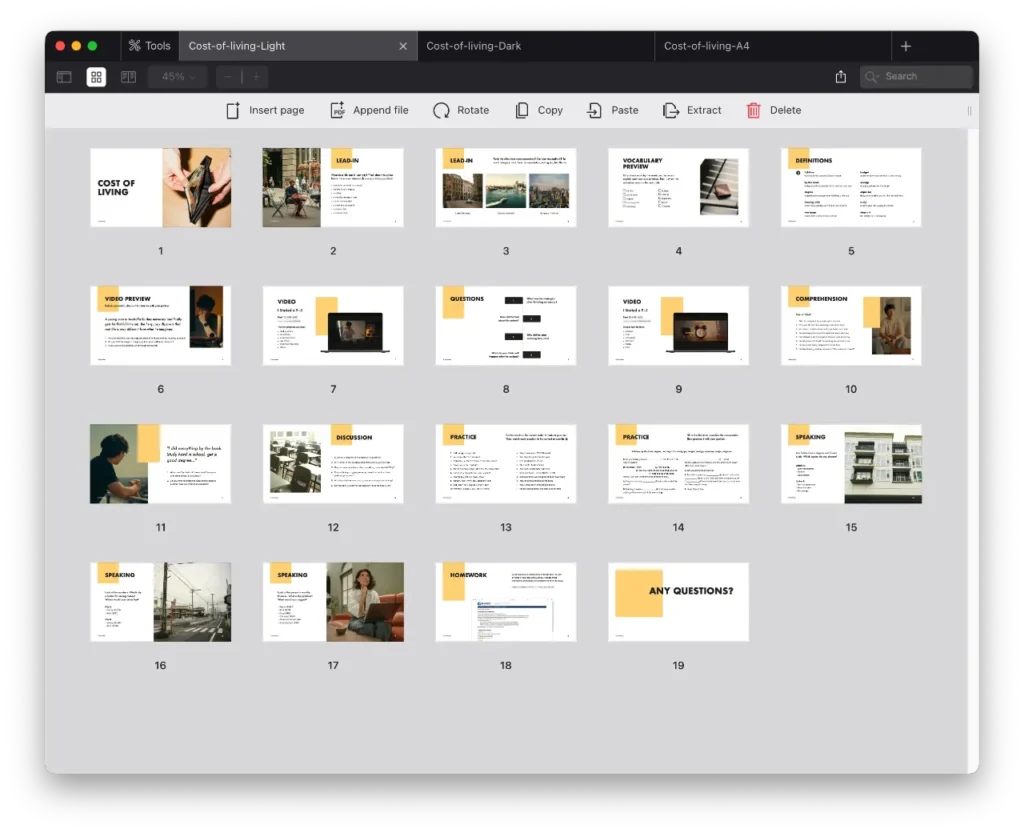
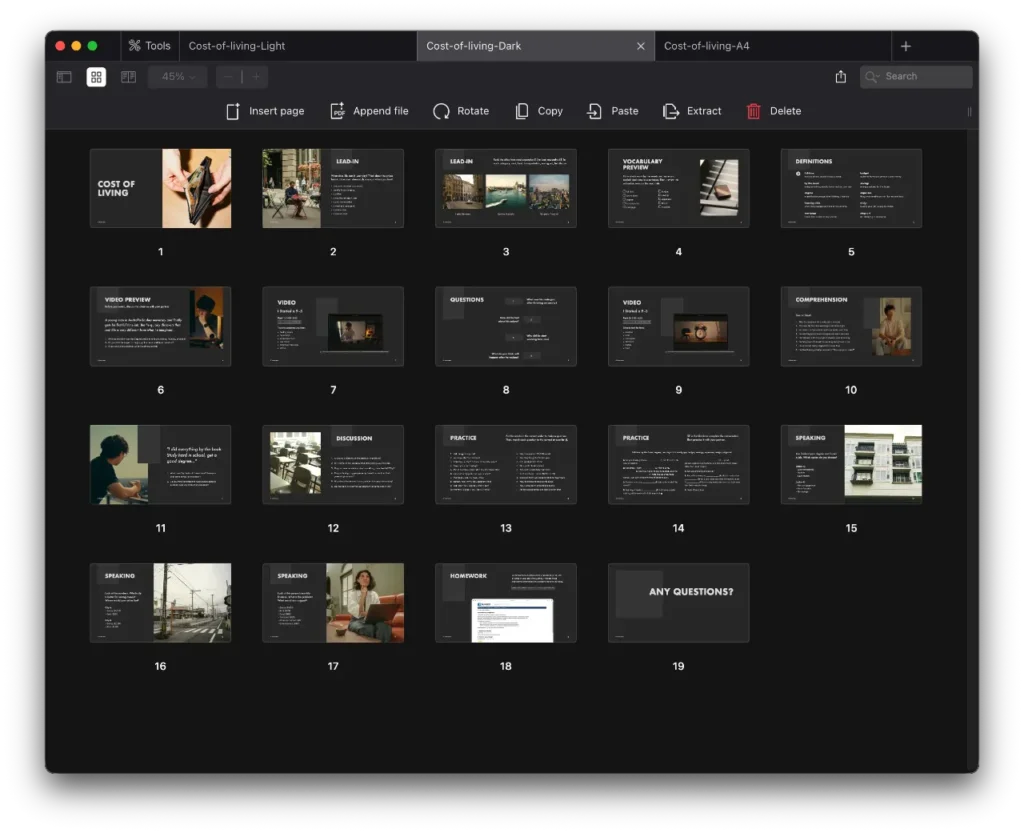
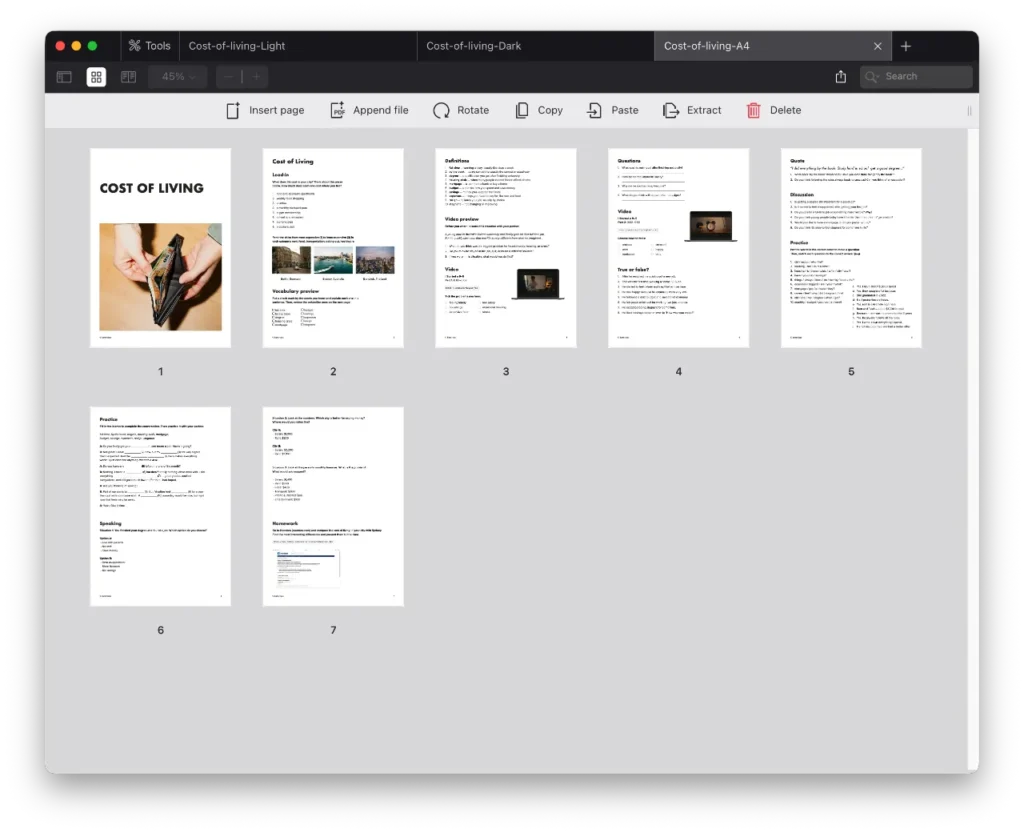
Vocabulary
- full-time
- by the book
- degree
- housing crisis
- mortgage
- budget
- savings
- expenses
- resign
- stagnant
Contents
- Lead-in
- Vocabulary preview
- Definitions
- Video preview
- Video part 1
- Comprehension questions
- Video part 2
- True or false
- Quote discussion
- Discussion
- Practice: question formation
- Practice: gap fill dialogue
- Speaking
- Homework
Start with the lead-in activity on slide 1. Students look at a list of eight everyday costs and say how much each one is in their city. This works well as a quick pair discussion before the class shares answers. Keep it light and conversational. The point is to get students thinking about money before the video.
Slide 2 adds a ranking task. Students compare rent, food, transport, eating out, and healthcare across Sydney, Berlin, and Bangkok. Most students won’t know the exact figures, and that’s fine. The guessing and discussion is the activity. Once they’ve finished, reveal the real answers or let students check on their phones.
Go through the vocabulary on slides 3 and 4 before the video. Ten words in total, all connected to money and work. The preview activity on slide 3 asks students to mark what they already know. This tells you where to spend more time. Slide 4 has simple definitions, one per word, so students can confirm their understanding quickly.
Slide 5 sets up the video with three prediction questions. Students discuss in pairs what they think happens before they watch. This B1 level task helps them engage with the content rather than just sit and watch passively.
The video is split into two parts. Part 1 runs to 3:02. Students tick the problems they hear from a list of eight options, five of which are actually mentioned. After watching, students answer four comprehension questions in pairs. Part 2 runs from 3:02 to the end. Students choose one word to describe how the creator feels. A true or false activity follows with eight statements, five true and three false.
Slides 10 and 11 move into discussion. The quote activity on slide 10 works well as a quick pair discussion before the longer conversation questions on slide 11. These questions connect the video directly to students’ own lives, which tends to produce the most natural conversation at B1 level.
The two practice activities on slides 12 and 13 work well as individual tasks followed by pair checking. Slide 12 is a sentence unscramble with a match activity. Slide 13 is a gap fill dialogue using all ten vocabulary words. Finish with the three speaking scenarios on slides 14 to 16 and assign the Numbeo homework for next class.
