
The Art of Asking

This B2 lesson is built around a short personal essay about the art of asking meaningful questions and the conversations they open up. Students read about one writer’s archive of questions she uses to connect with people, then practice the vocabulary and try some of those questions themselves. It’s a good fit for adult learners who enjoy reflecting and talking about relationships and communication.
Lesson overview
- Explore how thoughtful questions can lead to deeper, more meaningful conversations
- Learn and practice 10 vocabulary items related to emotions, connection, and personal growth
- Discuss ideas around small talk, listening, and what makes conversations feel real
- Try role plays based on real-life situations where deeper questions come up naturally
| Level | Vocabulary | Reading Time | Lesson Time |
| B2 / Upper-Intermediate | 10 words | 671 words / 4 min | 60 min |

Vocabulary
- crave
- intricacies
- reveal
- long for
- curated
- archive
- hard pill to swallow
- pursue
- unfold
- inner world
Contents
- Lead-in
- Ranking
- Vocabulary Preview
- Definitions
- Article
- Favorite Question
- Comprehension
- Find & Discuss
- Agree or Disagree
- Practice
- Role-Play 1
- Role-Play 2
- Homework
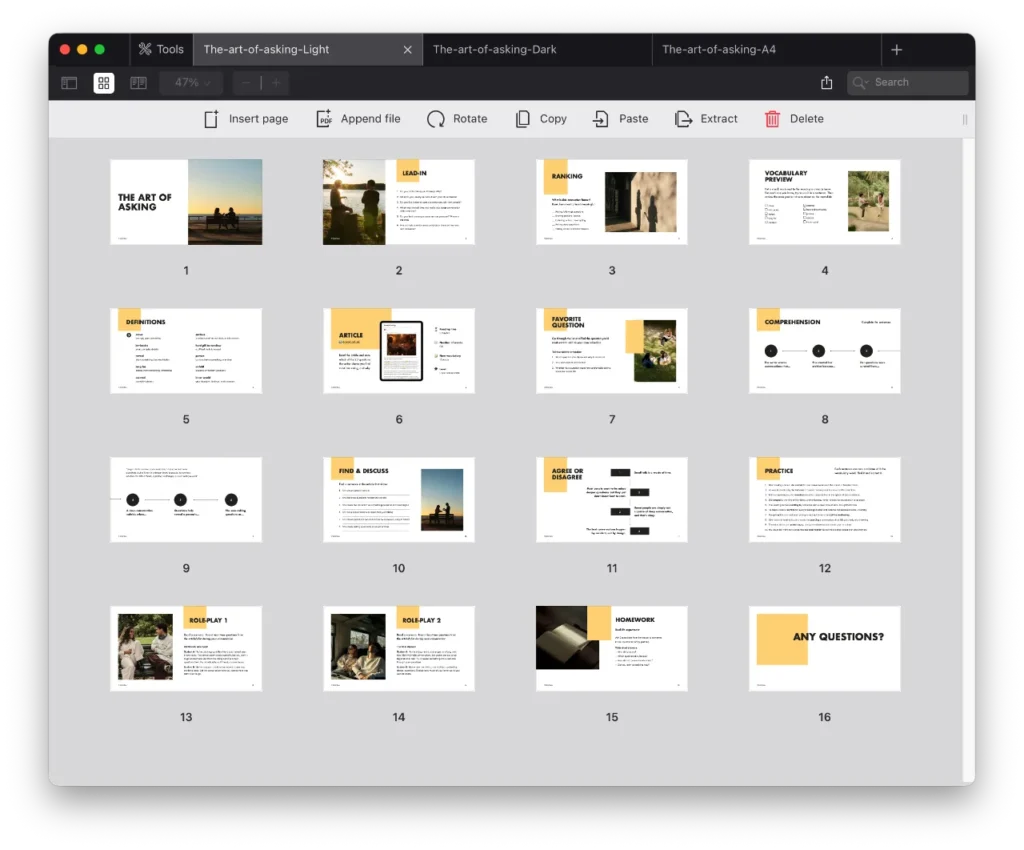
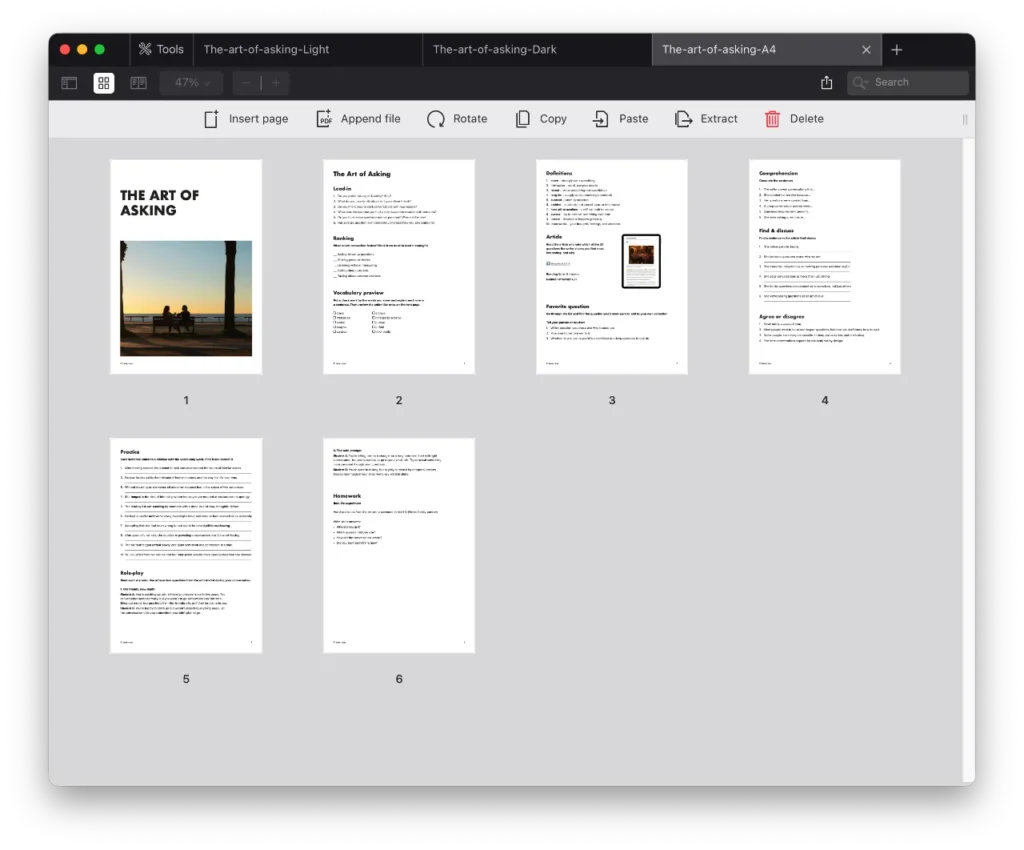
Start with the lead-in questions on slide 1. The first few are light enough that students jump in quickly, but questions 3 and 4 tend to generate real discussion. Give pairs or small groups a couple of minutes, then open it up to the class. The ranking activity works well as a quick whole-class vote or a short pair discussion where students have to justify their choices.
The vocabulary preview on slides 3 and 4 uses a self-check format. Students mark what they already know and try to use those words in a sentence before reviewing the rest. This is worth doing properly rather than rushing past it. The words come up throughout the article and the practice activity, so any gaps here will slow students down later. Watch for “long for” and “hard pill to swallow” as these tend to be the least familiar.
Before reading, tell students to look out for any question from the writer’s list that they’d actually want to use in real life. This gives them a personal reason to read closely. The comprehension task on slides 7 and 8 checks understanding of the article’s main ideas, and the find-and-discuss activity on slide 9 pushes students to support their answers with evidence from the text. The agree or disagree statements on slide 10 work well as a whole-class discussion or a quick written response if you want something quieter.
The error correction on slide 11 targets common grammar and collocation mistakes with the lesson’s vocabulary. Students tend to find this more engaging than gap fills because there’s something to spot and fix. Finish with one or both role plays. Encourage students to use the writer’s actual questions during the conversation rather than just describing them. The homework asks students to try this in real life, which makes for a nice discussion at the start of the next class.
