
British Small Talk
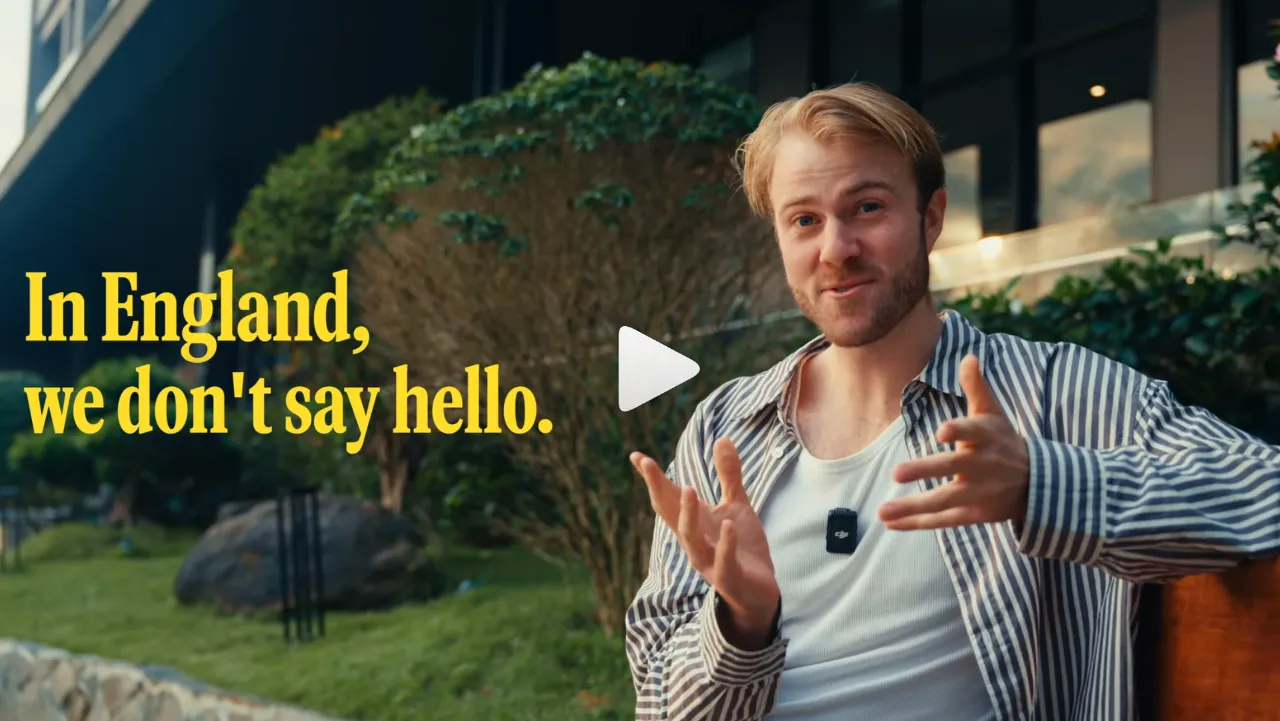
This A2 lesson uses a short Instagram video by a British English teacher to explore the art of small talk. Students find out why “I’m fine” sounds negative in British English, how to ask better questions, and why being curious makes you more interesting to talk to. It covers vocabulary, video tasks, and a lot of speaking practice.
Lesson overview
- Practice answering “How are you?” with natural, positive responses
- Learn eight vocabulary words connected to small talk and conversation
- Discuss what topics work for small talk in different countries and cultures
- Build question-asking skills through timed writing and speaking activities
| Level | Vocabulary | Video Length | Lesson Time |
| A2 / Pre-Intermediate | 8 words | 2:50 min | 60 min |
Vocabulary
- observe
- curious
- small talk
- clues
- glue
- focus
- lighthearted
- mindset
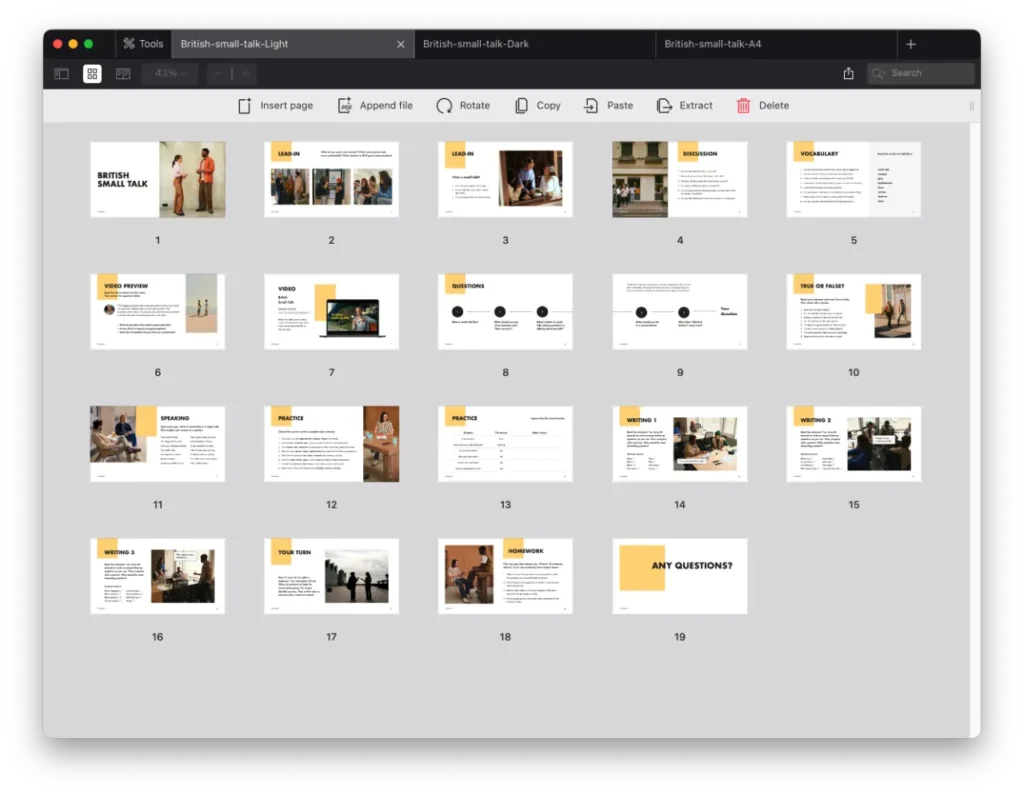
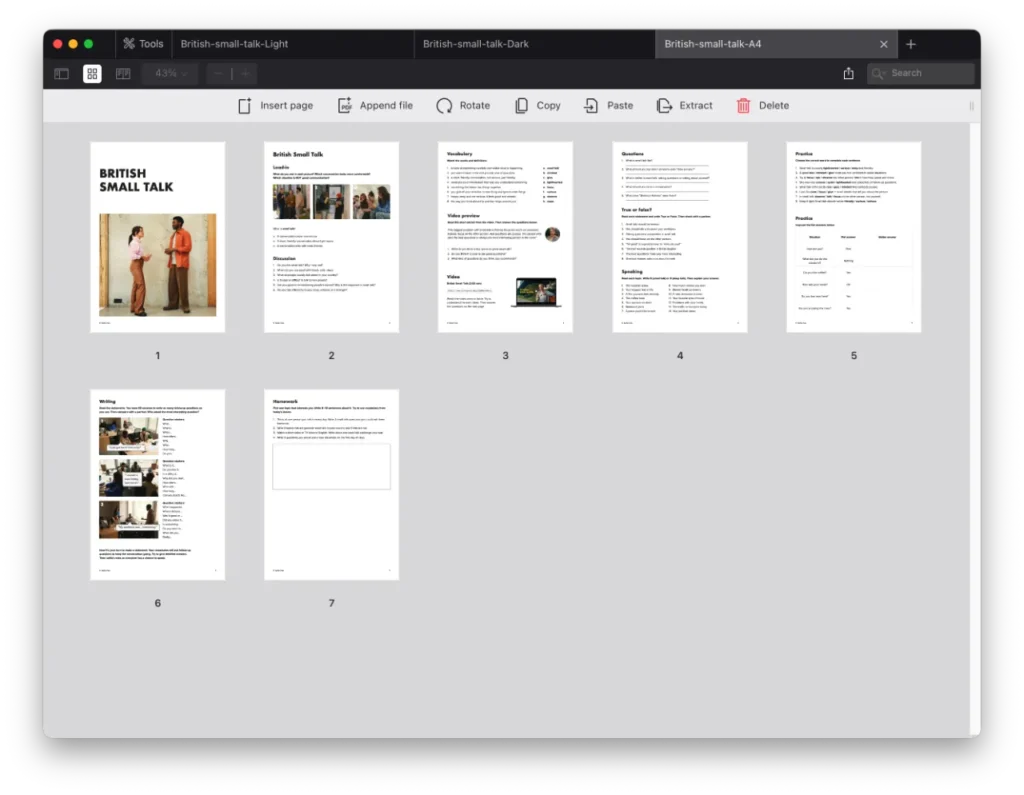
Contents
- Lead-in
- Discussion
- Vocabulary
- Video Preview
- Video
- Questions
- True or False?
- Speaking
- Practice
- Writing 1
- Writing 2
- Writing 3
- Your Turn
- Homework
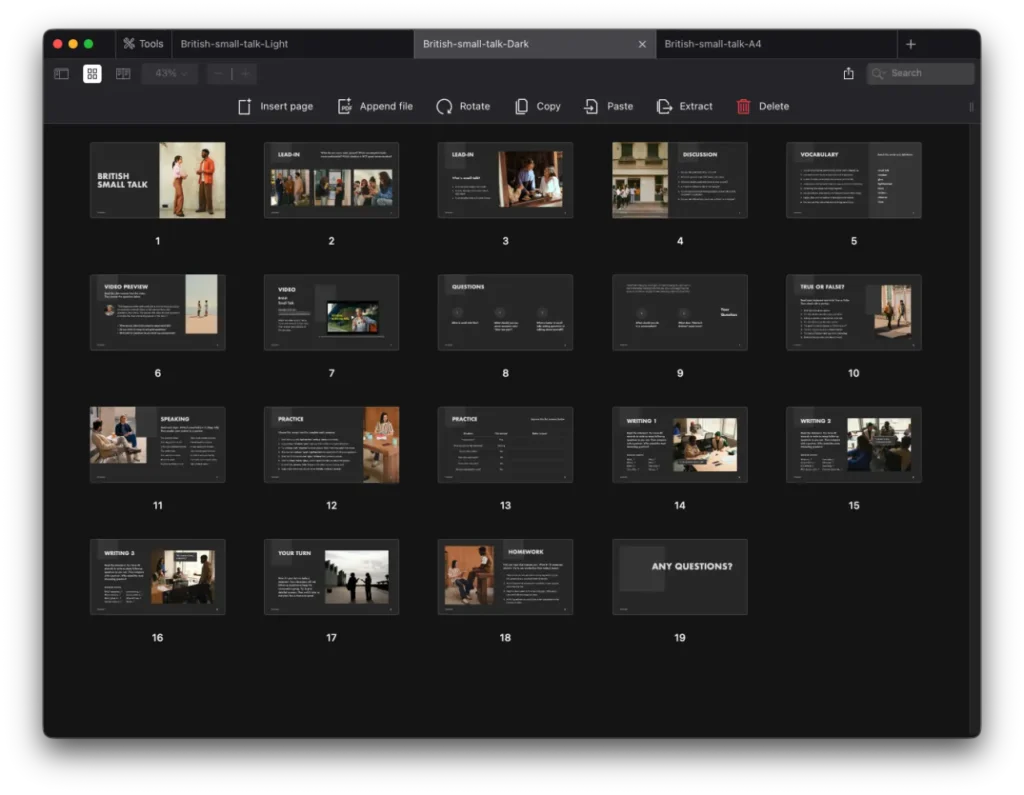
Start with the lead-in pictures. Students look at three images and decide which conversation looks comfortable and which looks awkward. This takes about three minutes and gets them thinking without needing much language yet. Then ask what small talk is and let them choose from the three options. Most students know the idea even if they don’t have the word for it.
The vocabulary set has eight words. Run a quick matching task in pairs before checking together as a class. Words like “lighthearted” and “mindset” are new for A2, so spend a moment on each one. Ask students to use the word in a sentence before moving on. This helps the word stick.
Before watching, show the video preview extract and ask the three questions. Students don’t need to answer perfectly. The goal is to activate thinking about the topic. Play the video once through, then a second time if needed. The comprehension questions on slides 7 and 8 cover the main points. The true/false task on slide 9 works well as a pair check after watching.
The speaking activity on slide 10 asks students to sort topics into small talk or deep talk. Give them two minutes to decide alone, then compare with a partner. There are no wrong answers here, so it opens up genuine discussion about culture. The practice slides that follow give students a chance to improve flat, one-word answers. Model one or two examples before students try on their own.
The writing activities on slides 13, 14, and 15 use a timed format. Students have 60 seconds to write as many follow-up questions as they can for a given statement. This works well as a light competition. Keep the energy up and let students share their best questions with the class.
