
Renovation: DIY or Pay?
Renovation splits people into two camps fast: those who grab a drill and figure it out, and those who call a professional before the paint is even chosen. This B1 lesson plan uses three short first-person stories to get adult students reading, thinking, and arguing in English. A DIYer, a Delegator, and an Investor each take a different approach to home improvement, and students have to decide who they agree with. The lesson covers renovation vocabulary, reading comprehension, and a speaking activity that tends to get genuinely heated.
Lesson overview
- Learn renovation tools and home improvement vocabulary through a picture matching activity
- Read three authentic-voice stories about a DIYer, a Delegator, and an Investor
- Discuss renovation decisions and compare pros and cons of hiring vs doing it yourself
- Practice sentence building and speaking using renovation vocabulary in context
| Level | Vocabulary | Reading time | Lesson Time |
| B1 / Intermediate | 10 words | 3 texts, 400 words total | 60 min |
Vocabulary
- tape measure
- drill
- screwdriver
- ladder
- glue
- nails
- screws
- wrench
- hammer
- paintbrush
- renovate
- plumbing
- tiles
- layout
- paint
- install
- hire a contractor
- over budget
- put up
- put together
Contents
- Lead-in
- Discussion
- Vocabulary Match 1
- Vocabulary Match 2
- Reading
- Comprehension
- Summary
- Quote
- Practice
- Practice
- Pair-work
- Speaking
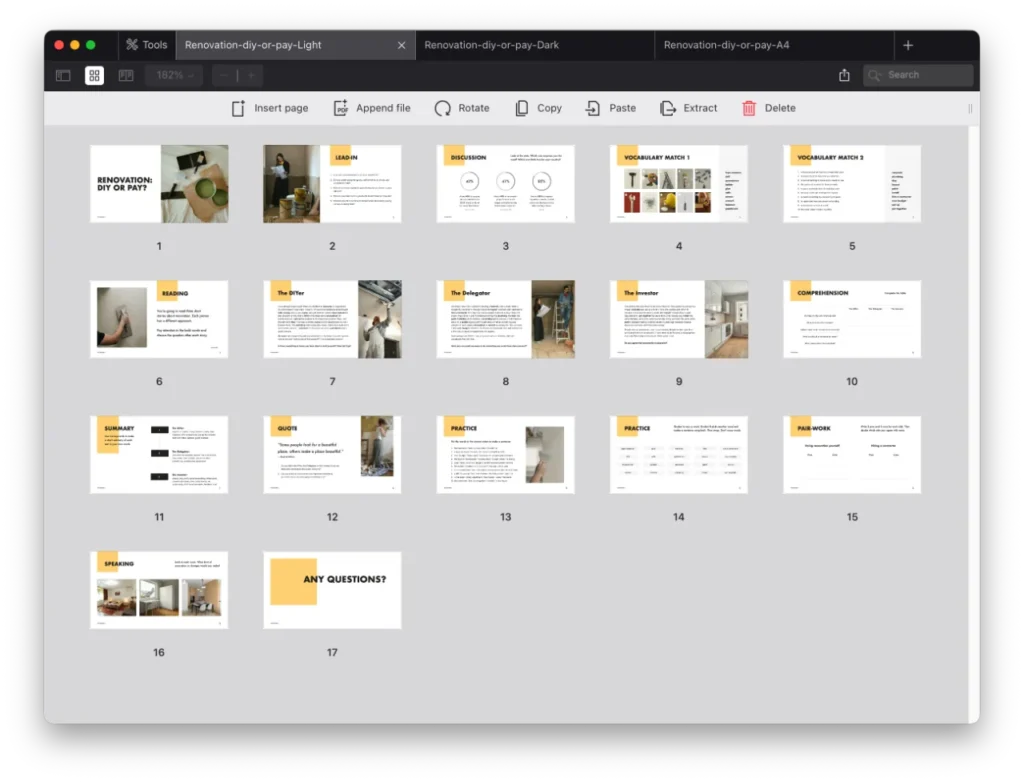
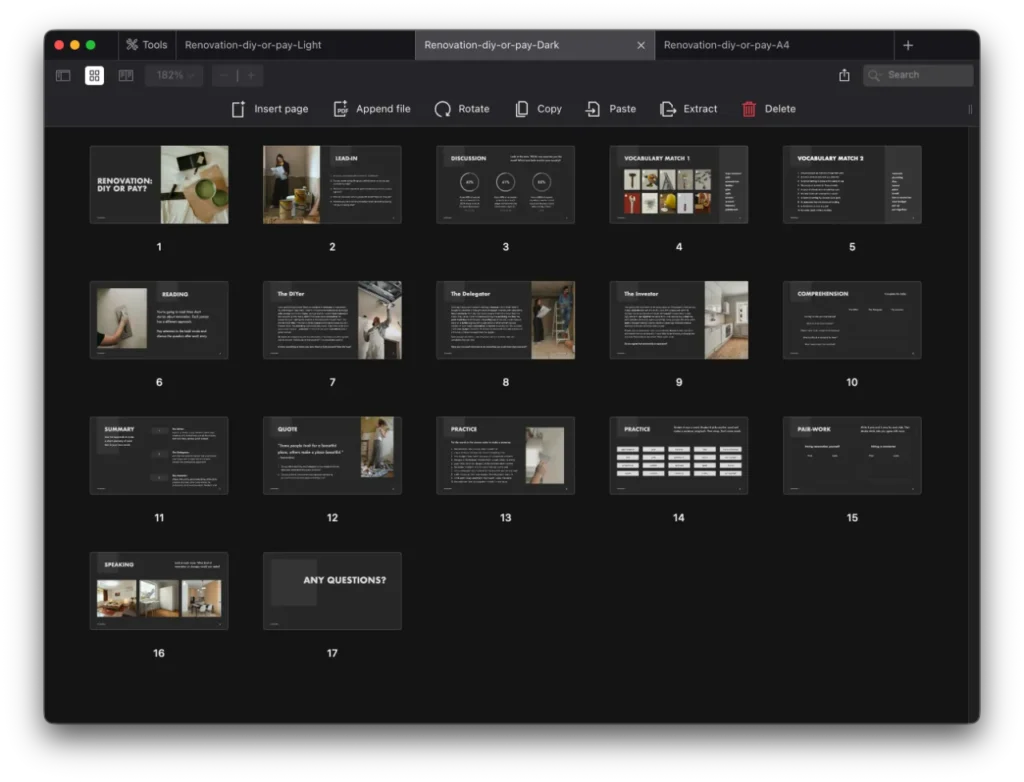
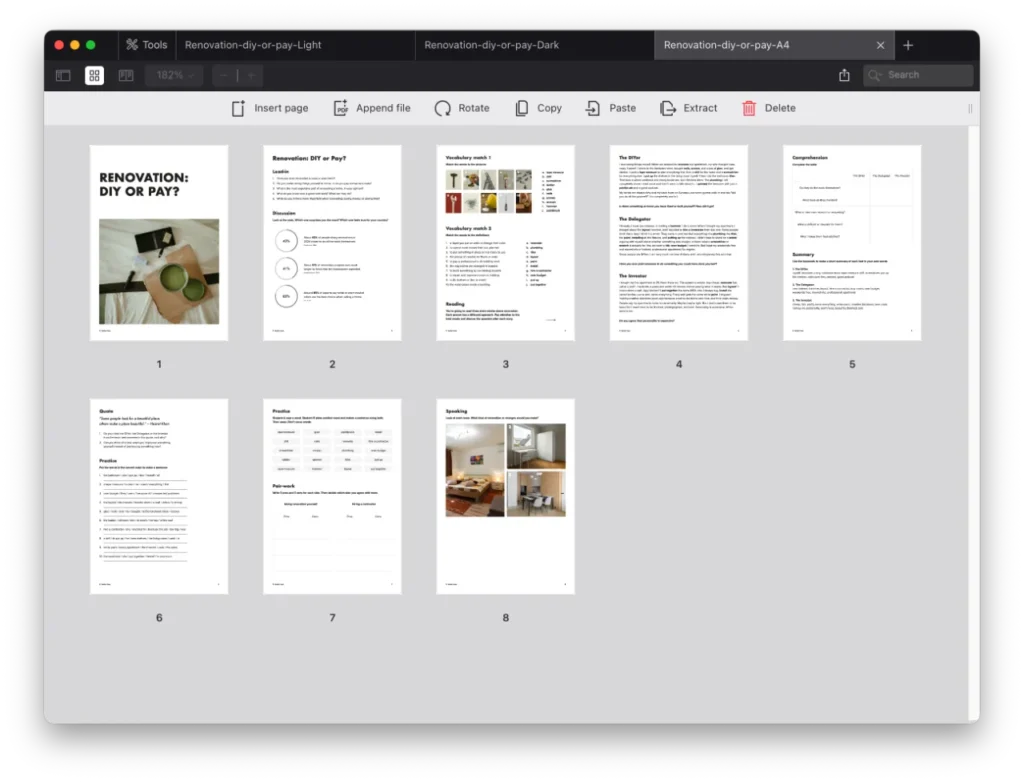
Start the lesson with the lead-in questions and give students a minute to think before they answer. The questions move from personal experience to opinion, so they get easier as students warm up. Question 4, about someone they know who is good with tools, usually gets good stories. Let students talk in pairs first, then open it up to the class.
The vocabulary sections work best in order. Vocabulary Match 1 is a picture activity with tools, so students can point and guess before they check answers. Vocabulary Match 2 covers renovation verbs and phrases. Go through both before the reading, not after. Students need the words to understand the texts.
The three reading texts are the heart of the lesson. Each one is short but has a strong personality, which makes them easy to compare. Have students read one at a time and answer the reflection question before moving to the next. The comprehension table works well as a pair activity after all three texts are read. Students fill it in together, then you check as a class.
The quote activity works well as a short speaking task between the comprehension check and the pair-work pros and cons table. Give students a minute to think and then ask a few to share. It usually leads into the DIY vs hiring debate naturally.
For the pair-work pros and cons table, let pairs work for five to seven minutes, then compare with another pair before the class discussion. The sentence ordering practice works as a quick individual task, either as homework or at the end of the class. The speaking activity with room photos is a good way to finish if you have time left.
