
Giving Feedback

Most people have a colleague or friend they’ve never been fully honest with, and they know it. This B2 Business English lesson looks at constructive feedback in professional settings. Students read a Forbes article about why feedback is hard to give and what actually makes it useful. They work through vocabulary like “conflict avoidance,” “actionable insight,” and “middle ground,” then practice giving feedback using a structured formula. Two role-play scenarios put the language to work in realistic workplace conversations.
Lesson overview
- Practice collocations and vocabulary connected to giving feedback at work
- Learn how to use a feedback formula to structure professional conversations
- Discuss why people avoid honest feedback and what good criticism looks like
- Role-play challenging workplace scenarios involving mistakes and unrealistic deadlines
| Level | Vocabulary | Reading Time | Lesson Time |
| B2 / Upper-Intermediate | 10 words | 669 words / 4 min | 60-80 min |
Vocabulary
- constructive feedback
- morale
- feasible
- actionable insight
- alternative
- deflect
- conflict avoidance
- empathy
- middle ground
- solicit
Contents
- Lead-In
- Vocabulary Preview
- Definitions
- Collocations
- Practice
- Article
- Comprehension
- Summary
- The Feedback Formula
- Role-Plays
- Speaking
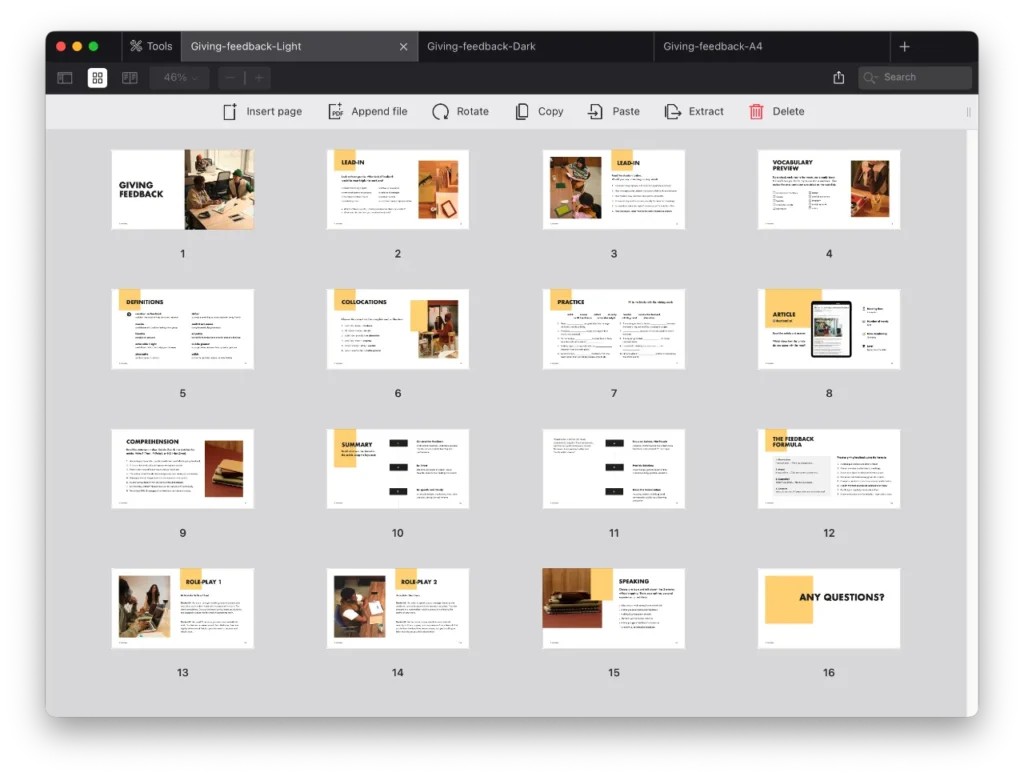
Start with the lead-in slides to get students thinking before any reading happens. The first slide shows eight professional roles and asks which person probably receives feedback most often. Students tend to disagree on this, which is exactly what you want. Let pairs discuss for two or three minutes, then open it up to the group. The second lead-in gives six real workplace situations and asks a simple question: would you say something or stay silent? This activity surfaces a lot of honest answers about conflict avoidance, which connects directly to the article. Give students time to read all six situations first, then compare with a partner before discussing as a class.
Move into vocabulary preview and definitions next. The lesson has ten words, so don’t try to cover all of them at once. Ask students to check off what they already know, then focus the class time on the words they’re less sure about. The collocations slide works well as a quick check: give / boost / provide / show / avoid / seek. Go through the answers quickly and make sure students can use the phrases, not just recognize them.
The Forbes article is 669 words at B2 level. Set a four-minute reading timer and give students a focus question: which ideas do you agree with most? After reading, move into the comprehension True / False / Not Given activity. Items 3, 4, and 6 tend to generate discussion because they’re easy to misread. Check answers as a group and ask students to point to the part of the article that gave them the answer.
The feedback formula is the core speaking activity. Walk students through the four steps: observation, impact, suggestion, check-in. Model one example with the class before students try it in pairs. The eight scenarios range from unclear emails to missed deadlines, so there’s plenty to work with. Encourage students to use full sentences, not just the sentence starters.
Close the lesson with one of the two role-plays. The AI mistake scenario works well because it touches on a situation many students find realistic. Assign roles, give students two minutes to read their cards, then let them run the conversation. The speaking slide at the end is a good fallback if you have extra time: pick any topic and talk for two minutes.
