
Giving Compliments

In some cultures, brushing off a compliment is considered polite. In English, it just sounds strange, and the person who gave the compliment usually ends up feeling awkward too. This A2 lesson on giving compliments helps students understand why, and gives them language to respond more naturally. They work through ten vocabulary items, two reading texts, and comprehension activities before moving into formula practice. Four compliment structures give students a clear framework, and a speaking activity with three real-life situations gives them a chance to use it.
Lesson overview
- Practice giving and receiving compliments in everyday English conversations.
- Learn vocabulary for feelings, appearance, and positive qualities at A2 level.
- Develop simple compliment formulas students can use immediately after class.
- Discuss cultural differences in how people give and receive compliments.
| Level | Vocabulary | Reading time | Lesson Time |
| A2 / Pre-Intermediate | 10 words | 2 texts, 345 words total | 60 min |
Vocabulary
- compliment
- appearance
- genuine
- confident
- boost
- specific
- mental health
- accept
- shy
- appreciate
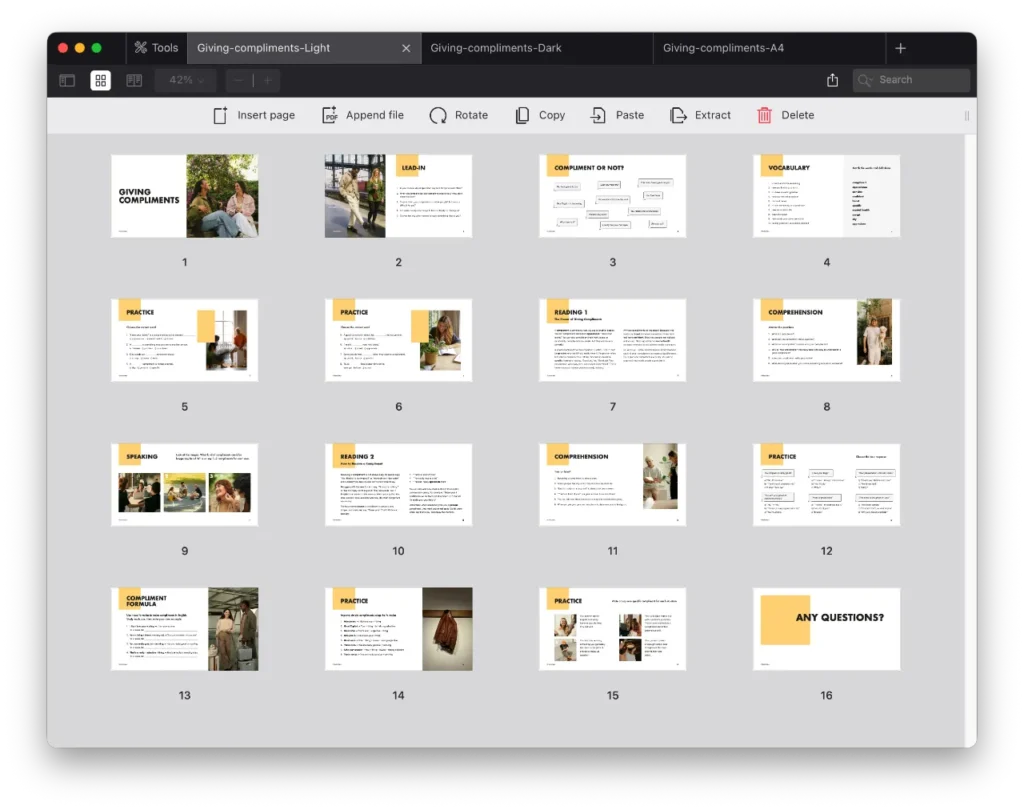
Contents
- Lead-in
- Compliment or Not?
- Vocabulary
- Practice
- Reading 1
- Comprehension
- Speaking
- Reading 2
- Comprehension
- Practice
- Compliment Formula
- Practice
Start with the lead-in questions and keep it light. Ask students when someone last said something nice to them and how it felt. The question about whether it’s easier to compliment friends versus strangers usually gets a good reaction. Give students a moment to think, then take a few answers before moving on.
Move to “Compliment or Not?” before touching the vocabulary. Students sort phrases into compliments and non-compliments. It’s quick, low-pressure, and it works because students have to think about what a compliment actually is before reading a definition. Two minutes is enough.
Go through the vocabulary matching together. Ten words to cover: compliment, appearance, genuine, confident, boost, specific, mental health, accept, shy, and appreciate. Don’t just check answers. Spend time on two or three words that might trip students up, like “boost” or “genuine.” Asking for an example sentence locks the meaning in better than reading a definition.
Students read the first short text on how to give compliments and answer six comprehension questions. Ask them to underline the two qualities of a good compliment as they read. The second reading covers how to receive a compliment. The “choose the best response” exercise works well in pairs. Students often laugh at the bad options, which helps them notice the difference between a natural reply and an awkward one.
The formula section is the most practical part of this giving compliments lesson. Give students a few minutes to study the four structures and write their own examples. The speaking activity shows three situations: a job interview, two friends talking, and someone looking in a mirror. Pairs write one or two compliments for each image. It’s a good way to wrap up and get students using what they’ve practiced.
