
The Four-Step Guide to Spot Misinformation
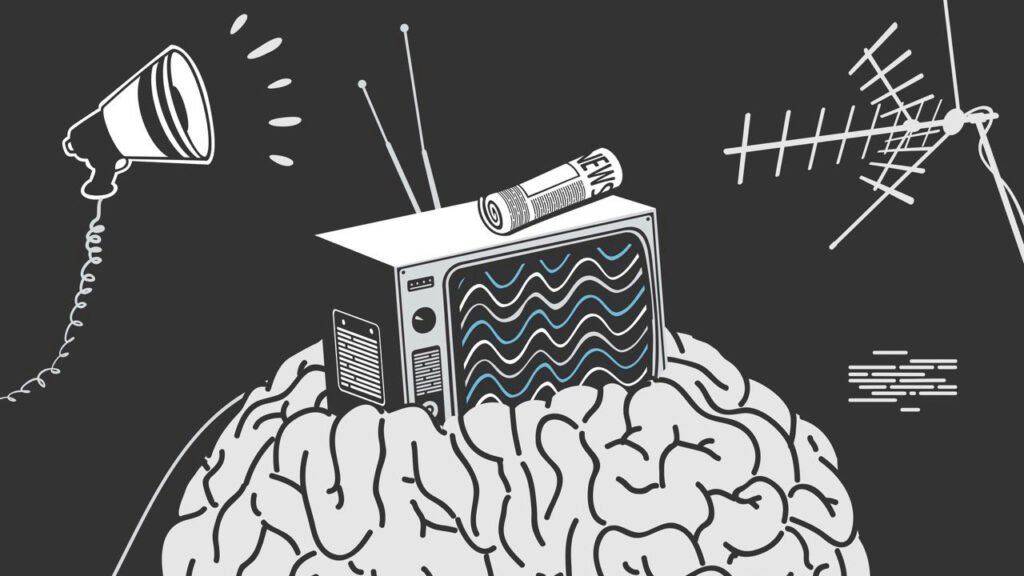
This C1 lesson teaches students how to identify and combat misinformation using the SIFT method: Stop, Investigate, Find, and Trace. Students read a 1,348-word article about fake news, learn 12 advanced vocabulary words like “rampant” and “pernicious,” and discuss the difference between misinformation and disinformation. The lesson includes a BBC quiz, collocation practice, and a fun fake news generator activity.
Lesson overview
- Learn the SIFT method for identifying misinformation and fake news online
- Master 12 advanced vocabulary words through collocations and gap-fill exercises
- Analyze a challenging article on social media misinformation and vaccination coverage
- Develop critical thinking skills through discussions on media literacy and propaganda
| Level | Vocabulary | Reading Time | Lesson Time |
| C1 / Advanced | 12 words | 1348 words / 7 min | 60-80 min |
Vocabulary
- rampant
- dire
- uptick
- bias
- onslaught
- discern
- amplify
- inoculate
- pernicious
- sleuthing
- credible
- onerous
Contents
- Lead-in
- Short quiz
- Vocabulary
- Article
- Summary
- Questions
- Collocations
- Practice
- Discussion
- Answer
- Fake news generator
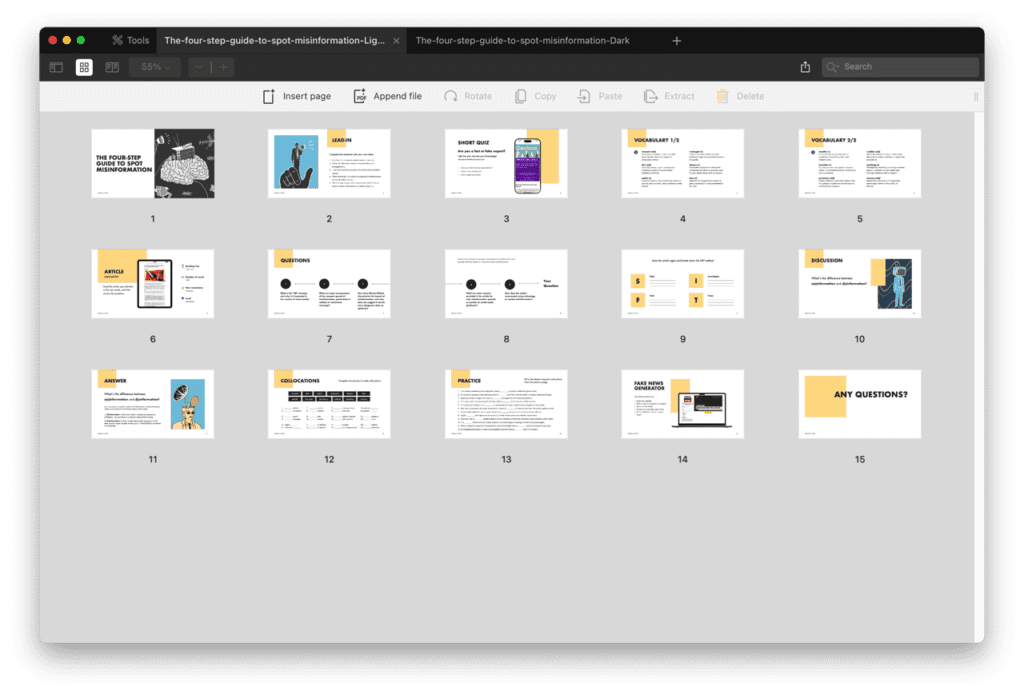
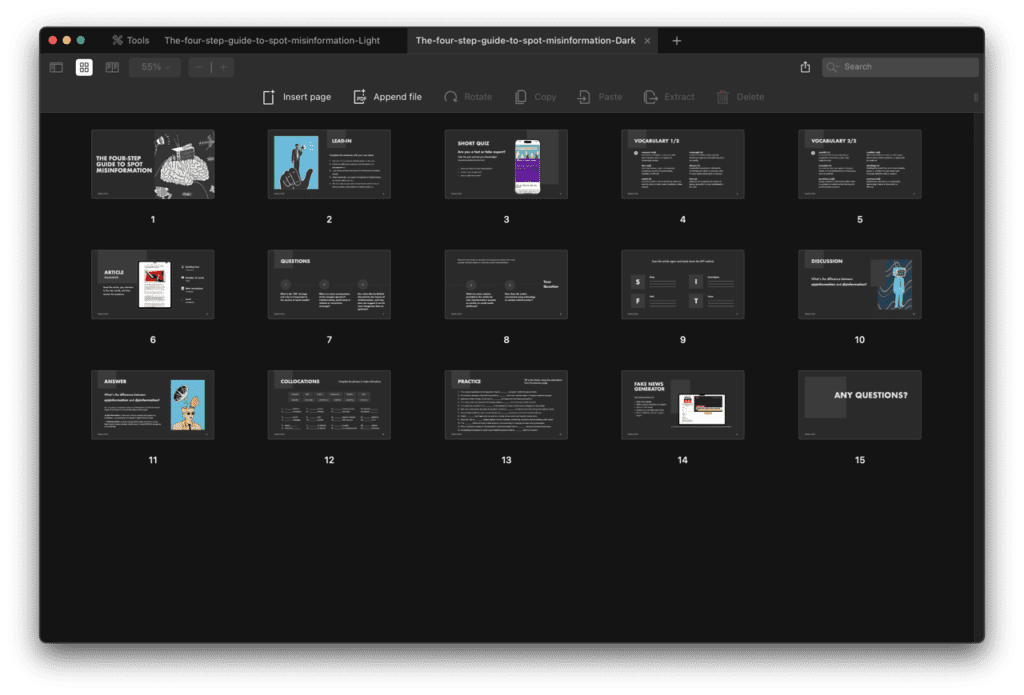
Begin with the sentence completion activity on page 2. These five prompts get C1 students talking about their experiences with fake news and opinions on combating it. Then move to the BBC quiz on page 3. Students take it individually on their devices. After the quiz, discuss results as a class. Someone always gets tricked by at least one fake story.
Pages 4-5 introduce 12 advanced vocabulary words with definitions. Cover these before the reading or students will get stuck on “pernicious” and “onerous.” The reading on page 6 is 1,348 words and takes about 7 minutes. Students read independently first, then tackle the five questions on pages 7-8 in small groups. Page 9 has them scan the article again to break down the SIFT method into its four steps.
Pages 10-11 explain the difference between misinformation and disinformation using a memory trick with the first three letters. The collocation exercises on pages 12-13 reinforce the vocabulary. Page 12 has 24 collocations to complete, and page 13 puts those collocations into context sentences. Expect students to mix up “rampant corruption” and “rampant inflation” at first.
Wrap up with the fake news generator on page 14. Students use the website to create humorous fake news stories with headlines, captions, and images. After the heavy topic, they need this. Plus it shows them how easy fake news is to make.
