
Economy or Business Class?
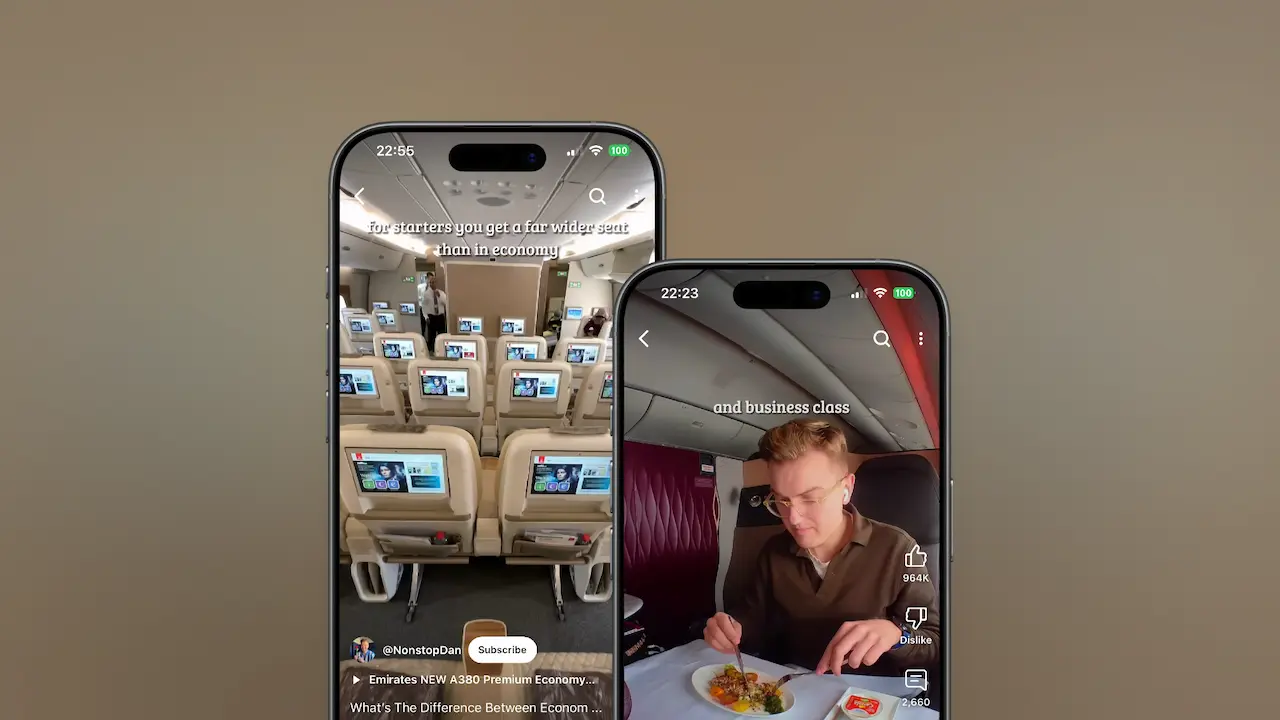
This B1 lesson compares economy, premium economy, business, and first class flying through vocabulary, short videos, and discussion. Students learn words like “amenities,” “recline,” and “leg space” while ranking what matters most to them on a flight. It is a fun topic that works well with students who travel or dream about upgrading one day.
Lesson overview
- Learn twelve vocabulary words related to flights, seating, and in-flight comfort
- Watch two short videos comparing economy, premium economy, business, and first class
- Practice vocabulary through gap-fill, error correction, and true or false activities
- Design a dream airline with custom ticket classes and present it to the class
| Level | Vocabulary | Video Length | Lesson Time |
| B1 / Intermediate | 12 words | 2 min | 60 min |

Vocabulary
- economy class
- business class
- amenities
- recline
- flight attendant
- lounge
- seat padding
- leg space
- terminal
- in a nutshell
- luxurious experience
- unrestricted space
Contents
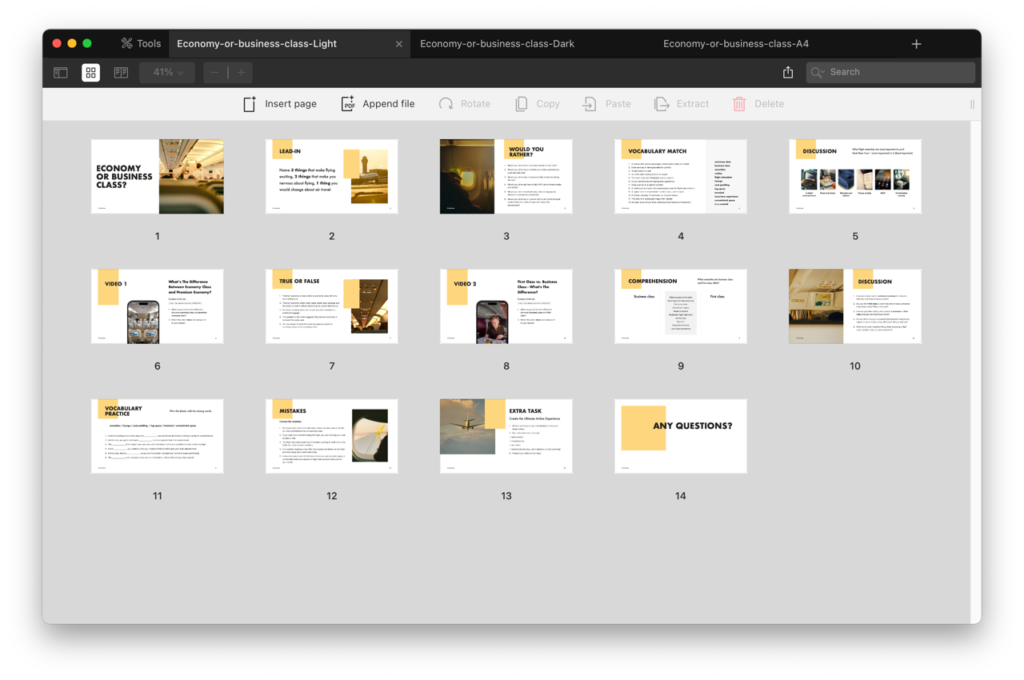
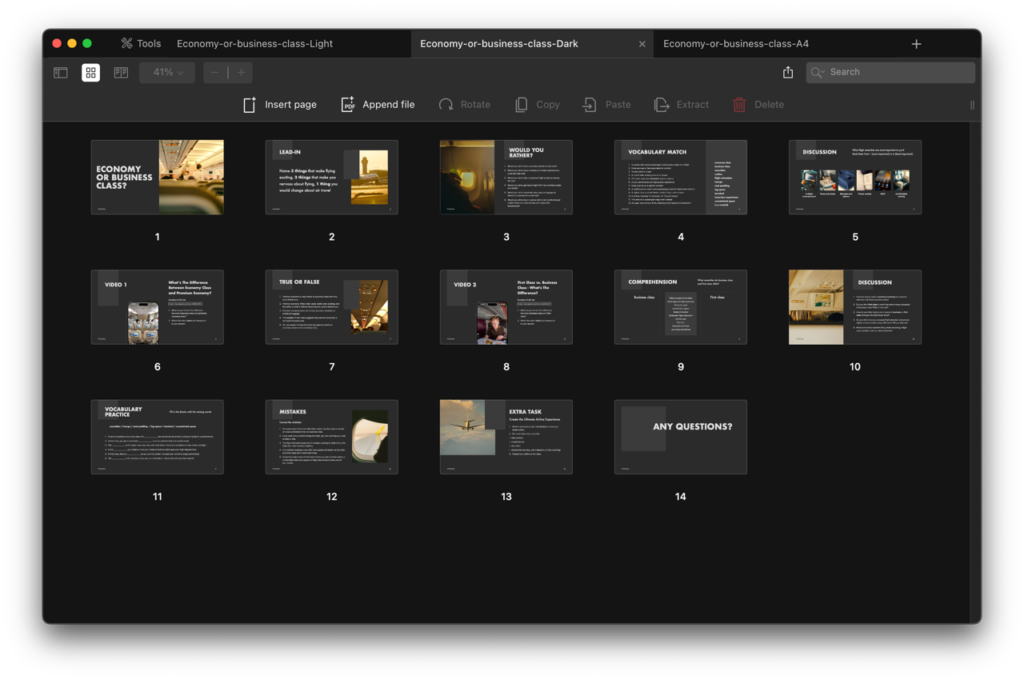
- Lead-in
- Would you rather?
- Vocabulary match
- Discussion
- Video 1
- True or false
- Video 2
- Comprehension
- Discussion
- Vocabulary practice
- Mistakes
- Extra task
Start with the 3-2-1 lead-in. Students name three things that make flying exciting, two things that make them nervous, and one thing they would change about air travel. This structure keeps answers focused and works well even with quieter students. Follow up with the “would you rather” questions. These are light and fun, and pairs like “free Wi-Fi or unlimited snacks” always split the room. Give students a few minutes in pairs before sharing answers with the group.
Move into the vocabulary matching next. Twelve words is a solid set for B1, but many of them are practical and easy to picture. “Recline,” “leg space,” and “flight attendant” are words students will actually use at an airport. “In a nutshell” is worth highlighting because it is a useful phrase beyond this topic. After matching, the amenities ranking activity gets students talking about personal preferences. Have them rank the six options individually first, then compare with a partner. Disagreements here are good because they push students to explain their choices using the new vocabulary.
Play the first short video comparing economy and premium economy. It is under a minute, so play it twice. The true or false task checks comprehension on specific details like seat padding, recline ability, and extra luggage. Go through answers together and ask students to correct the false statements in their own words. Then play the second video comparing business and first class. The comprehension task here asks students to sort amenities into the correct category. Some items like “meals and alcohol” appear in both, which makes the sorting trickier and sparks useful discussion about what actually separates the two classes.
Wrap up with the practice activities and the creative task. The gap-fill reinforces vocabulary in new sentences, and the error correction exercise targets common B1 grammar mistakes mixed in with the flight vocabulary. These work well as pair activities. End with the dream airline task. Groups design their own airline with custom seat classes, food, amenities, and special services. Give them about ten minutes to plan, then have each group present. Students enjoy this because they get creative with ridiculous first class perks, and it gives them a natural reason to use every vocabulary word from the lesson.
