
Desserts We Love

This A2 lesson teaches dessert vocabulary through pictures, reading, and discussion. Students learn the names of twelve popular desserts like brownies, mochi, and tiramisu, then practice adjectives to describe flavors and textures. The lesson includes four short reading texts about famous desserts from different countries.
Lesson overview
- Learn names of twelve common desserts from around the world
- Practice adjectives like sweet, crispy, chewy, and creamy
- Read about the history of fortune cookies, tiramisu, mochi, and lemon tarts
- Discuss dessert preferences and answer comprehension questions
| Level | Vocabulary | Lesson Time |
| A2 / Pre-Intermediate | 24 words | 60 min |

Vocabulary
- brownie
- macaron
- gelato
- tiramisu
- mochi
- cupcake
- cheesecake
- egg tart
- fortune Cookie
- churros
- lemon tart
- donut
- sweet
- crispy
- soft
- stretchy
- creamy
- chewy
- bitter
- sour
- light
- fresh
- rich
- delicious
Contents
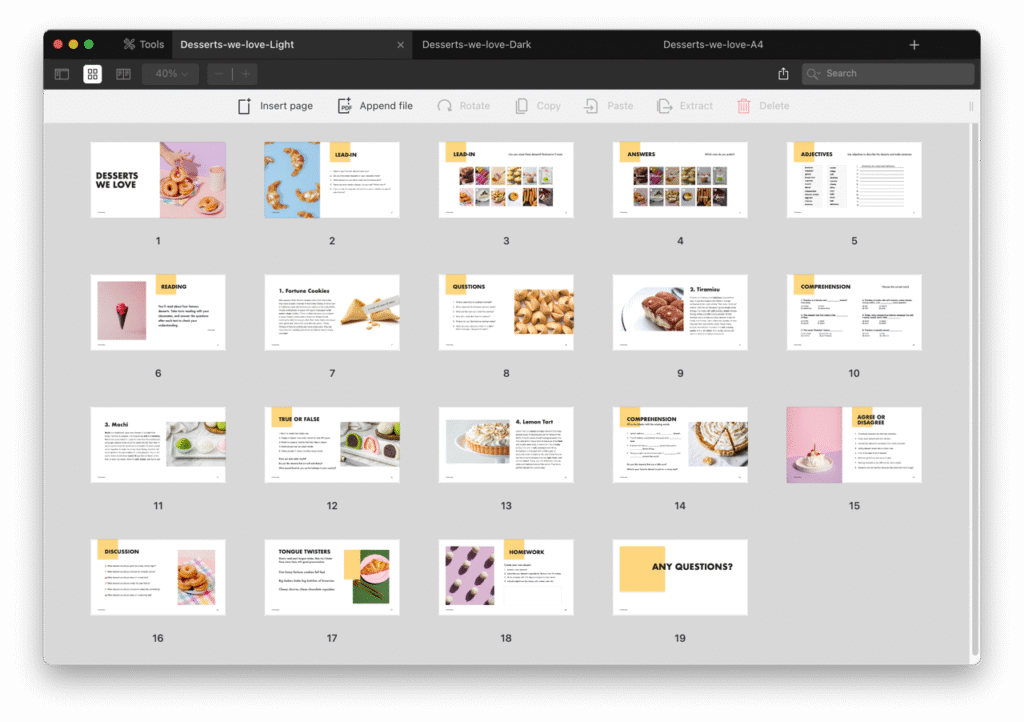
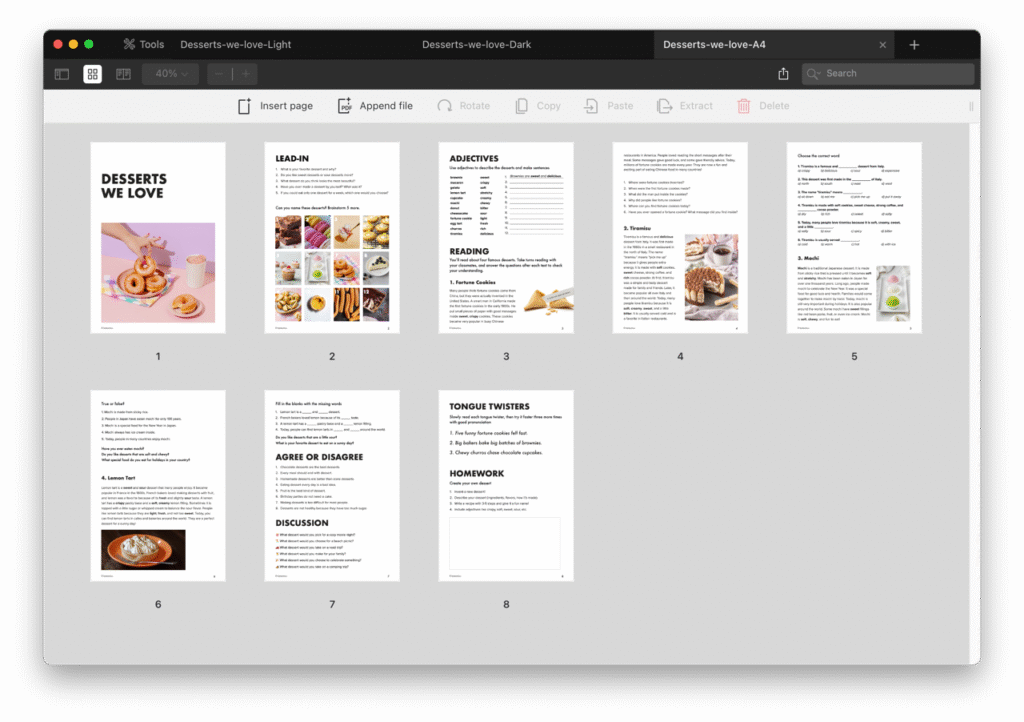
- Lead-in
- Adjectives
- Reading 1: Fortune Cookies
- Questions
- Reading 2: Tiramisu
- Comprehension
- Reading 3: Mochi
- True or false
- Reading 4: Lemon Tart
- Comprehension
- Agree or disagree
- Discussion
- Tongue twisters
- Homework
Start with the lead-in questions about favorite desserts. Students usually have strong opinions about sweets, so this gets them talking right away. Then move to the picture activity where they name the twelve desserts. Some students will know most of them, others will know just a few. Let them work in pairs to help each other before checking answers as a class.
The adjectives section teaches useful descriptive words. Students match adjectives to desserts and make simple sentences. Model a few examples first, then let them write their own. Check that they understand the difference between words like “chewy” and “crispy” since these textures might be new vocabulary.
The reading section has four short texts about desserts from different countries. You can have students take turns reading aloud or read silently first. Each text has different question types so students practice various skills. Fortune cookies has basic questions, tiramisu uses multiple choice, mochi has true or false, and lemon tart uses fill in the blanks. This variety keeps things interesting.
The agree or disagree activity works well as a quick discussion. Students can talk in pairs or small groups about statements like “Chocolate desserts are the best” or “Every meal should end with dessert.” The discussion questions about different situations give students a chance to use the dessert vocabulary naturally. The tongue twisters at the end are just for fun and pronunciation practice.
