
Super Commuting
This B2 lesson is about super commuting and why some people travel hundreds of miles to get to work. Students watch a video about a real super commuter, learn vocabulary related to commuting and housing costs, and discuss whether extreme commutes are worth it. It’s a great topic for classes that enjoy real-world issues.
Lesson overview
- Learn 10 vocabulary items related to commuting, housing, and daily expenses
- Watch and discuss a video about a real super commuter in New York
- Practice expressing opinions on work-life balance and commuting trade-offs
- Analyze two case studies and give advice on commuting decisions
| Level | Vocabulary | Video Length | Lesson Time |
| B2 / Upper-Intermediate | 10 words | 2:12 min | 60 min |


Vocabulary
- Super commuter
- Involve
- Average rent
- Transfer
- It works both ways
- Hustle and bustle
- Underscore
- Unaffordability crisis
- Household
- Cover basic needs
Contents
- Lead-in
- Vocabulary Preview
- Vocabulary
- Video
- Questions
- Comprehension
- Discussion
- Agree or disagree
- Case study
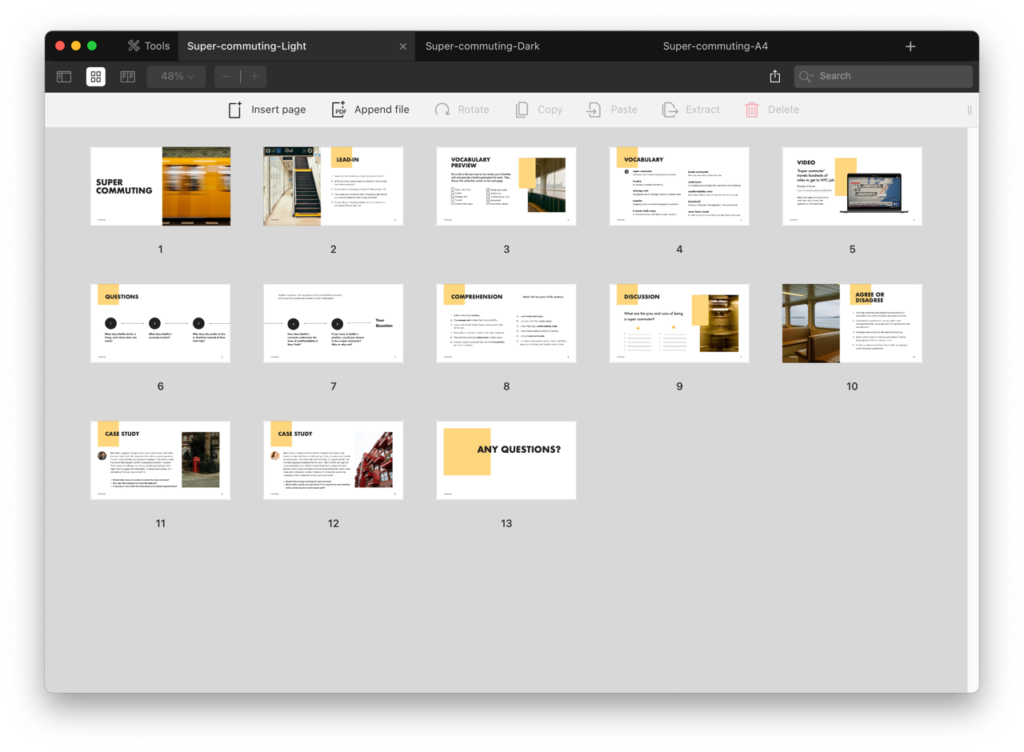
Open with the lead-in questions on slide 2. These get students talking about their own commutes and how far they’d be willing to travel for a job. Most students have strong opinions here, so even quieter groups tend to engage. Spend about five minutes on this before moving to vocabulary.
Go through the vocabulary preview on slide 3. Let students check the words they already know and try to explain them. Then review the full definitions on slide 4. Words like “hustle and bustle” and “it works both ways” are good ones to drill because students often recognize them but struggle to use them on their own. Once the vocabulary feels solid, play the video on slide 5. It’s about Kaitlin, a woman who flies from Charlotte to New York City for work. After watching, have students answer the comprehension questions on slides 6 and 7, then do the sentence matching on slide 8.
The second half of the lesson is all discussion. Slide 9 asks students to list pros and cons of being a super commuter, which works well in pairs. The agree or disagree activity on slide 10 is good for practicing opinion language. Give students a couple of minutes to read the statements, then discuss as a class.
Finish with the two case studies on slides 11 and 12. Alex is a graphic designer commuting from Manchester to London, and Sarah is a tattoo artist who travels between European cities. Both cases ask students to weigh the costs and benefits of long commutes and give practical advice. These work best in small groups of three or four, with a short class feedback round at the end.
