
Skiing or Snowboarding?
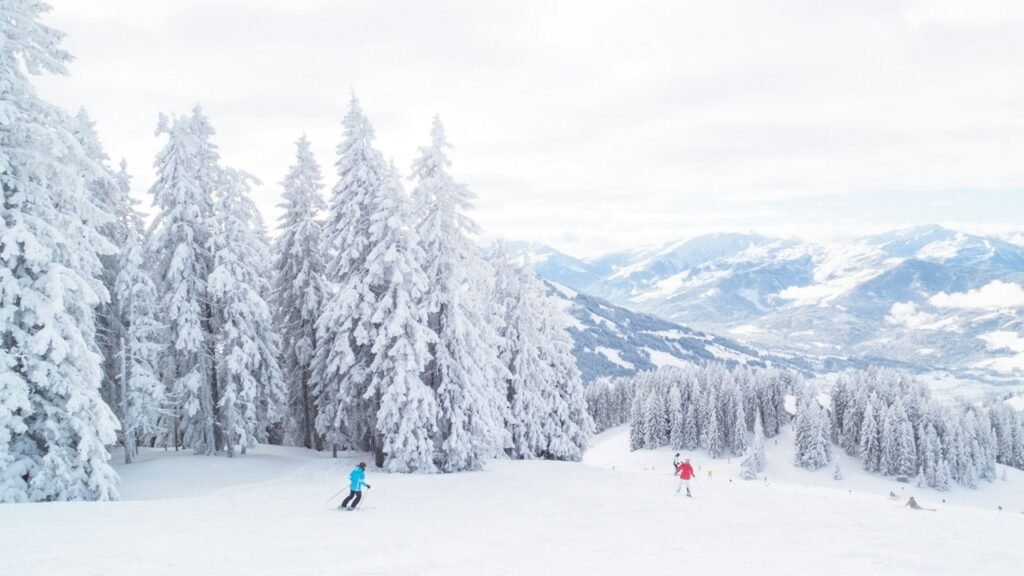
This B1 lesson compares skiing and snowboarding and helps students talk about winter sports in English. Students learn vocabulary like “balance,” “flexibility,” and “core,” read a short text about choosing between the two sports, and practice through role plays and opinion activities. It’s a great lesson for winter months or classes with students who enjoy outdoor sports.
Lesson overview
- Learn eight vocabulary words related to fitness, movement, and winter sports
- Read a short text comparing skiing and snowboarding for beginners
- Practice expressing opinions through agree or disagree statements about winter sports
- Role-play a conversation between an experienced skier and a complete beginner
| Level | Vocabulary | Lesson Time |
| B1 / Intermediate | 8 words | 60 min |
Vocabulary
- balance
- tricky
- progress
- quick thinking
- instructions
- fitness
- core
- flexibility
Contents
- Lead-in
- Winter activities
- Vocabulary match
- Reading
- Questions
- Vocabulary practice
- Agree or disagree
- Role-play
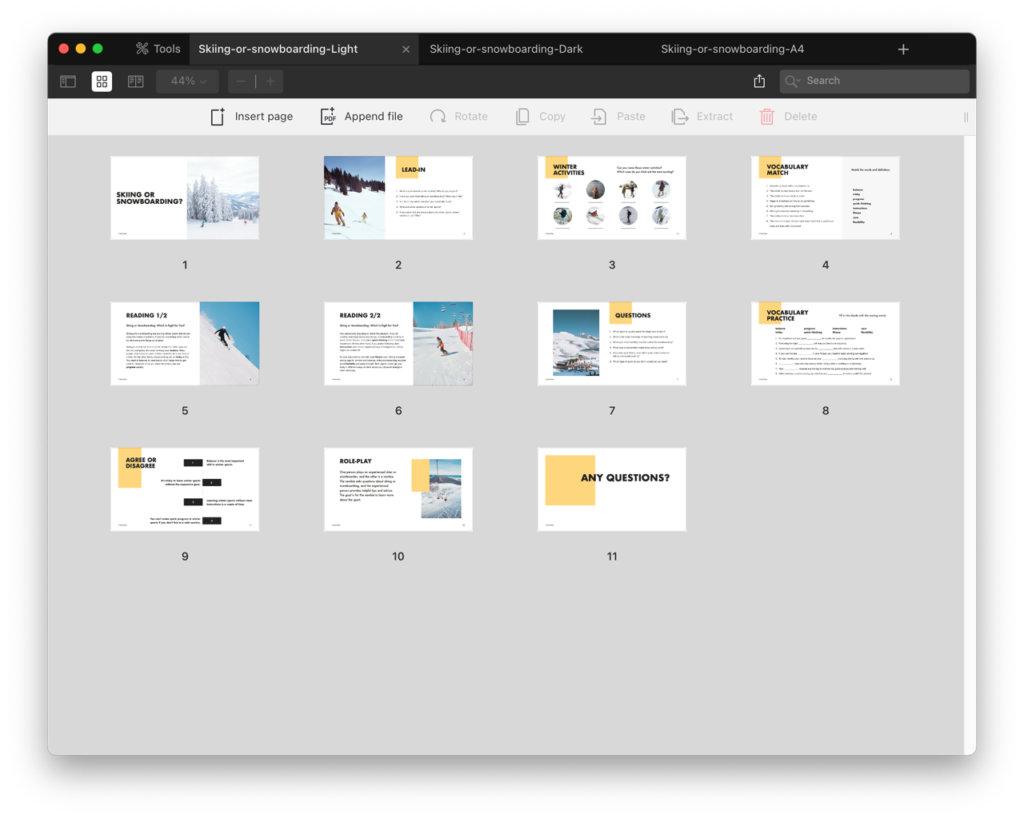
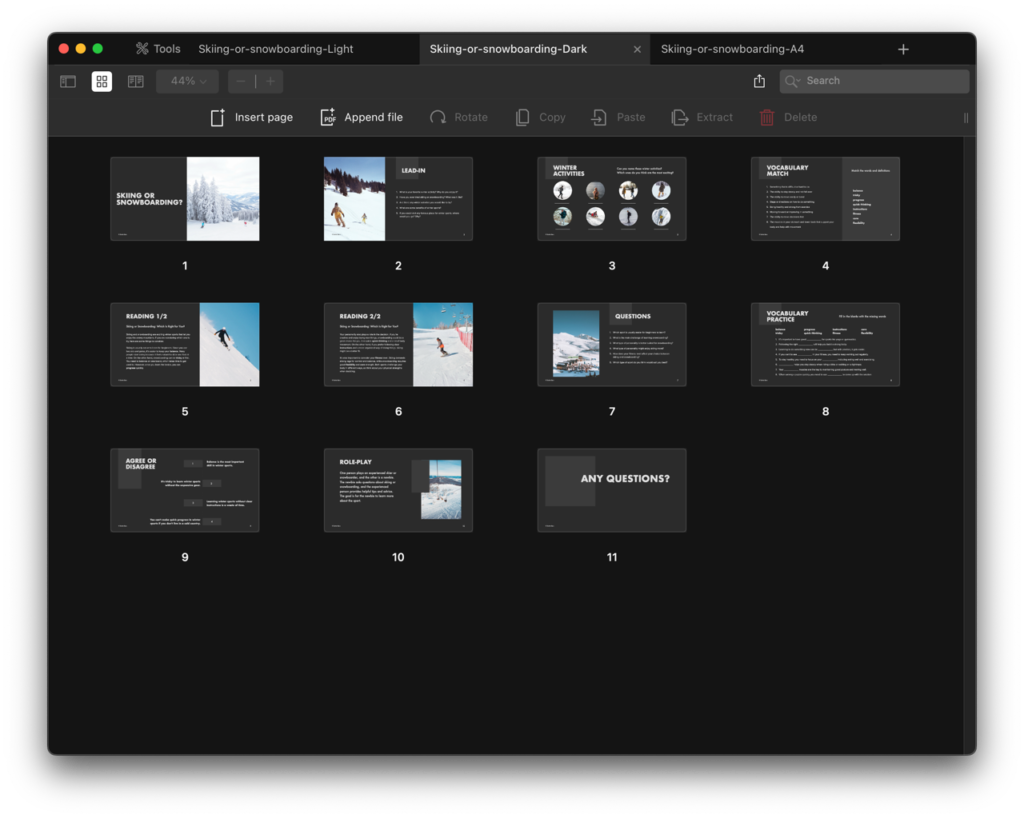
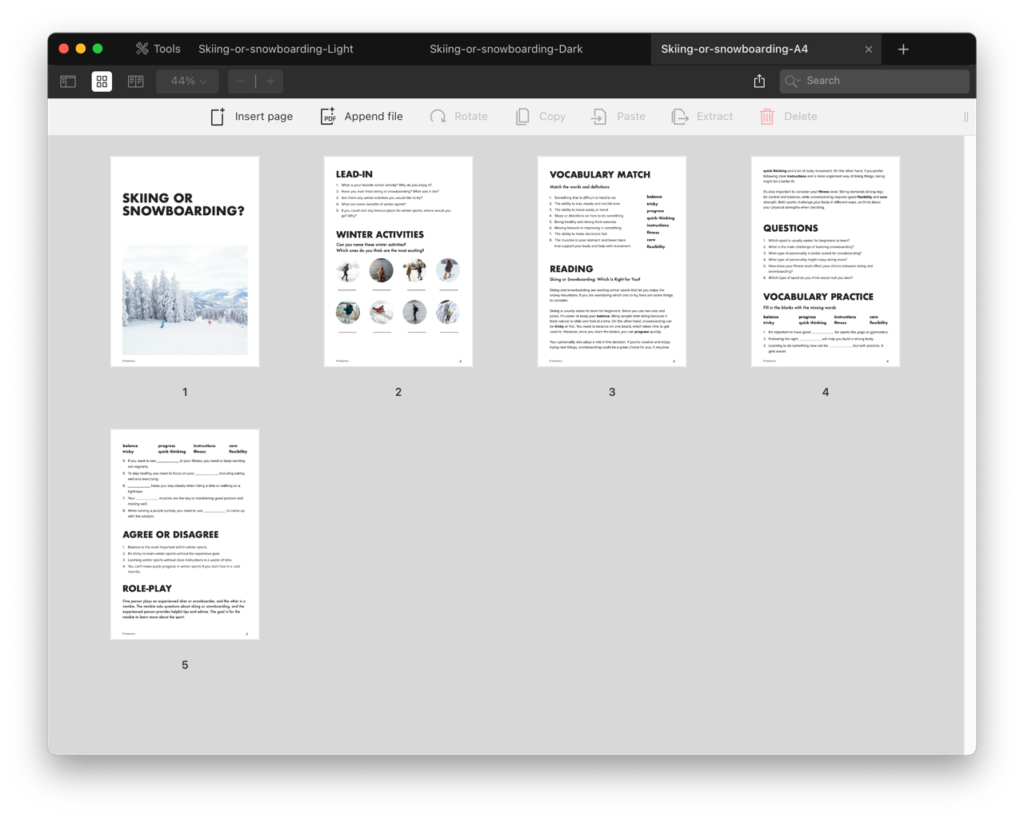
Start with the lead-in on slide 2. Most students have an opinion about winter sports even if they’ve never tried them, so these questions warm up the room quickly. Slide 3 shows eight winter activity pictures for students to name. This is a nice visual warm-up that builds vocabulary before the main lesson. Don’t worry if students can’t name all of them. Use it as a chance to teach words like “ice skating” or “sledding” if they come up blank.
Move into the vocabulary matching on slide 4. There are eight words, and the matching format keeps things moving. “Core” and “flexibility” are worth spending a minute on because B1 students sometimes know these words from gym contexts but can’t explain them clearly in English. Once you’ve checked the answers, go straight into the reading on slides 5 and 6. It compares skiing and snowboarding in terms of difficulty, personality fit, and physical demands. Have students read it once, then answer the six questions on slide 7 in pairs. Question 6 asks which sport would suit them personally, which usually gets a good back-and-forth going.
The gap-fill exercise on slide 8 reviews the vocabulary in new sentences. After that, the agree or disagree activity on slide 9 has four statements like “balance is the most important skill in winter sports” and “you can’t make quick progress if you don’t live in a cold country.” These work well as a class discussion because students have to justify their answers, not just say yes or no.
Finish with the role play on slide 10. One student plays an experienced skier or snowboarder and the other plays a complete beginner asking for tips and advice. Give pairs a few minutes to prepare, then have them perform for the class or swap partners and try again. This pulls together the vocabulary and reading content in a natural, speaking-focused way.
