
Pokémon Cards
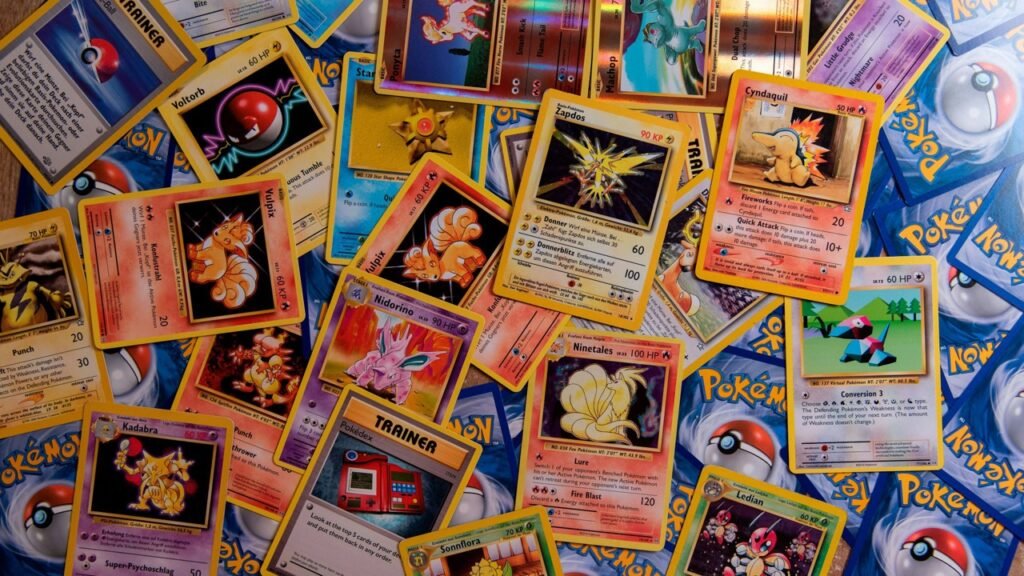
This B2 lesson uses the world of Pokémon card collecting to get students talking about hobbies, money, and lifestyle changes. Students pick up vocabulary like “graded,” “fluctuations,” and “rare” through listening tasks, role-plays, and opinion-based discussions. It is a fun topic that gets even non-collectors sharing strong opinions.
Lesson overview
- Learn ten vocabulary words connected to collecting and card values
- Practice listening for detail with a real Pokémon card collector’s story
- Debate whether hobbies can turn into careers through role-play scenarios
- Discuss opinions on spending, collecting, and what makes things valuable
| Level | Vocabulary | Audio Length | Lesson Time |
| B2 / Upper-Intermediate | 10 words | 2:37 min | 60 min |


Vocabulary
- collectible
- rare
- graded
- fluctuations
- surreal
- overnight
- cardboard
- deposit
- exposed to
- transformed
Contents
- Lead-in
- Pictures
- Vocabulary match
- Practice
- Listening 1
- Listening 2
- Agree/disagree
- Role-plays
- Quote
- Writing
- Homework
- Transcript
Start with the lead-in questions about hobbies and collecting. Most B2 students will have something to say here, even if they have never touched a Pokémon card. The photo discussion on the next slide helps set the scene. Ask students whether they would spend serious money on a small card, and let them explain why or why not. This warms up the opinions they will need later.
Move into the vocabulary matching next. Words like “fluctuations,” “graded,” and “surreal” might be new, but others like “rare” and “overnight” should feel familiar. Go through the matching first, then have students complete the gap-fill sentences. Check answers together and ask a few quick concept questions to make sure the trickier words stick. For example, ask “Can you give me an example of something that changed overnight?” to test their understanding.
The two listening tasks are the core of the lesson. Play the audio once for general understanding, then again for the detail questions. The speaker talks naturally and at a good pace for B2 learners, but words like “conventions” and “graded a 10” might need a quick explanation. After listening, the agree or disagree activity works well in small groups. Statements like “A hobby can’t change your life overnight” tend to split the room, which is exactly what you want.
Finish with the role-plays. The family debate and job interview scenarios push students to use the target vocabulary in context. Give pairs a minute to read their roles before starting. These role-plays work best when students commit to their characters, so encourage them to have fun with it. If time allows, the writing task and homework recording give students extra practice outside class.
