
Freelancing
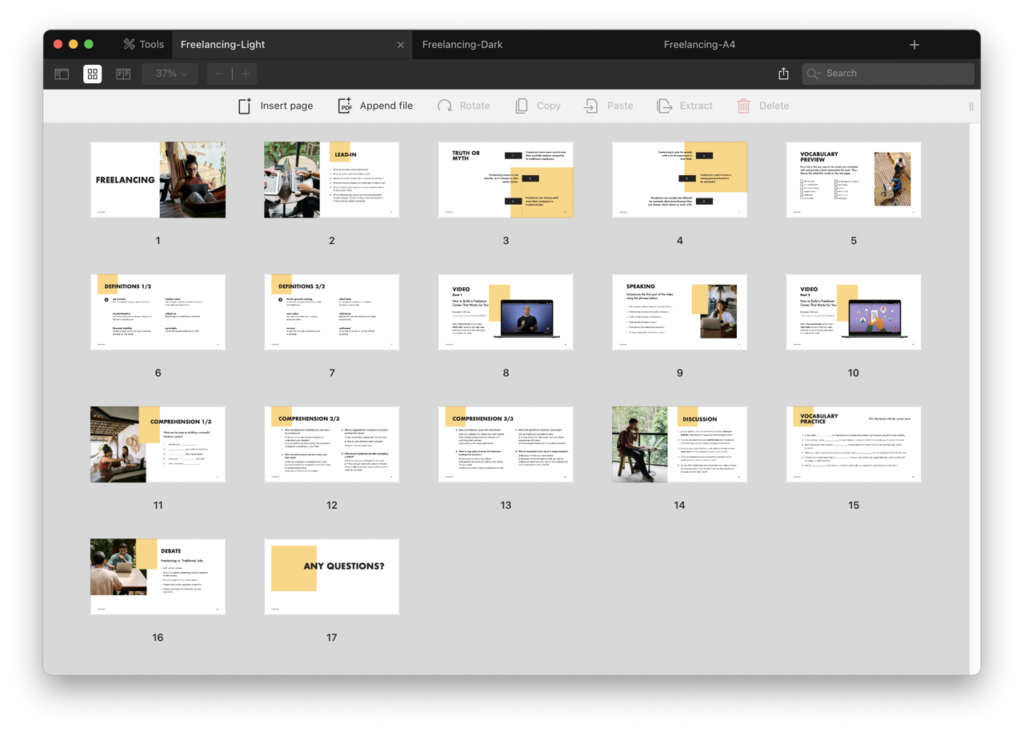
This B2 lesson explores freelancing through vocabulary, a TED-style video, and structured debate. Students learn business English phrases like “hit the ground running,” “market value,” and “client base” while discussing what it takes to build a freelance career. It is a strong choice for working professionals or students thinking about going independent.
Lesson overview
- Learn twelve business English words and phrases related to freelancing and careers
- Watch a video in two parts on how to build a freelance career that works for you
- Answer comprehension questions and summarize key advice using guided phrases
- Debate whether freelancing or traditional employment is the better career path
| Level | Vocabulary | Video Length | Lesson Time |
| B2 / Upper-Intermediate | 12 words | 3:53 min | 60 min |
Vocabulary
- job security
- counterintuitive
- financial stability
- market value
- reliant on
- up-to-date
- hit the ground running
- core value
- nurture
- client base
- references
- withstand
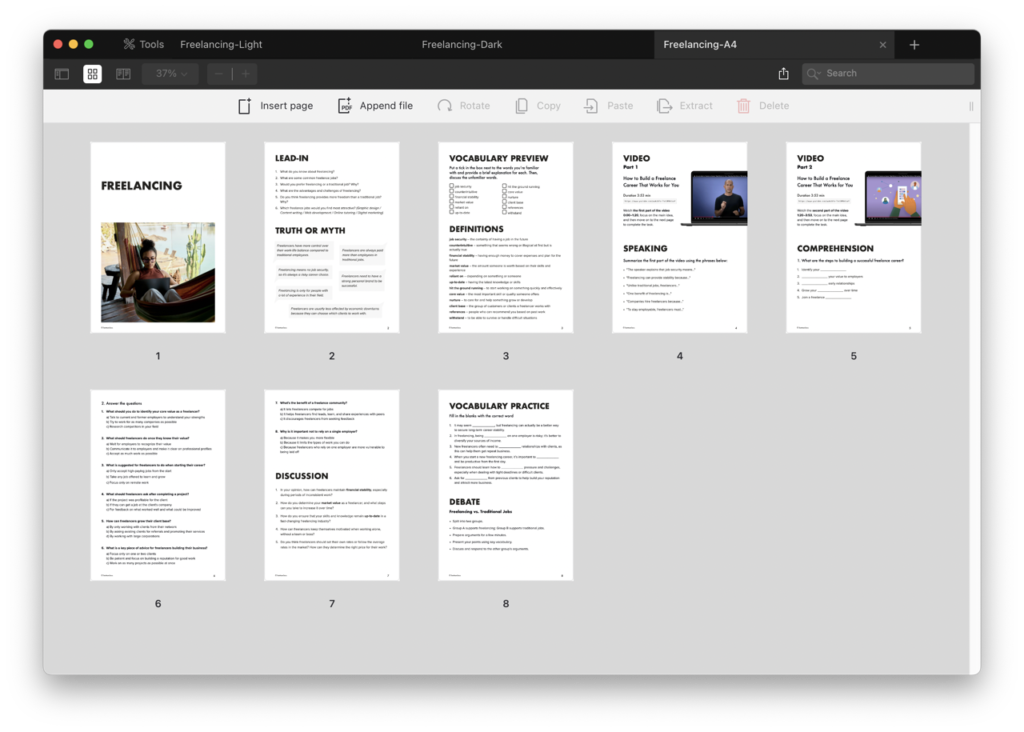
Contents
- Lead-in
- Truth or myth
- Vocabulary preview
- Definitions
- Video
- Speaking
- Video
- Comprehension
- Discussion
- Vocabulary practice
- Debate
Start with the lead-in questions about what students already know about freelancing. Most B2 learners will have heard the term and can name a few freelance jobs, but their understanding of the day-to-day reality is often vague. That is exactly where you want them before the lesson fills in the details. After a few minutes of pair discussion, move to the truth or myth activity. Six statements cover topics like job security, pay, and personal branding. Have students commit to an answer before discussing as a group. Statement two about freelancing always being risky and statement six about economic downturns tend to split opinions nicely.
The vocabulary preview introduces twelve items. Let students tick the ones they know and explain them first. Words like “job security” and “financial stability” are probably familiar, but phrases like “hit the ground running” and “counterintuitive” might need more attention. Give a quick personal example for each tricky one. Something like “I had to hit the ground running at my first teaching job because nobody trained me” makes the meaning stick better than a definition alone. Go through the rest on the definition slides and move on. Students will meet every word again in the video and practice tasks.
Split the video into two parts as the slides suggest. Play the first section up to 1:20 and use the speaking task where students summarize using sentence starters like “The speaker explains that job security means…” and “Unlike traditional jobs, freelancers…” These starters are helpful at B2 because they give structure without limiting what students can say. Then play the second part and move into the comprehension questions. There are eight multiple choice questions across three slides covering the five steps to building a freelance career. Let students work in pairs and check answers together. The questions about identifying your core value and growing your client base connect directly to the discussion that follows.
Wrap up with the discussion, vocabulary practice, and debate. The five discussion questions are open-ended and personal, asking how freelancers stay motivated, set their rates, and keep their skills current. These work well in small groups of three or four. The gap-fill exercise is a quick vocabulary check before the final activity. End with the debate. Split the class into two groups: one supports freelancing, the other supports traditional jobs. Give them a few minutes to prepare arguments, then let each side present and respond. Encourage students to use the target vocabulary in their arguments. This is where the lesson comes together because students need to combine the vocabulary, the video content, and their own opinions all at once.
