
Finding Your Ikigai

This B1 lesson introduces ikigai, the Japanese concept of finding purpose and happiness in life. Students learn vocabulary like “passion,” “vocation,” and “mission,” watch a short video, and answer personal questions to start mapping out their own ikigai. It’s a reflective lesson that works well with groups who enjoy talking about goals, careers, and what makes life meaningful.
Lesson overview
- Learn eight vocabulary words related to purpose, happiness, and career goals
- Watch a short video and discuss the four components of the ikigai concept
- Answer personal questions to identify passions, strengths, and life goals
- Explore similar cultural concepts like hygge, lagom, and kaizen
| Level | Vocabulary | Video Length | Lesson Time |
| B1 / Intermediate | 8 words | 0:58 min | 60 min |
Vocabulary
- passion
- purpose
- vocation
- mission
- profession
- balance
- joy
- strength
Contents
- Quote
- Lead-in
- Vocabulary match
- Vocabulary practice
- Video
- Discussion
- Speaking
- Questions
- Extra words
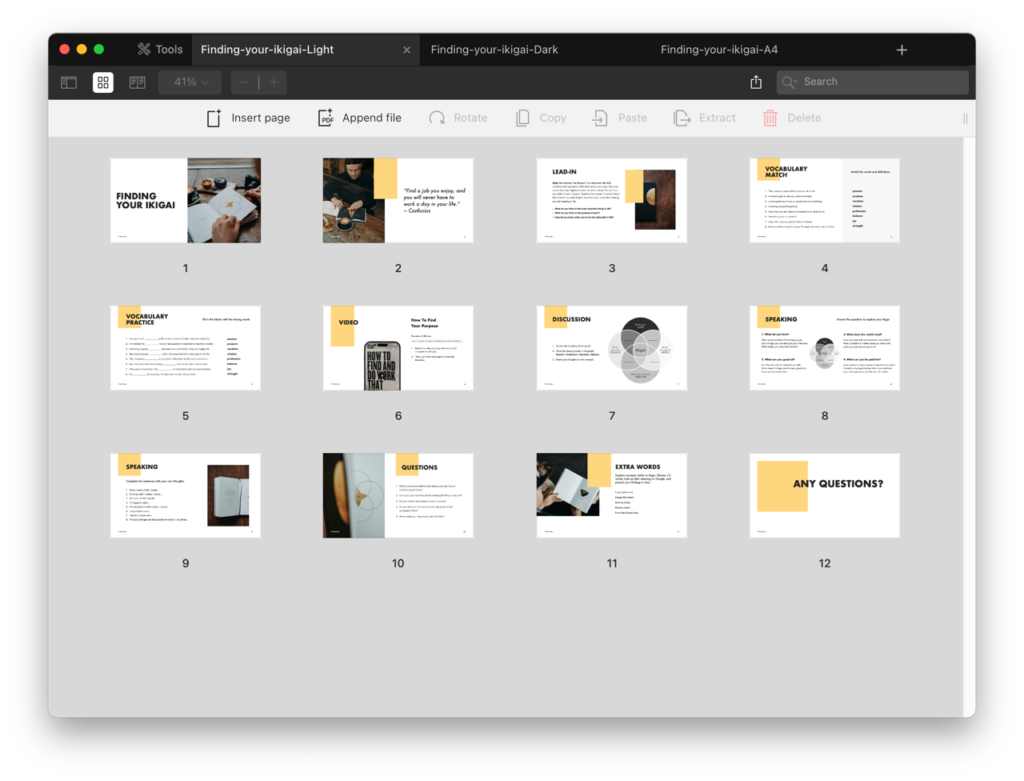
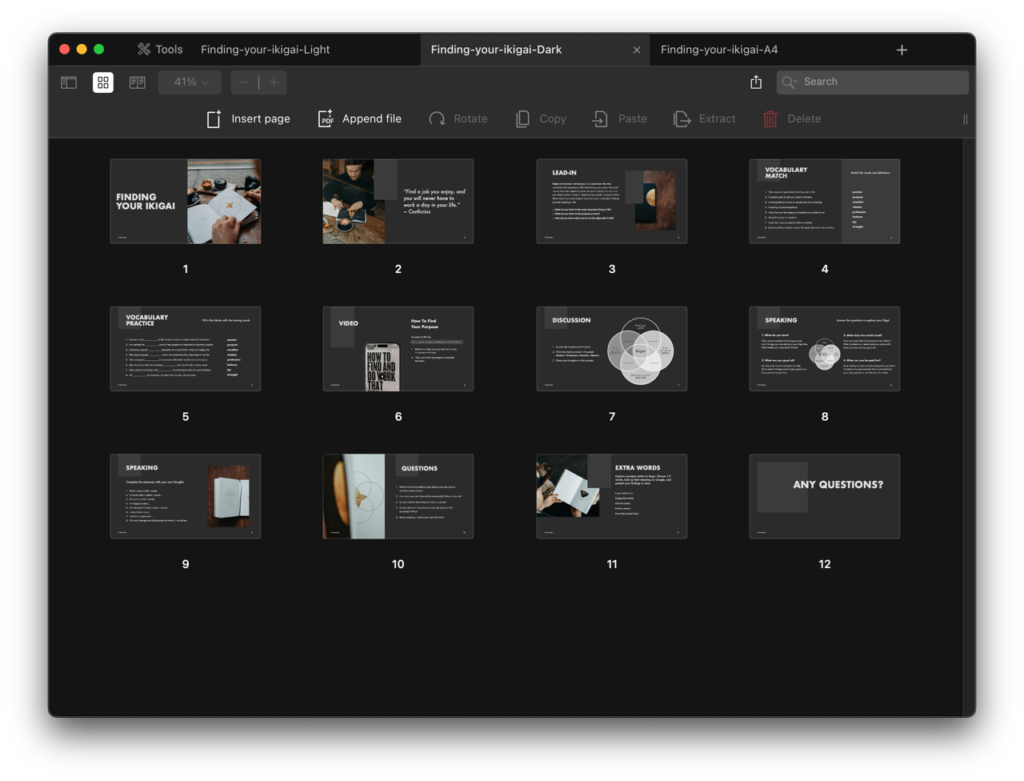
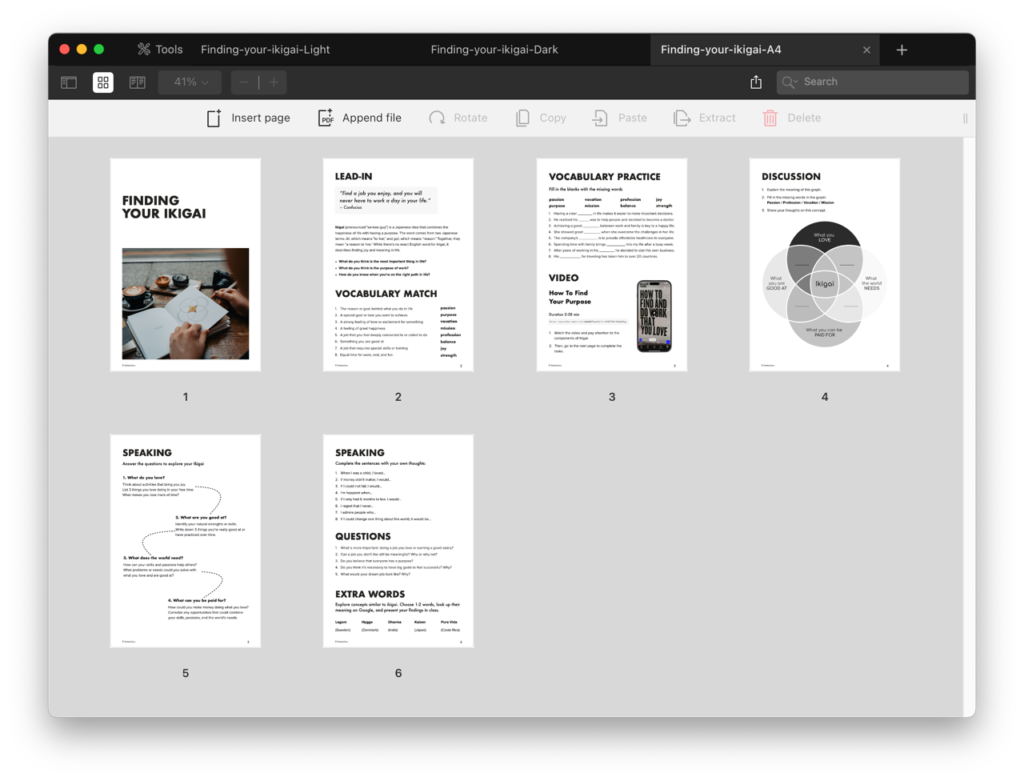
Open with the Confucius quote on slide 2 and give students a minute to react. Then read through the explanation of ikigai on slide 3 together. The lead-in questions here are broad, so pick one or two that fit your class rather than trying to cover all three. “What do you think is the purpose of work?” tends to get the best responses at B1 level.
The vocabulary section on slides 4 and 5 covers eight words. The matching exercise comes first, then a gap-fill activity that puts the words into full sentences. Pay attention to “vocation” and “profession” because B1 students often treat them as the same thing. A quick board note showing the difference helps. Once the vocabulary feels comfortable, play the short video on slide 6. It’s under a minute, so you can play it twice without any trouble.
Slide 7 is where the ikigai diagram comes in. Students fill in the four missing labels and explain how the circles overlap. This is a good pair activity. Give them a few minutes to talk it through before checking as a class. Then move into the speaking activities on slides 8 and 9. Slide 8 walks students through four big questions that map onto the ikigai diagram: what you love, what you’re good at, what the world needs, and what you can be paid for. Students work through these individually first, then share in pairs or small groups. Slide 9 has sentence starters like “If money didn’t matter, I would…” and “I’m happiest when…” that push students to speak more freely.
Finish with the discussion questions on slide 10 and the extra words activity on slide 11. Each student picks a concept like hygge or pura vida, looks it up, and presents a short summary. This makes a nice homework task if you run short on time in class.
