
Climbing Mount Everest

This B2 lesson explores what it takes to climb Mount Everest. Students learn vocabulary like “altitude sickness,” “avalanche,” and “base camp,” then read about the challenges climbers face. The lesson includes three audio clips from a mountain guide discussing fitness requirements, climbing seasons, and temperatures on Everest.
Lesson overview
- Practice vocabulary related to mountain climbing and extreme conditions
- Read about the physical and mental demands of climbing Everest
- Listen to expert advice on training, timing, and weather from a real climber
- Discuss why people attempt dangerous climbs and what questions they’d ask survivors
| Level | Vocabulary | Listening Time | Lesson Time |
| B2 / Upper-Intermediate | 10 words | 3 min | 60 min |
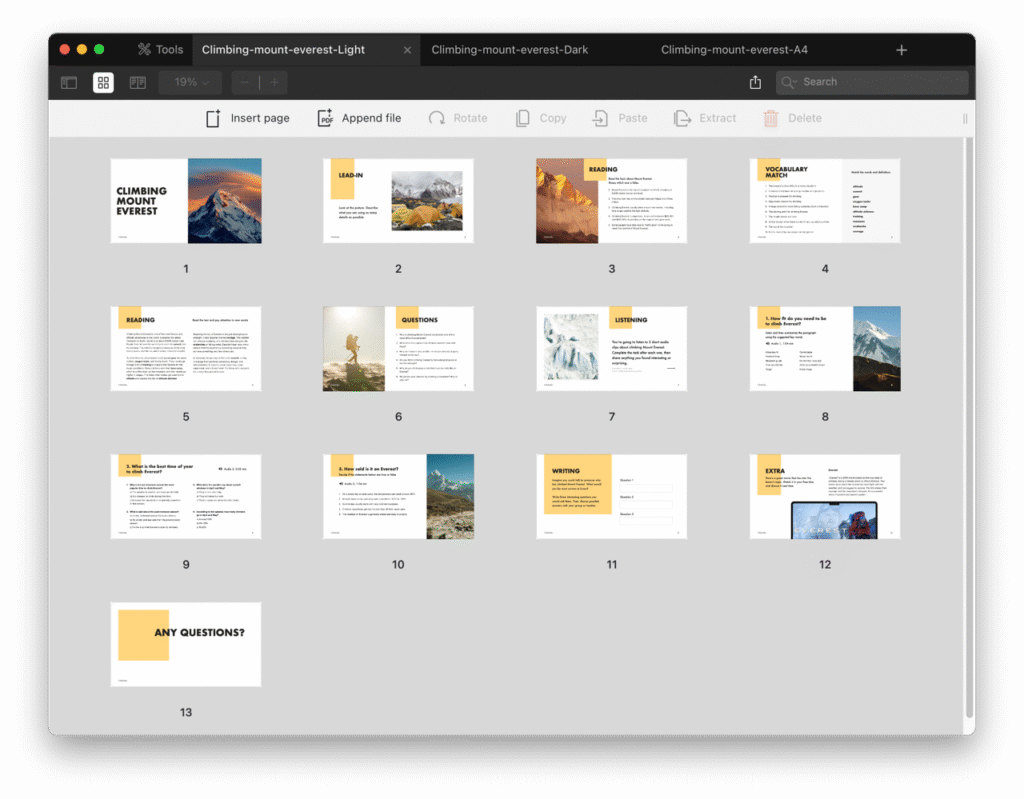
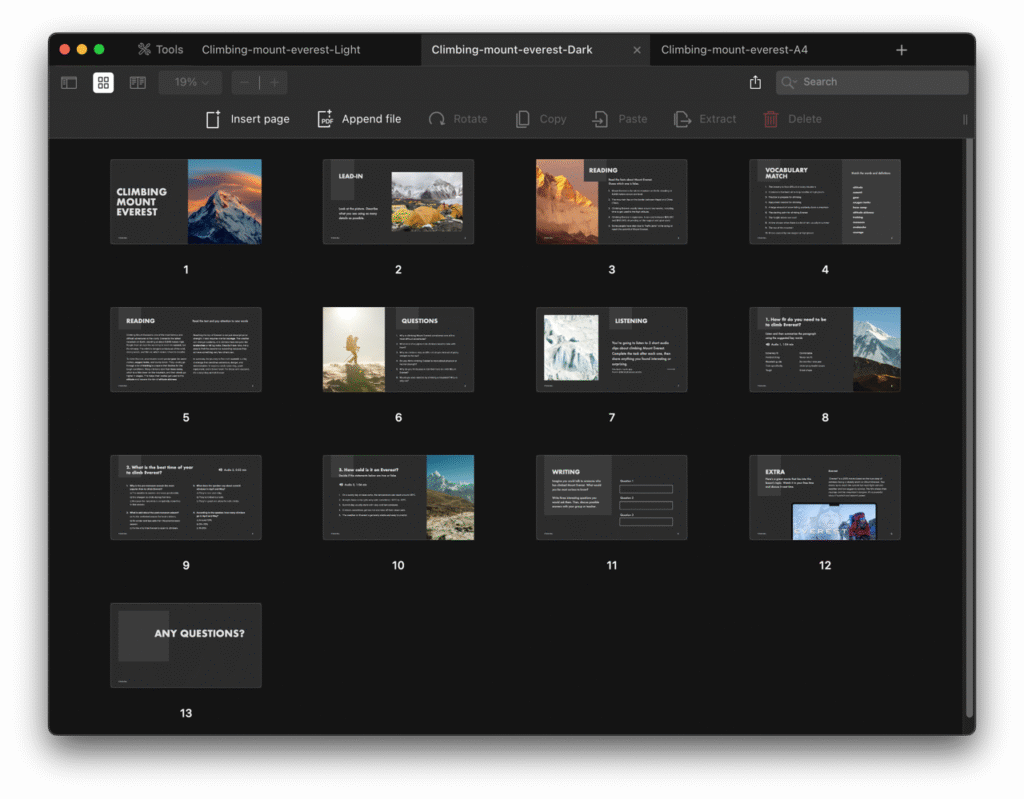
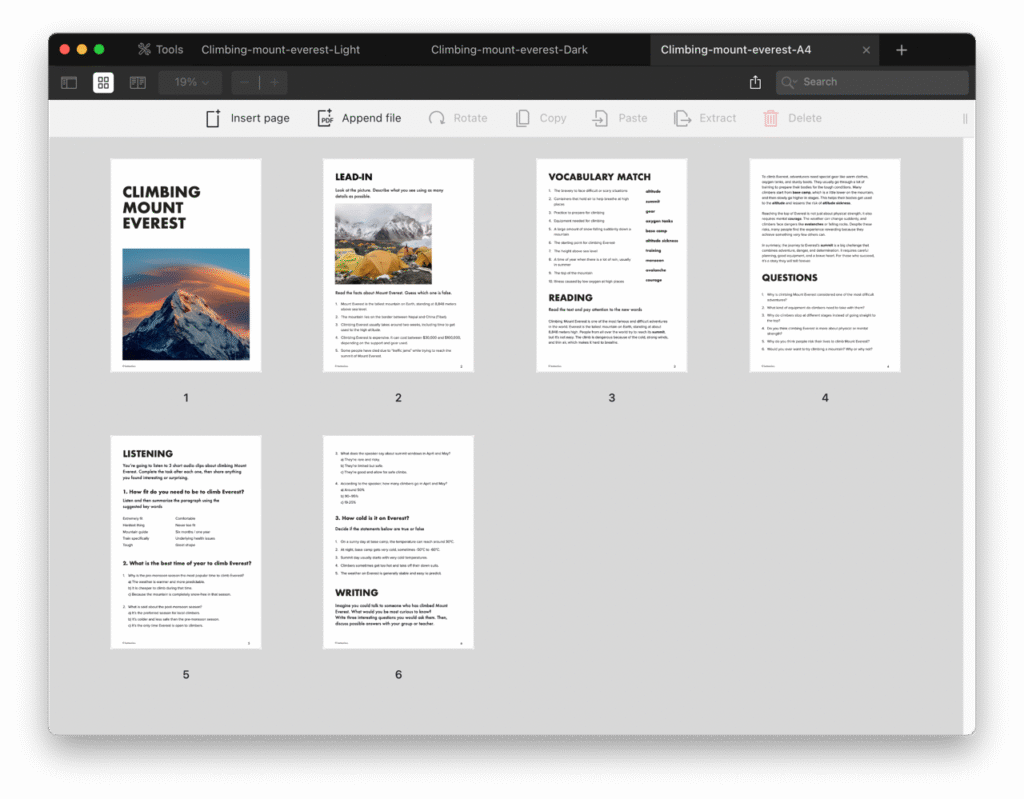
Vocabulary
- altitude
- summit
- gear
- oxygen tanks
- base camp
- altitude sickness
- training
- monsoon
- avalanche
- courage
Contents
- Lead-in
- Reading
- Vocabulary match
- Reading
- Questions
- Listening
- Writing
- Extra
Start with the picture description. Students talk about what they see in the image, which usually shows climbers, snow, or base camp scenes. This activates their background knowledge about Everest. The facts activity has five statements and students guess which one is false. Number five about traffic jams surprises most people because it sounds absurd but it’s actually true.
Go through the vocabulary matching before the reading. Words like “monsoon” and “oxygen tanks” are specific to climbing contexts, while “courage” and “gear” have broader uses. The reading text gives an overview of what climbing Everest involves. It’s straightforward at B2 level but includes all the key vocabulary in context. The comprehension questions check understanding and push students to give opinions on questions four through six.
The listening section has three audio clips from a real mountain guide. Each clip is about one minute long and focuses on a different aspect of climbing. The first audio asks students to summarize using key words you’ve provided. This scaffolds the task so they’re not starting from nothing. The second audio uses multiple choice questions about climbing seasons, and the third has true or false statements about temperature. Playing real audio from actual climbers makes this more engaging than scripted dialogues.
The writing task has students create three questions they’d ask someone who climbed Everest. After writing, they discuss possible answers with partners or as a group. This works on question formation and gets them thinking critically about what information would be most interesting. The movie recommendation for “Everest” gives students something to watch outside class if they want to explore the topic further.
