
The Rise & Fall of Real Christmas Trees

This C1 lesson looks at the history and debate around real versus artificial Christmas trees. Students read an article tracing how real trees went from holiday staple to declining tradition, then practice 12 advanced vocabulary items through discussion, collocations, and a persuasive sales pitch activity. It works well for groups who enjoy debating everyday topics with strong opinions.
Lesson overview
- Practice advanced vocabulary like “faux,” “plummet,” and “biodegradable” in context
- Discuss the environmental and cultural arguments for real versus artificial trees
- Build collocation knowledge through guided matching and free production
- Develop persuasive speaking skills in a team-based sales pitch role play
| Level | Vocabulary | Reading Time | Lesson Time |
| C1 / Advanced | 12 words | 775 words / 4 min | 60-70 min |
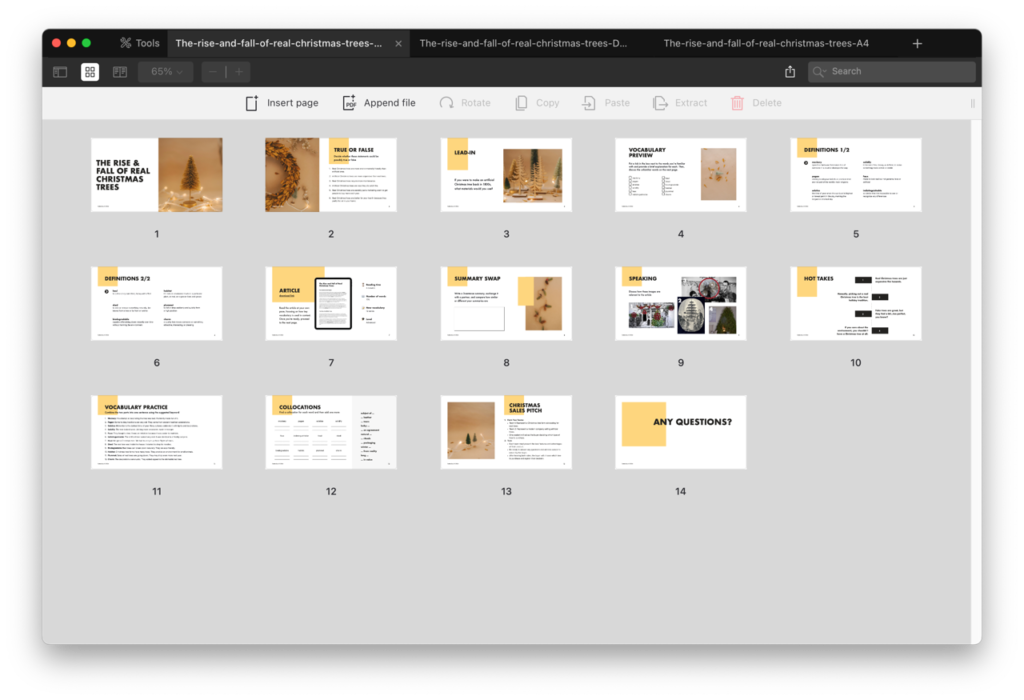
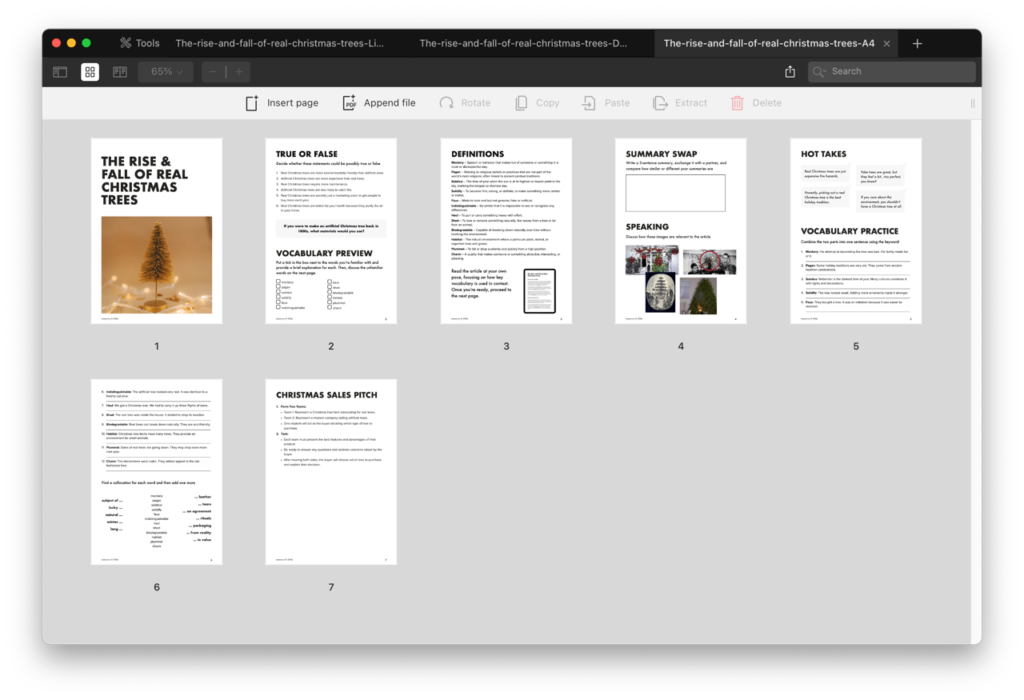
Vocabulary
- mockery
- pagan
- solstice
- solidify
- faux
- indistinguishable
- haul
- shed
- biodegradable
- habitat
- plummet
- charm
Contents
- True or false
- Lead-in
- Vocabulary preview
- Definitions
- Article
- Summary swap
- Speaking
- Hot takes
- Practice
- Collocations
- Christmas sales pitch
Kick things off with the true or false statements on slide 2. These are designed to get students talking before they even read the article, so let them argue a bit. The question about making an artificial tree in the 1800s is a fun one that usually sparks creative answers. Give pairs a couple of minutes to brainstorm materials, then share ideas as a class.
Before the reading, go through the vocabulary preview. Have students check off words they already know and explain them to a partner. Then walk through the definitions together. With C1 learners, you probably won’t need to spend too long here, but words like “pagan” and “solstice” sometimes trip people up because they’re topic-specific. Once the vocab feels solid, let students read the article at their own pace. Four minutes is a rough guide, but don’t rush anyone.
After the reading, the summary swap works well as a quick comprehension check. Students write three sentences, then compare with a partner. You’ll see right away who got the main points about Christmas trees and who focused on smaller details. The speaking activity with images ties back to the article nicely and gives quieter students a concrete thing to react to.
Save the sales pitch for the last fifteen to twenty minutes. Split the class into two teams, one arguing for real trees, the other for artificial. Pick one confident student as the buyer. This is where the lesson really comes alive because students have to pull together vocabulary, arguments from the article, and their own opinions. The buyer’s final decision usually leads to a good laugh and some last-minute persuasion attempts.
