
A No-Buy Year

This B2 lesson is about the no-buy year trend, where people challenge themselves to stop unnecessary spending for a full year. Students learn vocabulary like “coping mechanism,” “fight or flight,” and “thrifting,” listen to someone explain their no-buy rules, and debate whether cutting out shopping is realistic in today’s world. It’s a perfect lesson for January classes or any time students are thinking about new year resolutions and money habits.
Lesson overview
- Learn eight vocabulary items related to shopping habits, spending, and self-control
- Listen to a speaker explain her personal no-buy year rules and identify key details
- Practice matching, true or false, and comprehension exercises based on the audio
- Debate whether a no-buy year improves financial health or harms mental wellbeing
| Level | Vocabulary | Listening Time | Lesson Time |
| B2 / Upper-Intermediate | 8 words | 2:16 min | 60 min |
Vocabulary
- I’m done
- accumulate
- purchasing decision
- coping mechanism
- fight or flight state
- thrifting
- fall off the deep end
- takeout
Contents
- Lead-in
- Discussion
- Vocabulary
- Definitions
- Listening
- True or False
- Comprehension
- Questions
- Debate
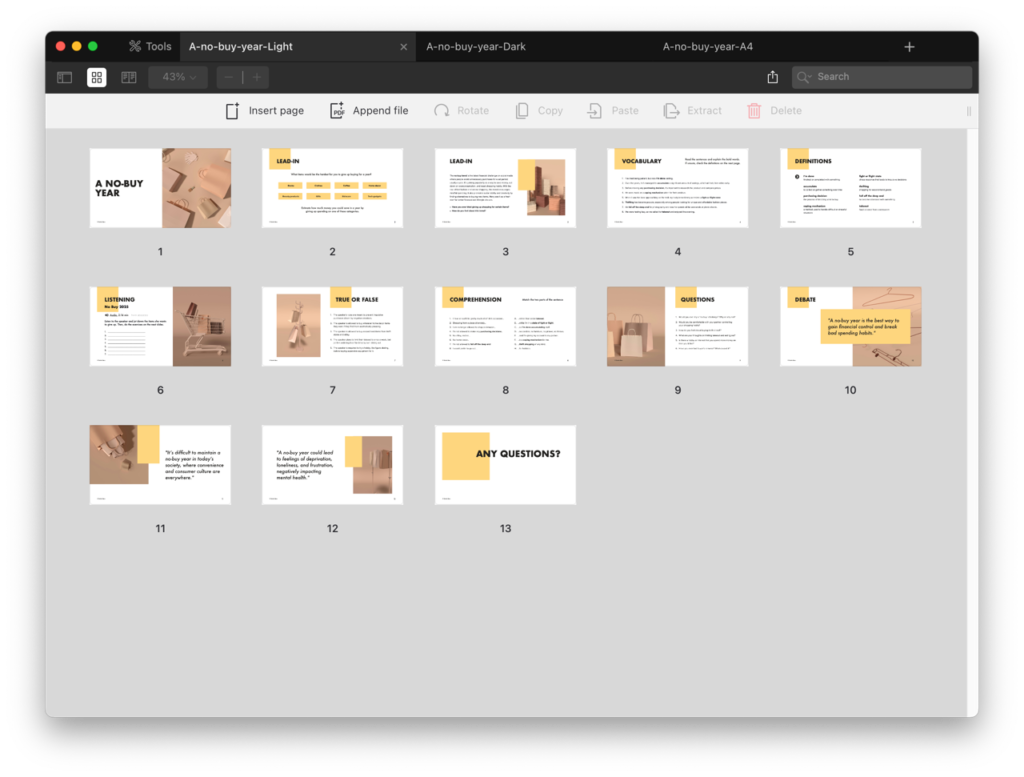
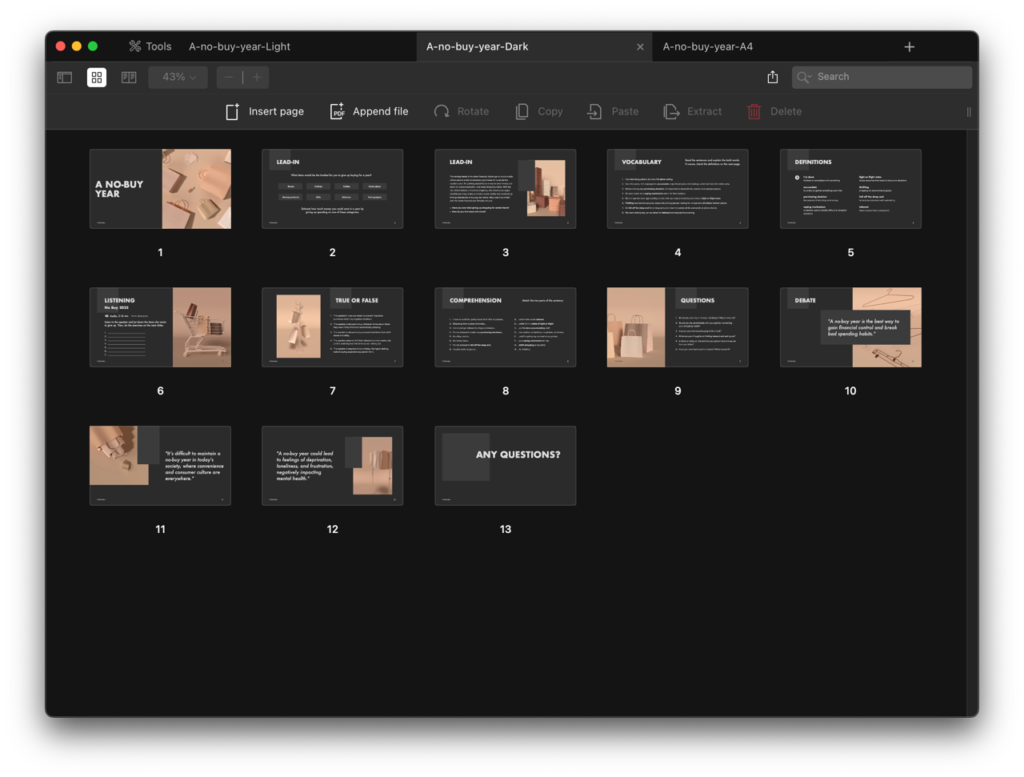
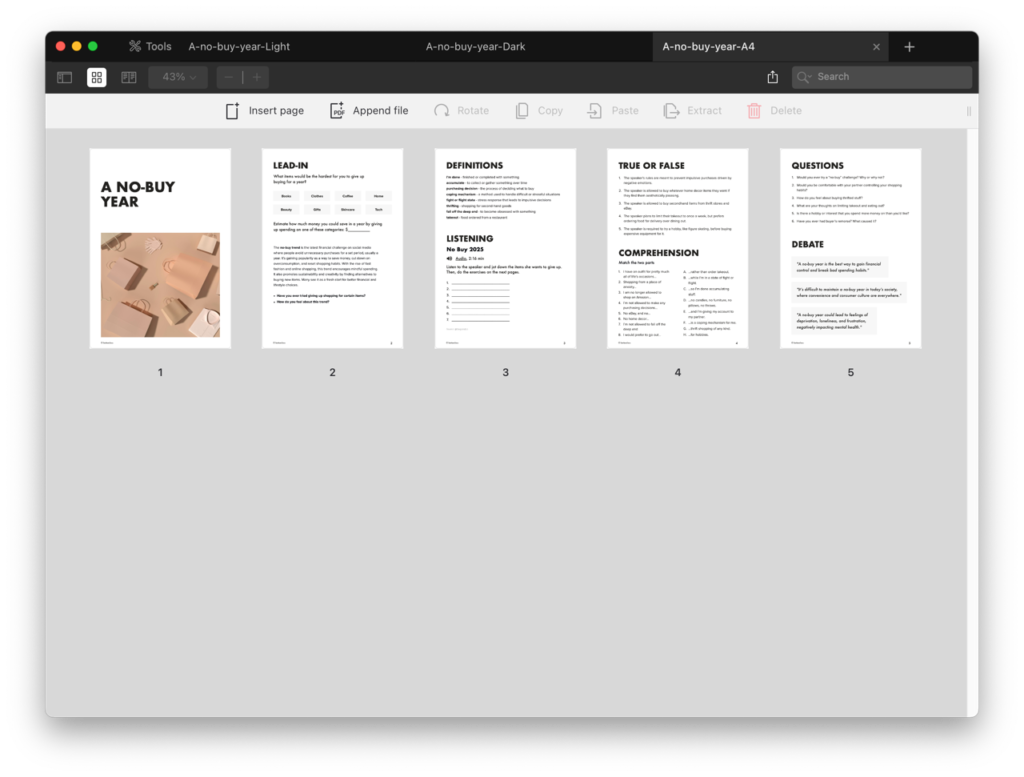
Start with the lead-in on slide 2. Students look at a list of spending categories like clothes, coffee, skincare, and tech gadgets, then pick which ones would be hardest to give up. Have them estimate how much they could save in a year by cutting one category. This gets personal fast and works well in pairs. Slide 3 gives a short explanation of the no-buy trend. Read it together, then ask the two discussion questions at the bottom. Most B2 students have seen this trend on social media even if they haven’t tried it themselves.
Move to the vocabulary on slide 4. There are eight items presented in full sentences. Let students figure out the meanings from context first, then check the definitions on slide 5. “Coping mechanism” and “fight or flight state” are worth extra time because they come up in the listening and connect to the emotional side of shopping that the lesson explores. “Thrifting” and “fall off the deep end” are also useful beyond this lesson.
Play the audio on slide 6. It runs just over two minutes. A speaker explains her no-buy rules for the year, covering everything from clothes and Amazon to home decor and hobbies. Students jot down the items she plans to give up. After listening, do the true or false exercise on slide 7 and the sentence matching on slide 8. Both activities check understanding of specific details from the audio, so play it a second time if students seem unsure.
The discussion questions on slide 9 open things up. Questions like “would you be comfortable with your partner controlling your shopping?” and “have you ever had buyer’s remorse?” get strong reactions at B2 level. Then move into the three debate prompts on slides 10 through 12. Each one takes a different angle: financial control, the pressure of consumer culture, and the mental health risks of going without. You can run these as a full class debate or split students into groups and assign one statement per group. Either way, give students a couple of minutes to prepare their arguments before they start talking.
