
AI & Politics

This C1 lesson looks at the growing debate around artificial intelligence in politics and governance. Students read a 920-word article, learn 16 vocabulary items like “algocracy,” “circumspect,” and “fabricated,” and discuss whether AI could ever replace human politicians. The lesson wraps up with a creative group task where students design their own AI political party.
Lesson overview
- Learn 16 advanced vocabulary items related to AI, politics, and governance systems
- Read and annotate an article about AI’s potential role in democratic politics
- Analyze “hot takes” and practice identifying true, false, and not given statements
- Design an AI political party with policies, a manifesto, and a class presentation
| Level | Vocabulary | Reading Time | Lesson Time |
| C1 / Advanced | 16 words | 920 words / 5 min | 60-80 min |
Vocabulary
- surge
- bullish
- circumspect
- outlandish
- inherit
- fabricated
- hallucination
- constituent
- common ground
- legislation
- conventional
- de facto
- algocracy
- debate mediator
- polarizing topic
- amplify
Contents
- Lead-in
- Questions
- Vocabulary
- Definitions
- Article
- Comprehension
- True, false, not given
- Hot takes
- Vocabulary practice
- AI political party
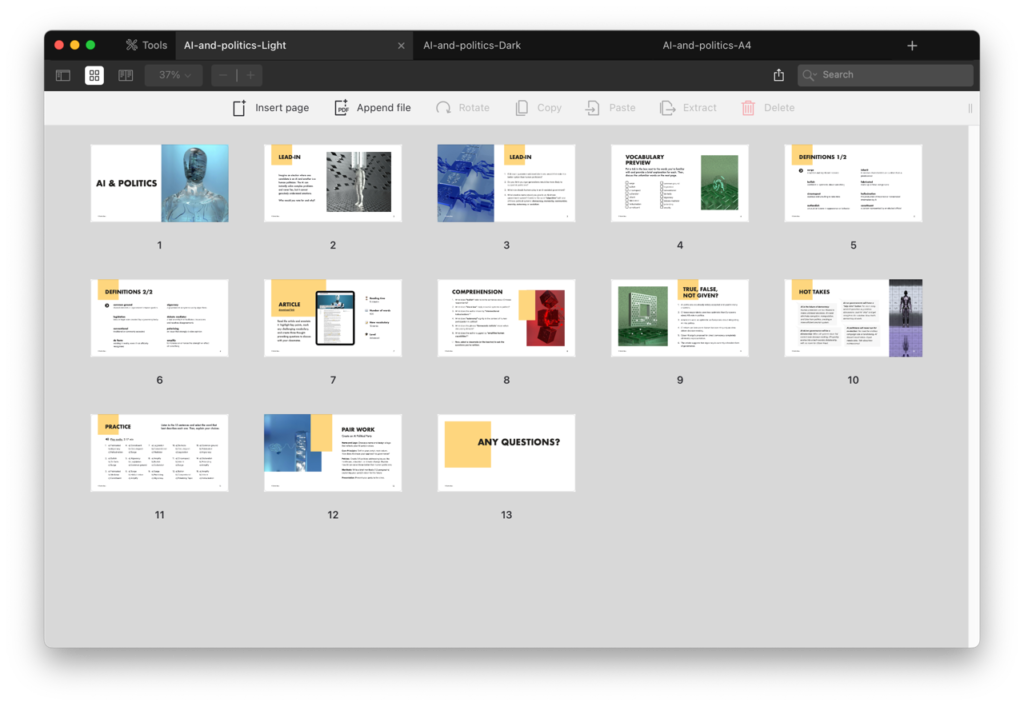
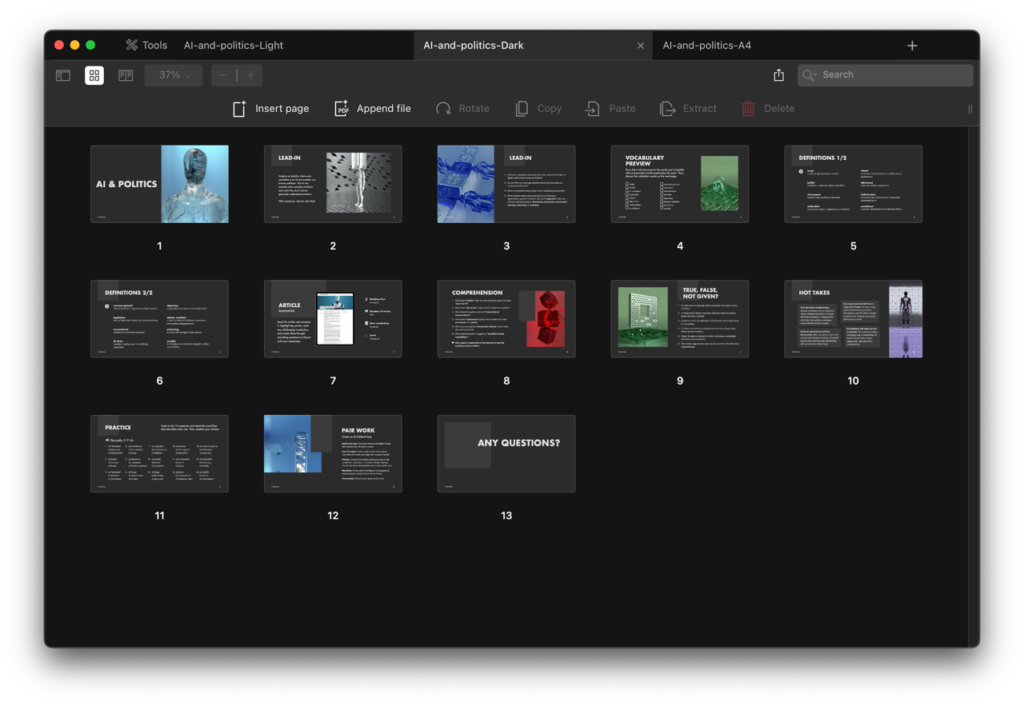
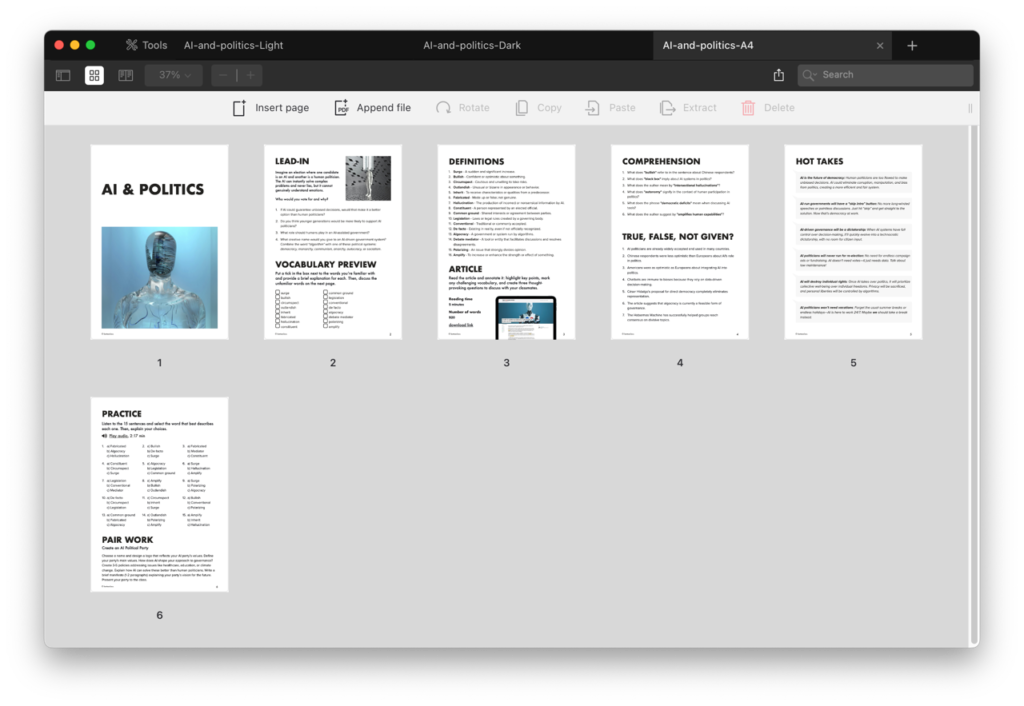
The lead-in on slide 2 is a strong opener. Students imagine an election between an AI candidate and a human politician, then decide who gets their vote. This question splits the room fast, and C1 students usually have enough language to argue their position well. Follow up with the discussion questions on slide 3. Question 4 is a lighter moment where students combine “algorithm” with a political system to invent a name, which loosens things up before the vocabulary section.
Go through the vocabulary preview on slide 4. There are 16 words, which is a lot, so let students check the ones they already know before reviewing the definitions on slides 5 and 6. Words like “bullish,” “circumspect,” and “de facto” are worth extra attention because they appear across many contexts beyond this lesson. “Hallucination” in the AI sense is also worth flagging since students may only know the medical meaning.
The article on slide 7 is about 920 words and takes around five minutes to read. Ask students to highlight key points and write three discussion questions as they read. This active reading approach works better than just having them answer your questions because it forces them to engage with the text on their own terms. After reading, go through the comprehension questions on slide 8 and the true, false, or not given exercise on slide 9. Then let students ask each other the questions they wrote.
Slides 10 and 11 keep the energy up. The “hot takes” on slide 10 mix serious arguments with humorous ones, which makes the discussion feel less like a test and more like a real conversation. The listening exercise on slide 11 has 15 sentences where students pick the vocabulary word that best fits each one. Finish with the pair work on slide 12. Students create an AI political party complete with a name, logo, policies, and a short manifesto. Give groups about 15 minutes for this and have each one present to the class. It’s a satisfying way to close because students pull together vocabulary, opinions, and ideas from the entire lesson.
