
Your Morning Routine

Lesson overview
- Learn eight vocabulary words connected to health, focus, and daily habits
- Watch a short video about a neuroscientist’s morning routine and discuss the tips
- Fill in blanks from the video transcript and answer personal questions about morning habits
- Make a tough choice about what to do when you oversleep before a big job interview
| Level | Vocabulary | Video Duration | Lesson Time |
| B1 / Intermediate | 8 words | 1:00 min | 60 min |
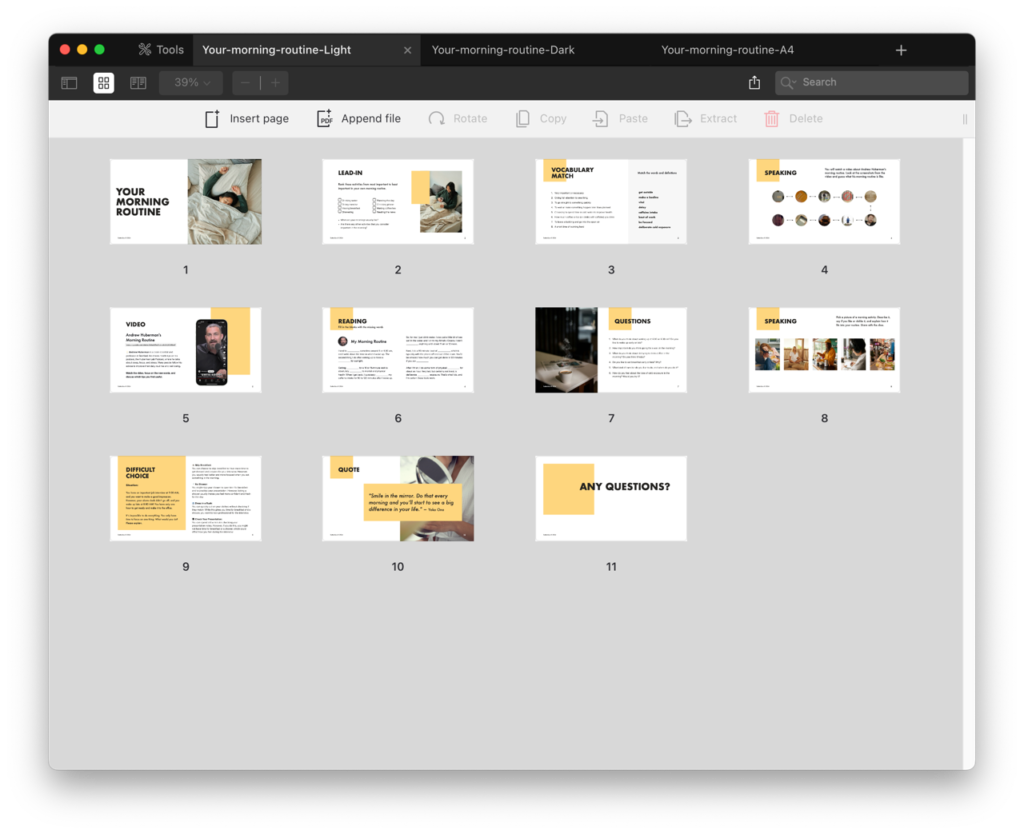
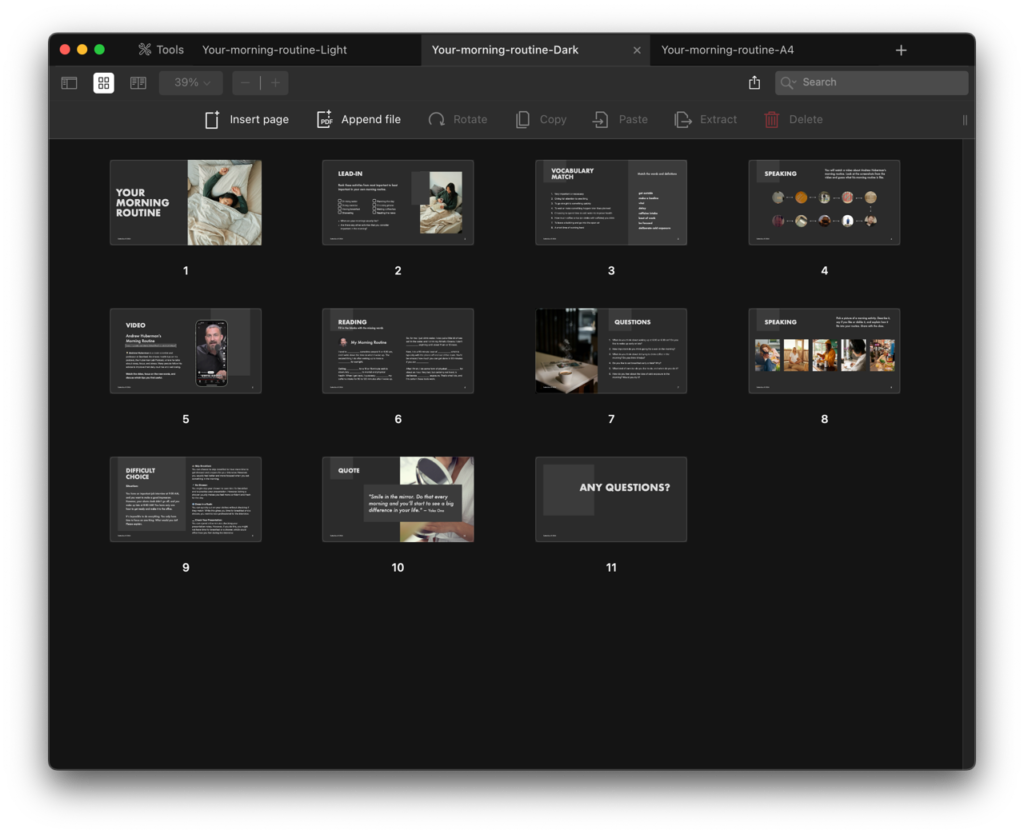
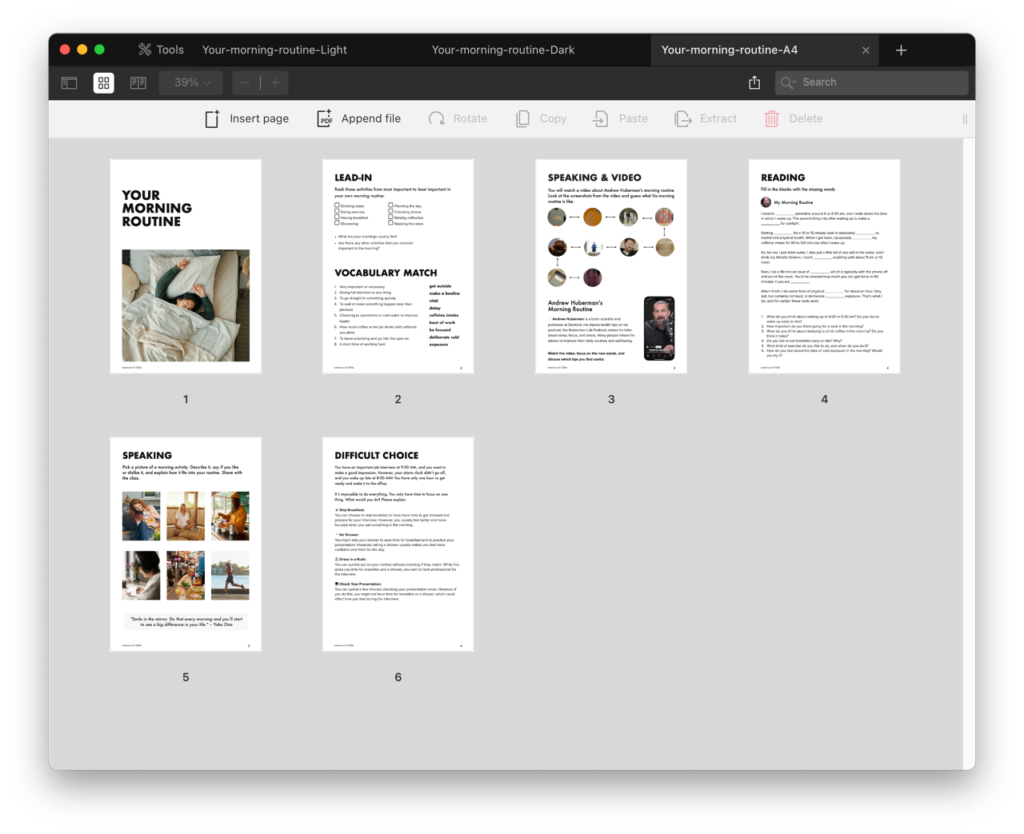
Vocabulary
- get outside
- make a beeline
- vital delay
- caffeine intake
- bout of work
- be focused
- deliberate cold exposure
Contents
- Lead-in
- Vocabulary match
- Speaking
- Video
- Reading
- Questions
- Speaking
- Difficult choice
- Quote
Open with the ranking activity. Students put eight morning activities in order from most to least important in their own routine. Things like drinking water, checking your phone, and doing exercise are on the list. This always sparks debate because morning habits are surprisingly personal. Some students will put coffee first, others will say exercise. Ask a few follow-up questions about what their mornings actually look like and whether there’s anything they wish they could add.
Cover the eight vocabulary words through the matching exercise. Most B1 students will know “vital” and “delay,” but phrases like “make a beeline,” “bout of work,” “caffeine intake,” and “deliberate cold exposure” will be new. For “make a beeline,” explain it as going straight to something without stopping. For “deliberate cold exposure,” keep it simple: “It means choosing to take a cold shower or sit in cold water on purpose because it’s supposed to be good for your health.” After matching, show the video screenshots and have students guess what Huberman’s routine looks like before watching. This builds curiosity and gives them something to check their predictions against.
Play the video. It’s a short clip, so watch it twice. After the first viewing, ask students which tips surprised them. After the second, move into the gap-fill reading exercise. Students complete the transcript with missing words from the video. Words like “beeline,” “outside,” “delays,” “eat,” “work,” “focused,” “exercise,” and “cold” all appear in the blanks. Check answers together and replay any sections where students are unsure. The discussion questions that follow are personal and easy to answer: “Do you like waking up early?”, “What do you think about skipping coffee for 90 minutes?”, “Would you try cold exposure?” These connect the video content to students’ real lives.
The picture speaking activity keeps things moving. Students pick a morning activity image, describe it, and say whether they like or dislike it and how it fits their routine. Then end with the difficult choice scenario. Students wake up at 8:00 AM with a job interview at 9:00 AM. They can only do one thing: skip breakfast, skip showering, get dressed in a rush, or review their presentation. Each option has a trade-off. Students explain their choice and defend it. This activity gets lively because there’s no right answer and everyone has a different priority. The Yoko Ono quote about smiling in the mirror makes a nice closing moment.
