
Your Boring Life is Beautiful
This B1 intermediate lesson encourages students to appreciate everyday life through a thought-provoking reading and video about finding beauty in ordinary moments. Students explore the concept of gratitude by imagining they could relive one day from their deathbed. Through vocabulary about emotions and time, idiom practice, and personal storytelling with photos, learners develop language skills while reflecting on what makes their seemingly boring lives actually meaningful and worth cherishing.
Lesson overview
- Explore gratitude and mindfulness through a reading about appreciating ordinary life
- Learn vocabulary related to emotions, probability, and life experiences
- Practice time-related idioms and apply them to personal situations
- Develop extended speaking skills by sharing meaningful memories with visual support
| Level | Vocabulary | Video Length | Lesson Time |
| B1 / Intermediate | 8 words | 4:00 min | 60 min |
Vocabulary
- Miracle
- Improbable
- Sentiment
- Dull
- Capable
- Familiar
- Feeling out of place
- Passed on
- Day in, day out
- It’s just another day
- One day
- Day and night
- At the end of the day
- The other day
- Call it a day
- As clear as day
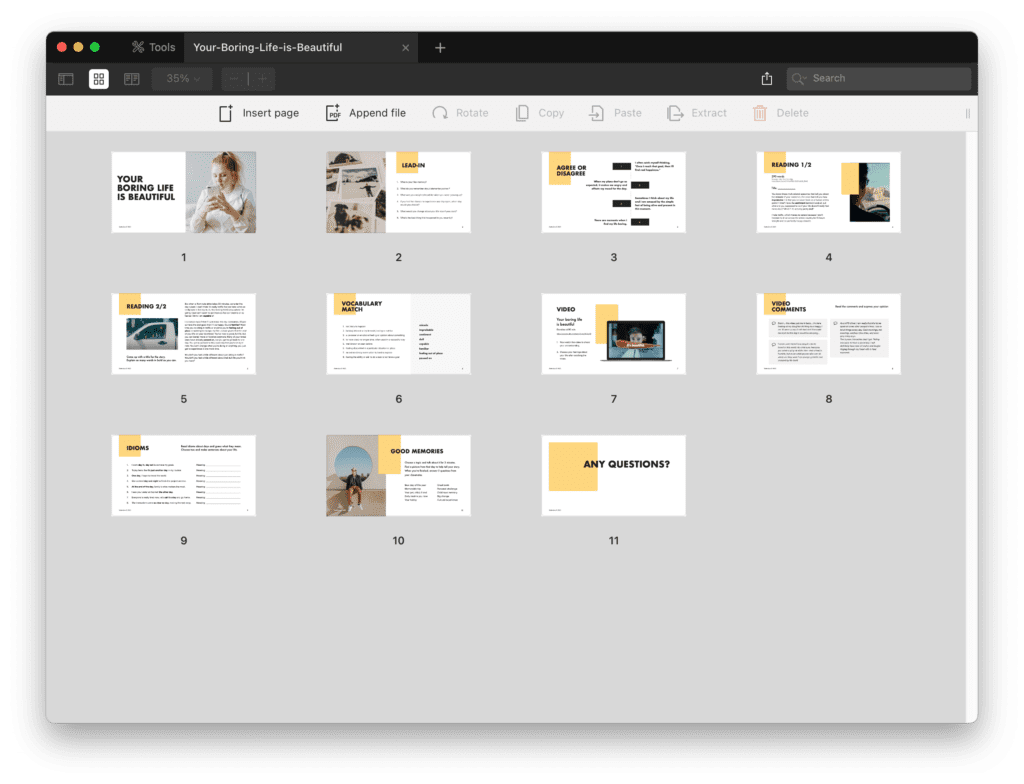
Contents
- Lead-in
- Agree or disagree
- Reading
- Vocabulary match
- Video
- Video comments
- Idioms about days
- Good memories
Start with the warm-up questions on page 2. These six questions about memories and life satisfaction set up the lesson’s theme. Give students two minutes to think about question six on their own before they talk with a partner. This question ties directly to the reading’s message about appreciating the present.
Page 3 has four agree-or-disagree statements about happiness and life satisfaction. Students respond solo first, then compare with partners. Takes about four minutes and gives you a baseline of their attitudes before the reading shakes things up.
Pages 4-5 have a 290-word reading adapted from a YouTube video transcript. Students read silently and come up with a title that captures the main message. After reading, pairs work together to explain the eight bolded vocab words before checking definitions on page 6. About eight minutes total for this.
The video on page 7 runs four minutes. Play it straight through so students get the full emotional impact. The visuals add something the transcript just can’t. After watching, give them three minutes to talk about how the video changed how they think about daily life.
Page 8 has three YouTube comments. Read these aloud or have students read them, then discuss which comment hits closest to home for them. This bridges personal reflection with language practice.
Page 9 introduces eight time-related idioms. Students work in pairs to guess meanings before checking answers. Then each student picks two idioms and makes sentences about their own life. This makes the language personal and takes about seven minutes.
The final speaking task on page 10 needs some prep time. Students choose a topic and find a photo on their phone that represents that memory. Give five minutes to prepare, then three minutes per student for presenting. Everyone else listens and preps two follow-up questions. This works best if you go first and share your own memory to set the tone.
