
You Say You’re an Artist?
This B2 lesson challenges students to think about what it means to be an artist through a provocative video. Students learn vocabulary like people pleaser, muse, and hunger for growth, then watch a speaker question someone who claims to be an artist but doesn’t act like one. Activities include filling in missing words, debating statements about creativity, and writing a personal artist manifesto.
Lesson overview
- Practice vocabulary for discussing creative identity: trace, blend into, priorities, engage with, surrounded
- Watch a provocative video questioning if calling yourself an artist requires daily action
- Debate whether creativity is a job or feeling and if inspiration matters
- Write a short artist manifesto about creating every day with full commitment
| Level | Vocabulary | Video Length | Lesson Time |
| B2 / Upper-Intermediate | 8 words | 1:52 min | 60 min |


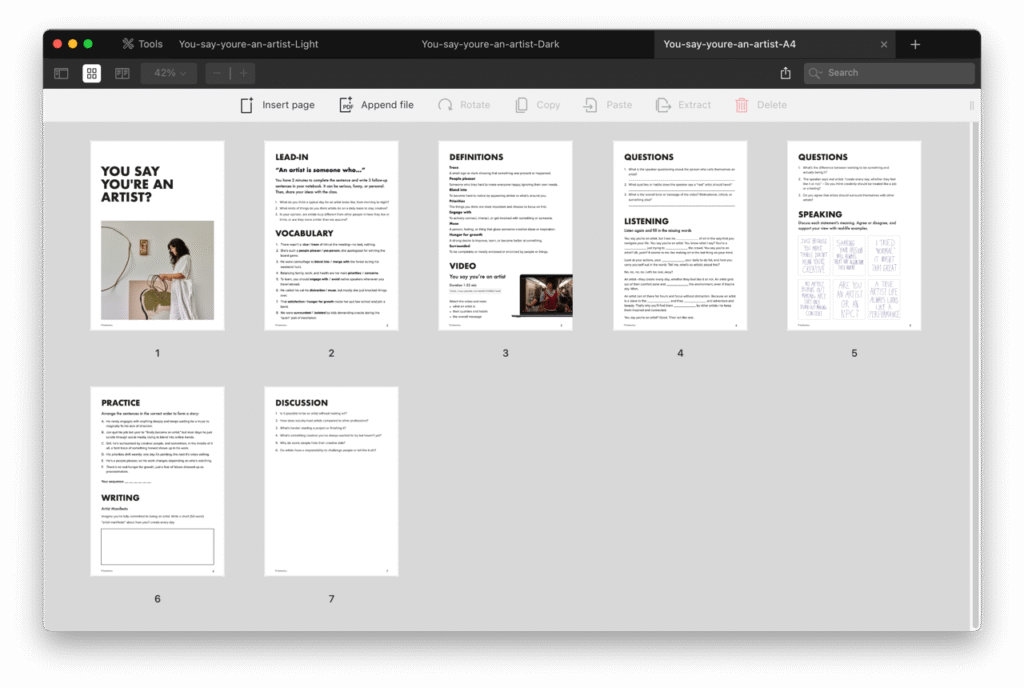
Vocabulary
- trace
- people pleaser
- blend into
- priorities
- engage with
- muse
- hunger for growth
- surrounded
Contents
- Lead-in
- Vocabulary
- Definitions
- Video
- Comprehension
- Listening
- Questions
- Practice
- Speaking
- Writing
- Discussion
Start with the sentence completion warm-up. Students finish “An artist is someone who…” and write three follow-up sentences. Give them two minutes, then share with the class. Answers will range from serious definitions to funny observations, which sets a good tone. Then move to the three lead-in questions about what artists’ daily lives look like. Question 3 about whether artists are truly different from others primes students for the video’s message.
Do the vocabulary exercise. Students choose the best word for each sentence and explain their choice. Some sentences have two possible answers depending on interpretation, which creates discussion. After checking answers, review the definitions page together. Words like “people pleaser” and “hunger for growth” are useful beyond this topic. Then play the video. It’s under two minutes and has a confrontational tone. The speaker challenges someone who says they’re an artist but shows no evidence in their daily life or habits.
After watching, students answer three questions about what the speaker is questioning, what qualities real artists have, and the overall tone. Most students will say the tone is critical or motivational or both. Then play the video again while students fill in eight missing words in the transcript. This focuses attention on key phrases like “slave to the muse” and “hunger and adventure and beauty.” The three follow-up questions push students to think critically about the video’s claims. Question 2 about whether creativity should be a job or feeling often divides the room.
The speaking section shows five provocative statements about art and identity. Students discuss the meaning of each, then agree or disagree with examples. These statements work well in small groups because they’re open to interpretation. The practice exercise has six scrambled sentences forming a story about Jon, someone who claims to be an artist but struggles with follow-through. Students arrange them in logical order. There’s more than one correct sequence, which makes it interesting.
The writing task asks students to write a 50-word artist manifesto about creating every day. Give them five minutes to write, then have volunteers share. Some students will write seriously, others ironically. Both work. End with the discussion questions. Question 1 about being an artist without making art connects directly to the video. Question 6 about artists’ responsibility to challenge people brings the lesson full circle to the provocative nature of the video itself.
