
Would You Try This Fruit?
This B1 lesson takes students on a tour of unusual fruits, starting with a video about durian and why it’s banned from public places in Southeast Asia. They learn food vocabulary like “rind,” “creamy,” “odor,” and “spiky,” then practice describing the appearance, smell, and taste of fruits like papaya, dragon fruit, and passion fruit. It’s a fun lesson that always gets strong reactions, especially during the durian section.
Lesson overview
- Learn ten food vocabulary words connected to taste, smell, and appearance
- Watch a video about durian fruit and discuss why people love it or can’t stand it
- Practice describing three exotic fruits by their look, smell, and taste before reading the real descriptions
- Play a naming game and debate opinions about fresh versus frozen fruit and exotic versus local
| Level | Vocabulary | Lesson Time |
| B1 / Intermediate | 10 words | 60 min |
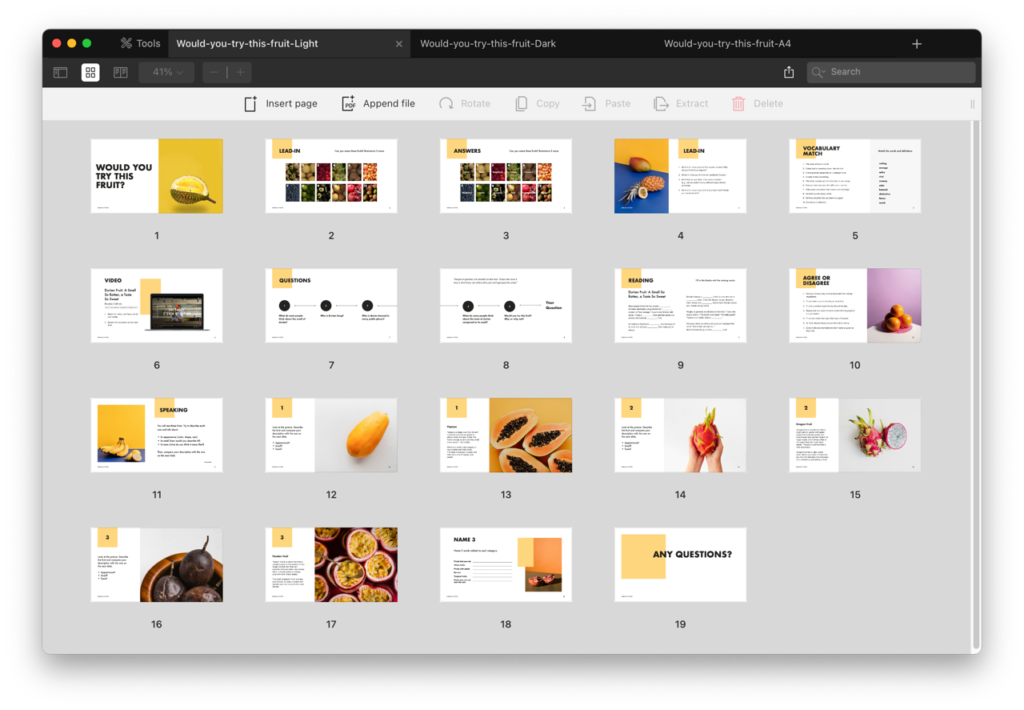
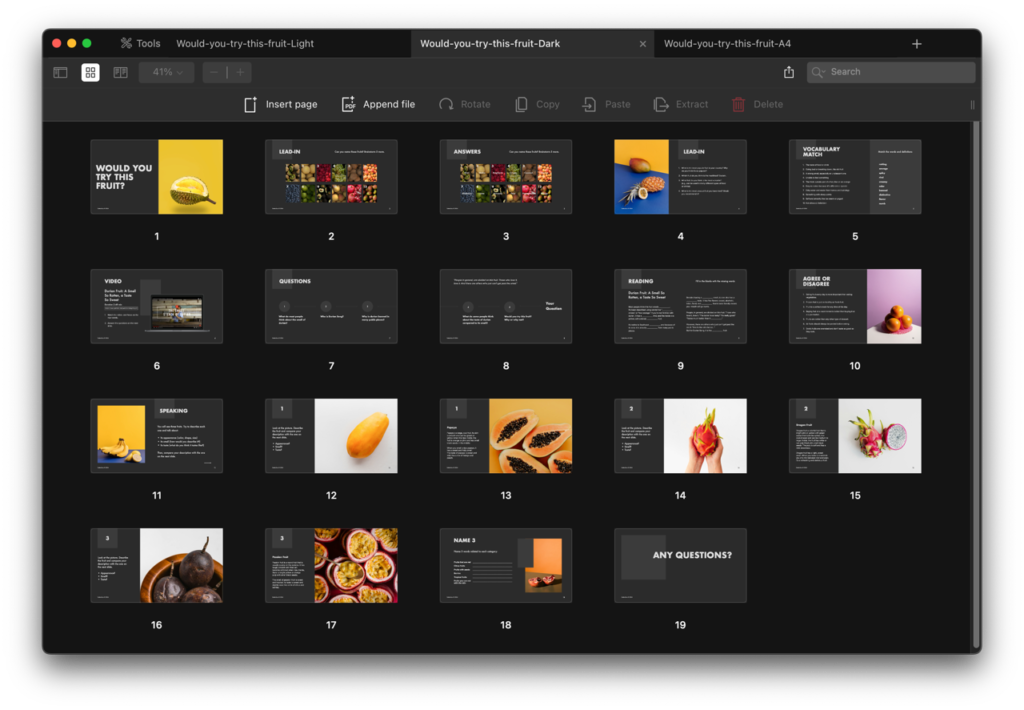
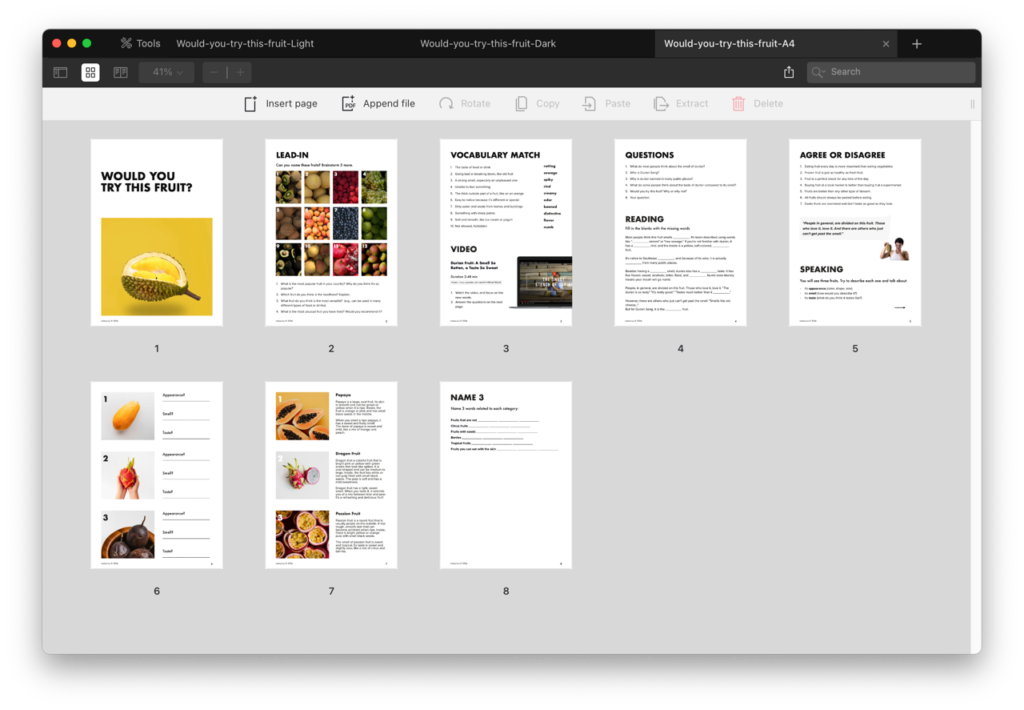
Vocabulary
- rotting
- sewage
- spiky
- rind
- creamy
- odor
- banned
- distinctive
- flavor
- numb
Contents
- Lead-in
- Vocabulary match
- Video
- Questions
- Reading
- Agree or disagree
- Speaking
- Name 3
Start with the picture quiz where students name twelve common fruits. Most B1 students will know mango, coconut, and grapes but might struggle with pomegranate, apricot, or raspberry. After naming the fruits, have them brainstorm five more. Then move to the four discussion questions. The one about the most unusual fruit students have tried usually produces the best stories. If your class hasn’t tried many unusual fruits, that’s fine too. It sets up the durian video perfectly.
Cover the ten vocabulary words before the video. “Rotting,” “sewage,” “spiky,” “rind,” “creamy,” “odor,” “banned,” “distinctive,” “flavor,” and “numb” all appear in the durian clip. Give clear examples for each one. “Rind” is the thick skin on fruits like oranges or watermelons. “Distinctive” means easy to recognize because it’s different from everything else. “Numb” is when your mouth can’t feel anything, which happens with durian apparently. Once the vocabulary feels solid, play the video. It’s under three minutes and covers why durian smells terrible but tastes amazing. Students answer five comprehension questions afterward, including one they write themselves.
The gap-fill reading reinforces the video content. Students fill in missing words from the transcript using what they remember. Play the video once more if they need help. After checking answers, the agree or disagree section shifts the conversation to broader fruit and food opinions. Statements like “Frozen fruit is just as healthy as fresh fruit” and “Exotic fruits are overrated” usually divide the class. These work well in small groups where students can argue their point.
The speaking section is the creative part of the lesson. Three exotic fruits appear one at a time: papaya, dragon fruit, and passion fruit. Students describe each one before seeing the real description on the following slide. Encourage them to use the target vocabulary. “The skin is spiky” for dragon fruit. “It has a creamy texture” for papaya. Comparing their guesses with the actual descriptions shows them how close they got and teaches new descriptive phrases. End with the “Name 3” game where students list three items per category: red fruits, citrus fruits, berries, tropical fruits, and so on. It’s a quick vocabulary review that ends the lesson on an energetic note.
