
Why We Remember Unfinished Tasks

This B1 ESL lesson introduces the Zeigarnik Effect, which explains why we remember unfinished tasks more than completed ones. Students explore how this psychological concept affects motivation and focus through reading, examples, and vocabulary activities. The lesson also includes tips on applying the Zeigarnik Effect in daily life to boost productivity.
Lesson overview
- Learn ten vocabulary words related to tasks, focus, and productivity
- Read three short texts explaining what the Zeigarnik Effect is and how it works
- Find synonyms for key words and complete sentences with original ideas
- Discuss how unfinished tasks affect daily life and share tips for staying on track
| Level | Vocabulary | Lesson Time |
| B1 / Intermediate | 10 words | 60 min |
Vocabulary
- Unfinished
- Realize
- Incomplete
- Mental tension
- Half-done
- Assignment
- Focused
- Anxious
- Motivated
- Productivity
Contents
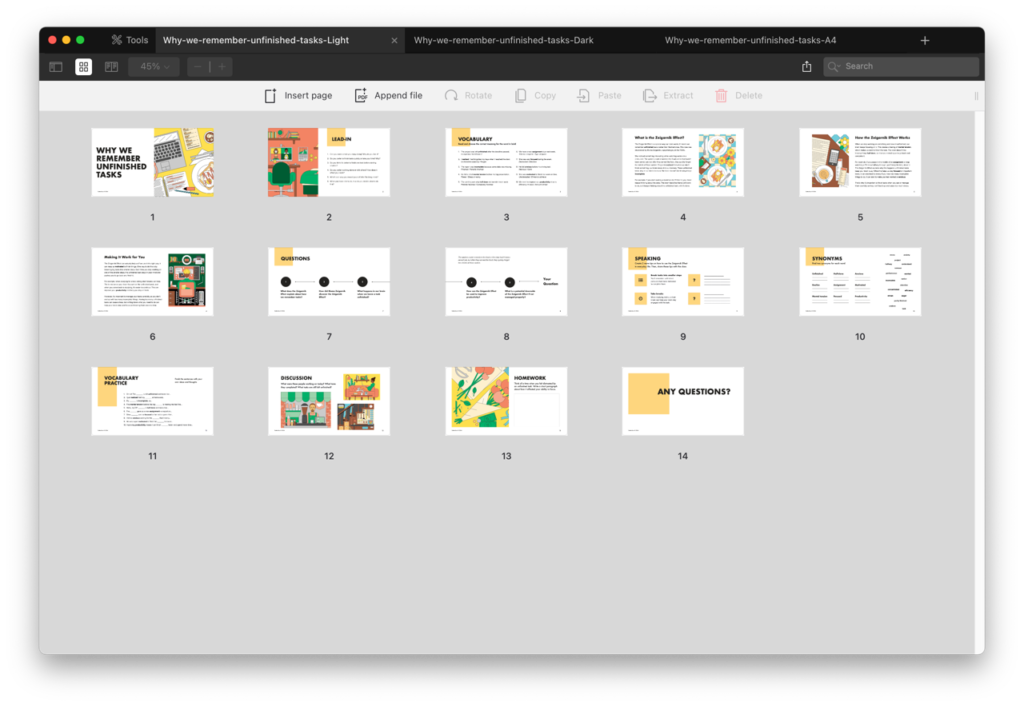
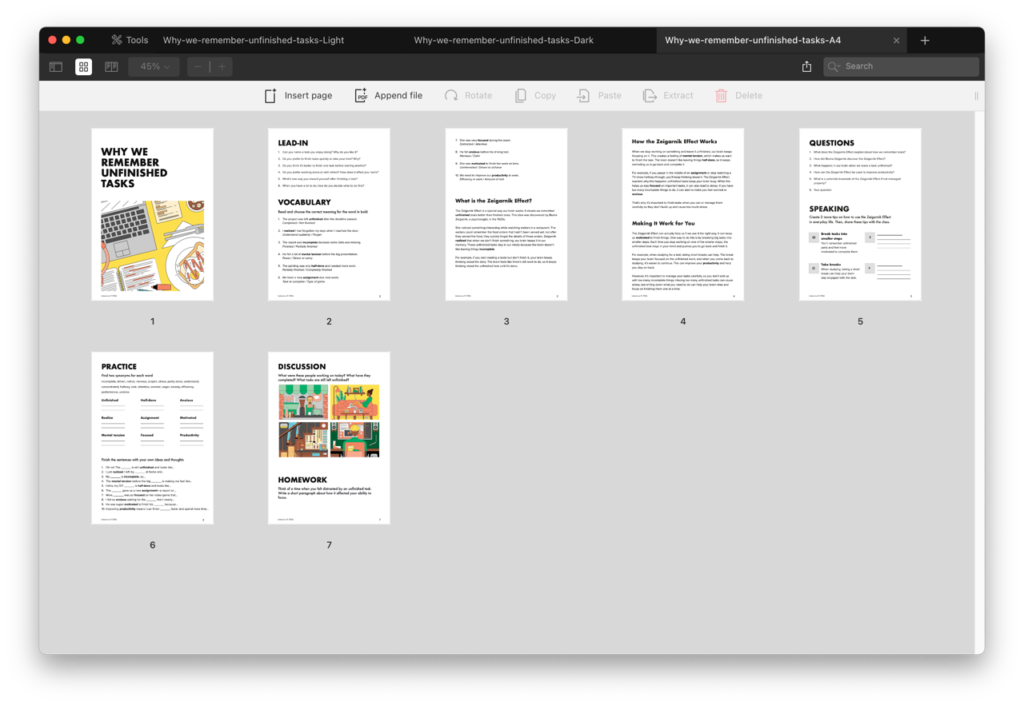
- Lead-in
- Vocabulary
- Reading
- Questions
- Speaking
- Synonyms
- Vocabulary practice
- Discussion
- Homework
Start with the lead-in questions about how students handle tasks and what they do when they have a lot on their plate. These are simple enough for B1 and get students thinking about their own habits. Then move into the vocabulary exercise where students choose the correct meaning for ten bolded words in context sentences. Words like “unfinished,” “focused,” and “motivated” should be familiar to most B1 learners, but “mental tension,” “productivity,” and “anxious” might need a bit more attention. Go through any tricky ones together before starting the reading.
The reading is split into three short texts. The first explains what the Zeigarnik Effect is and tells the story about the restaurant waiters. The second describes how it works in our brains. The third gives practical advice on using it to stay productive. Have students read one section at a time, pausing after each to check understanding. The waiter story in the first text is a great hook because it’s concrete and easy to picture. Ask students if they’ve ever experienced something similar, like not being able to stop thinking about a show they paused halfway through.
After reading all three sections, work through the five comprehension questions. Question five asks students to come up with their own question, which pushes them to engage with the text more deeply. The speaking activity follows nicely from here. Students already have two example tips for using the Zeigarnik Effect and need to create two more of their own. This works well in pairs because they can bounce ideas off each other.
The synonym matching exercise reinforces the vocabulary from earlier. Students find two synonyms for each of nine words. Then the sentence completion task gives them ten sentence starters to finish with their own ideas. These are deliberately open-ended and a few are meant to be funny, like “my DIY project is half-done and looks like…” which usually gets creative answers. Wrap up with the picture discussion where students look at images of people and guess what they were working on, what they finished, and what’s still left to do. The homework paragraph about a time an unfinished task distracted them is a good follow-up writing task for the next class.
