
Why This IKEA Table is in Every Household

This engaging B2 level lesson explores the phenomenon behind IKEA’s wildly popular Lack coffee table and examines the environmental impact of fast furniture. Students will analyze consumer behavior, discuss throwaway culture, and explore sustainable alternatives through reading, vocabulary building, and meaningful discussion activities. The lesson combines business concepts with environmental awareness, perfect for upper-intermediate learners ready to tackle real-world issues.
Lesson overview
- Practice discussing environmental responsibility and consumer habits
- Learn specialized vocabulary related to sustainability and business practices
- Develop critical thinking skills about planned obsolescence and waste
- Explore creative solutions for repurposing and reducing furniture waste
| Level | Vocabulary | Video Length | Lesson Time |
| B2 / Upper-Intermediate | 16 words | 9:38 min | 60-90 min |
Vocabulary
- Notion
- Screw
- Committed
- Assemble
- One-stop-shop
- Obsolescence
- Intentionally
- Turnover
- Affordability
- Contribute
- Landfills
- Significant
- Throwaway culture
- Crucial
- Conscious
- Sustainable
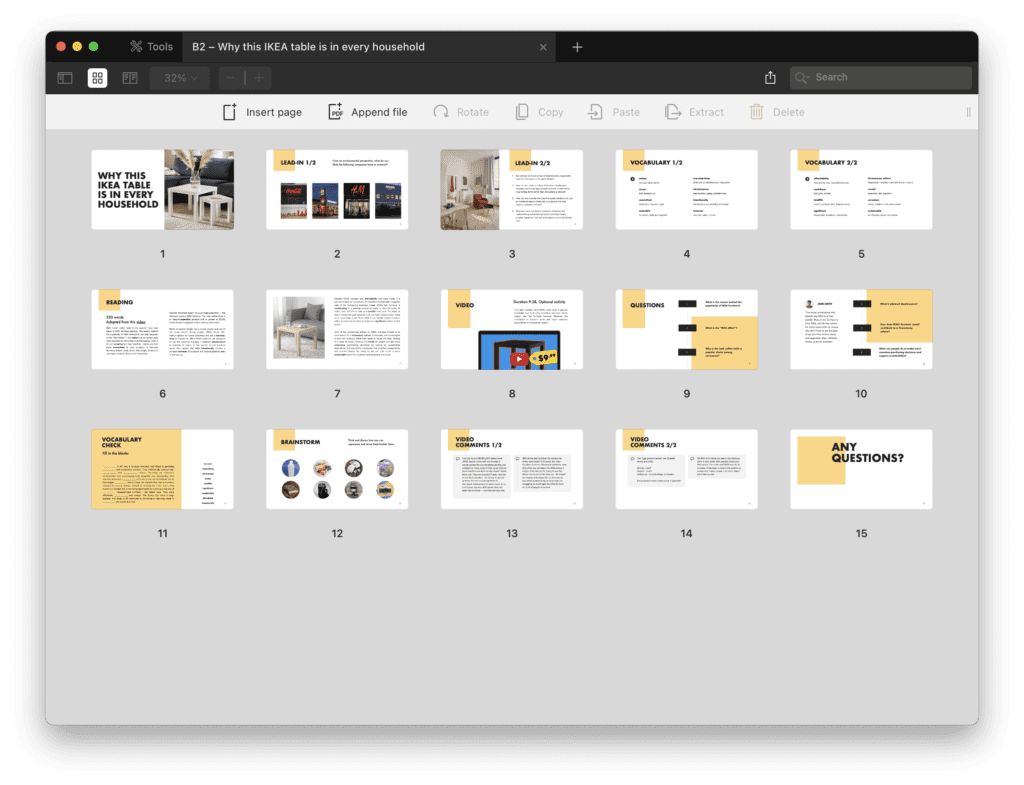
Contents
- Lead-in 1
- Lead-in 2
- Vocabulary 1
- Vocabulary 2
- Reading
- Video (optional homework)
- Questions
- Vocabulary check
- Brainstorm
- Video comments 1
- Video comments 2
Start with the stats activity on page 2. Students read six consumer facts and figure out which three are fake. This hooks their attention right away and gets them thinking critically. The real statistics are wild enough that students will naturally start talking about spending habits. Let pairs argue about which facts seem sketchy before you reveal the answers.
Move to the lead-in questions on page 3. These five prompts get students reflecting on their own spending patterns and how much they shell out for subscriptions. Question three about feeling pressured to buy stuff really hits home with most learners. Make sure it’s a judgment-free zone where students can be honest about impulse buying or how ads influence them.
Pages 4 and 5 throw some challenging vocab at them like “onslaught,” “permeating,” and “insatiable.” These words pop up in the main article, so teaching them now makes sure students can actually understand what they’re reading. Use the definitions provided and have students make their own example sentences. Advanced learners get a lot out of exploring the subtle differences between synonyms.
The article on page 6 is 492 words and takes about four minutes to read. Have students read it on their own while they highlight interesting bits to discuss later. The comprehension questions on pages 7 and 8 check if they got the main ideas like non-essential spending and environmental consequences. Push them to point to specific passages when they answer.
Page 9 has two solid practice tasks. Task one makes students divide the article into sections and create titles, which builds organizational skills. Task two sends them online to dig up more consumerism facts and write a short paragraph. This combines research with academic writing practice.
The vocab practice on page 10 reinforces the new terms through gap-fill sentences. The sarcastic tips activity on pages 11 and 12 gives everyone a creative break while hammering home the themes. Students complete funny suggestions for wasteful spending like “Only Buy Brand Names.” This playful approach helps advanced learners practice irony in English.
Wrap up by talking about which strategies students might actually use to cut down on unnecessary spending.
