
Why Everyone Hates E-Scooters
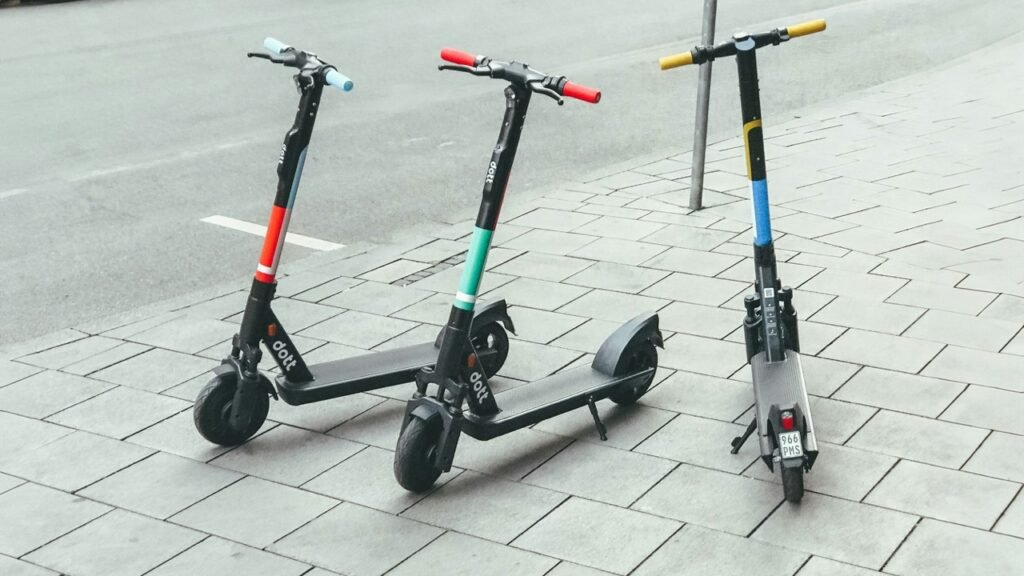
This B2 lesson digs into why e-scooters cause so much frustration in cities around the world. Students read a 1000-word article about the rise of micromobility, learn fourteen vocabulary words like “sketchy,” “clutter,” and “fatality,” and discuss the real problems e-scooters create for pedestrians, riders, and city planners. If your students live in a city with e-scooters, they’ll have plenty to say from minute one.
Lesson overview
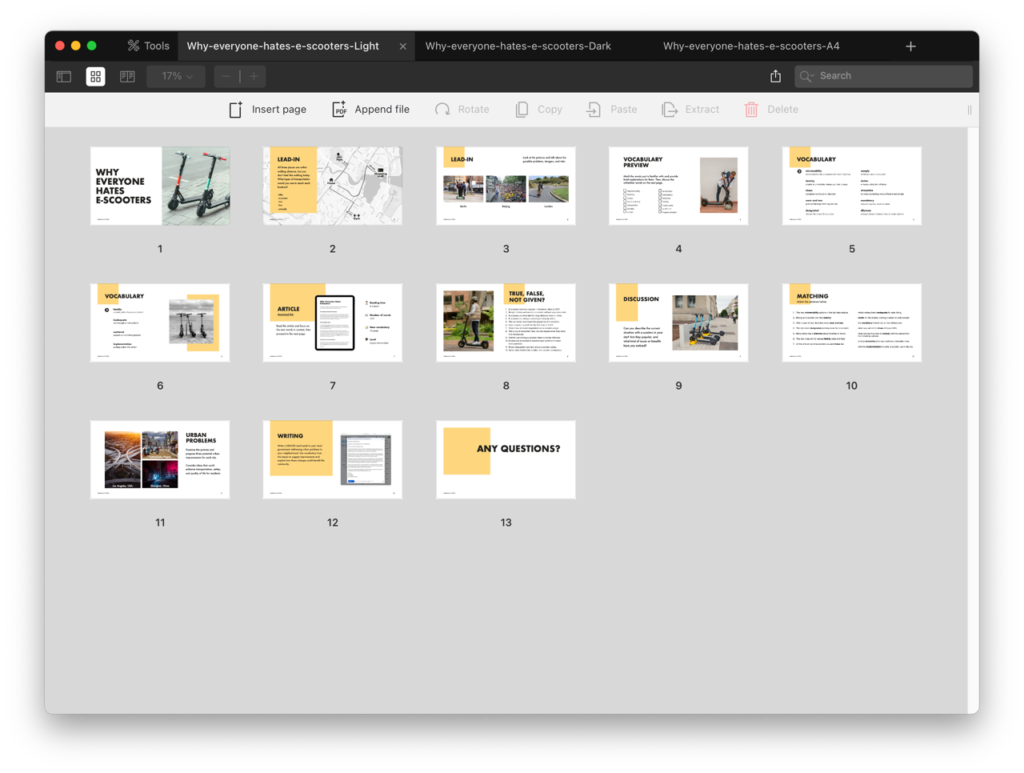
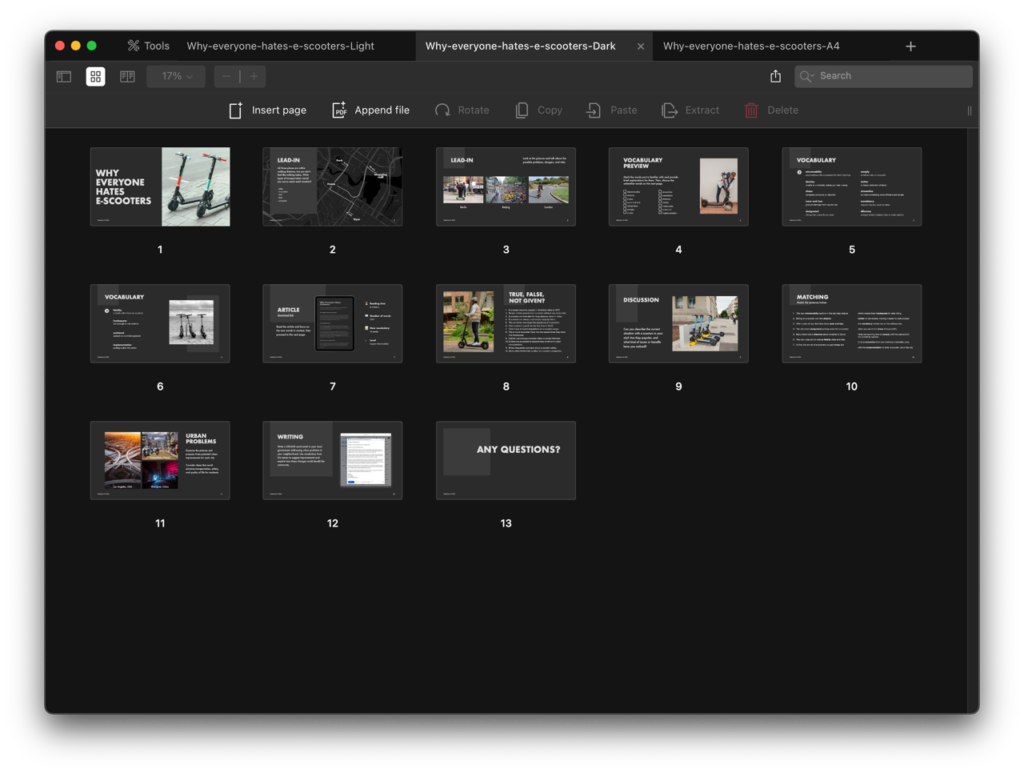
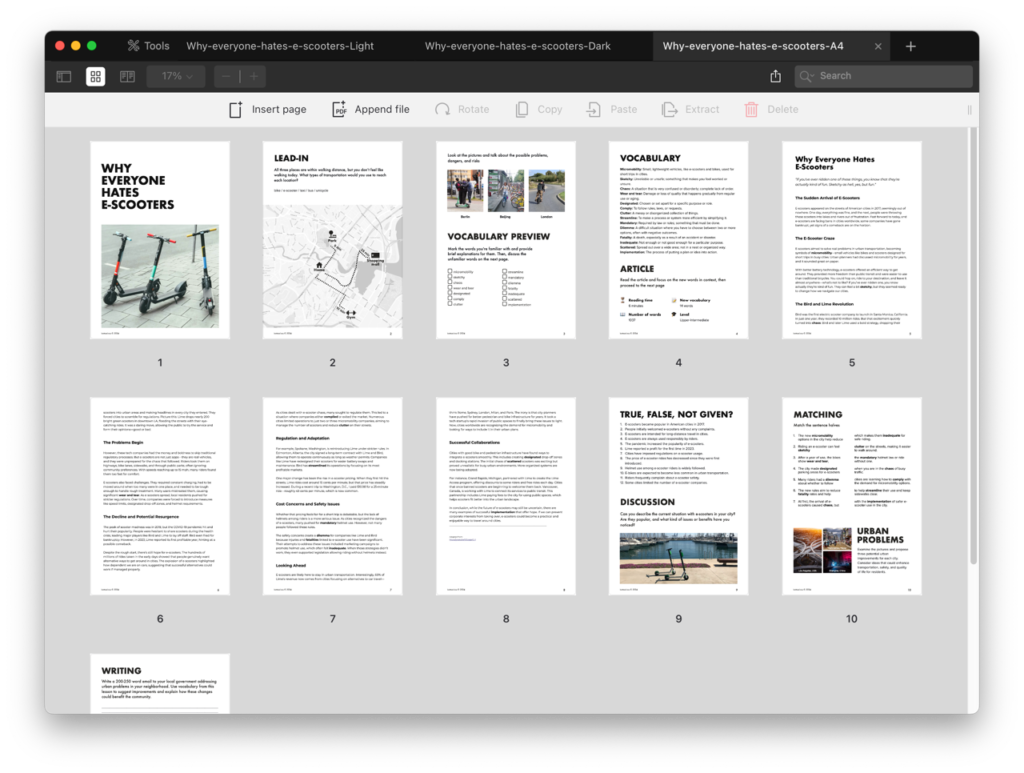
- Learn fourteen vocabulary words related to urban transportation, safety, and city planning
- Read an article about the rise and backlash of e-scooters and complete true, false, or not given tasks
- Match sentence halves using target vocabulary to reinforce meaning in context
- Examine photos of real city problems and write an email proposing improvements to local government
| Level | Vocabulary | Reading Time | Lesson Time |
| B2 / Upper-Intermediate | 14 words | 1037 words / 6 min | 60-80 min |
Vocabulary
- micromobility
- sketchy
- chaos
- wear and tear
- designated
- comply
- clutter
- streamline
- mandatory
- dilemma
- fatality
- inadequate
- scattered
- implementation
Contents
- Lead-in 1
- Lead-in 2
- Vocabulary preview
- Vocabulary
- Article
- Comprehension
- Discussion
- Matching
- Urban problems
- Writing
The lead-in puts students in a quick decision-making scenario. Their home, a park, a gym, and a shopping mall are all within walking distance, but they don’t feel like walking. Which transport would they pick for each trip? Options include bike, e-scooter, taxi, bus, and unicycle. This is light and gets students using transport vocabulary right away. After sharing choices, show the three city photos from Berlin, Beijing, and London. Students describe the problems they see: e-scooters blocking sidewalks, traffic chaos, safety risks. This visual warm-up connects directly to the article they’ll read next.
Go through the fourteen vocabulary words before the reading. Split them into groups to make it manageable. Start with “micromobility,” “sketchy,” “chaos,” “wear and tear,” “designated,” “comply,” and “clutter.” Then cover “streamline,” “mandatory,” “dilemma,” “fatality,” “inadequate,” “scattered,” and “implementation.” These are dense for one lesson, so don’t rush. Use short, clear examples: “Mandatory means you have to do it by law, like wearing a seatbelt” or “Clutter is when e-scooters are left everywhere on the sidewalk and nobody can walk.” Once students feel confident, move into the article.
Give students about eight minutes to read. At just over 1000 words, it’s a solid B2 reading. The true, false, or not given exercise checks comprehension without being too demanding. The “not given” option makes it trickier than standard true or false because students can’t just guess. Go through answers together and discuss any disagreements. Then ask the discussion question about e-scooters in their own city. Students who live in places with e-scooter programs usually have strong opinions about sidewalk clutter and reckless riding.
The sentence matching exercise reinforces the vocabulary in longer, more complex sentences. Students connect seven beginnings with their correct endings. Each sentence uses two or three target words, which helps students see how they work together in real contexts. The urban problems activity near the end shows photos from Kathmandu, Los Angeles, and Shanghai. Students examine each picture and suggest three improvements. This pushes them to think beyond e-scooters and apply the vocabulary to broader city planning topics. End with the email writing task. Students write 200 to 250 words to their local government about a real problem in their neighborhood, using lesson vocabulary to propose changes. This makes a good homework assignment if you run short on time in class.
