
Why Does Summer Feel So Short?
This B2 lesson explores why summer feels shorter than other seasons and how our brains perceive time. Students learn eight expressions like “fly by,” “nostalgia,” and “be mindful,” read about the psychology of time perception, and watch a short video on how routine affects our sense of time passing. The activities mix vocabulary practice with personal reflection and debate about summer’s value.
Lesson overview
- Learn eight phrases and terms related to time perception and memory
- Read about why summer feels short despite being the same length as other seasons
- Watch a video explaining how familiarity and routine change our experience of time
- Debate whether summer is the best season or overrated and discuss ways to stay present
| Level | Vocabulary | Video Length | Lesson Time |
| B2 / Upper-Intermediate | 8 words and phrases | 0:47 min | 60 min |
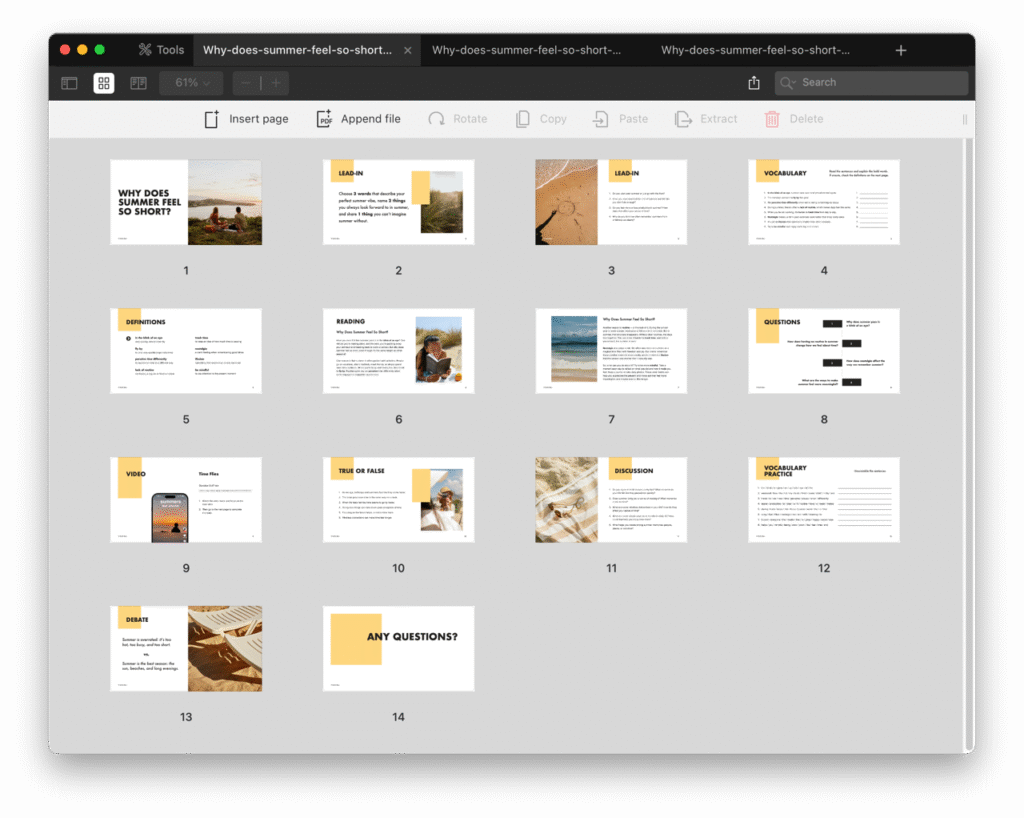
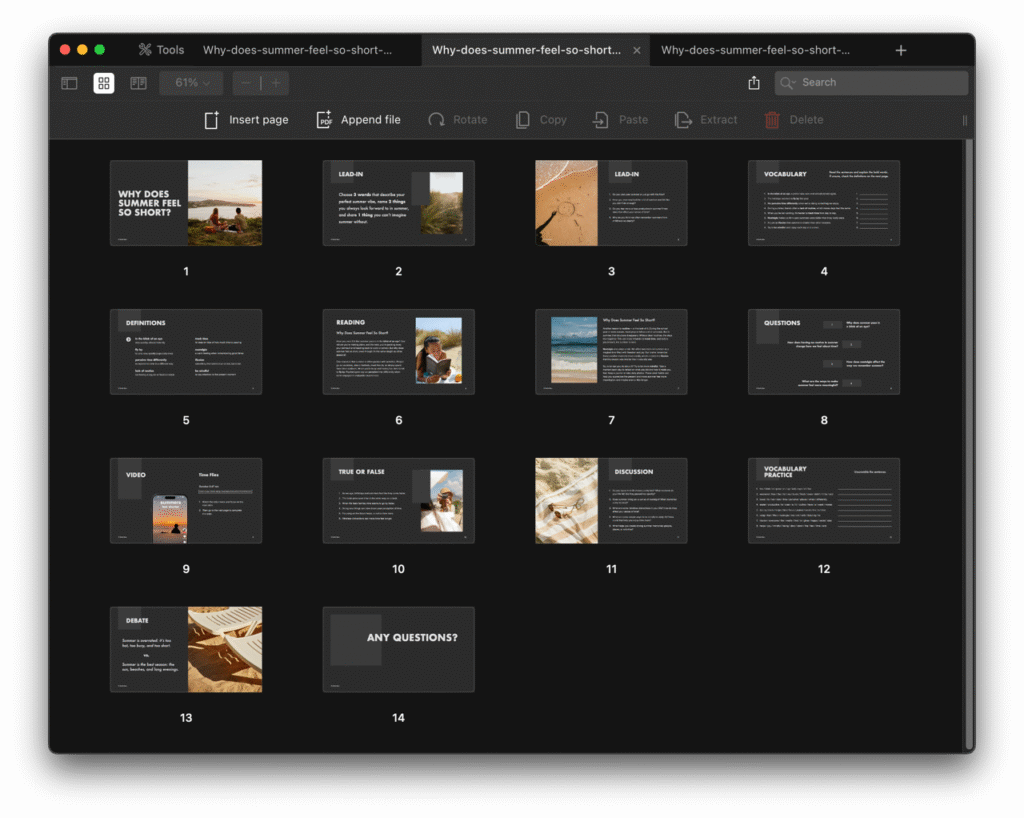
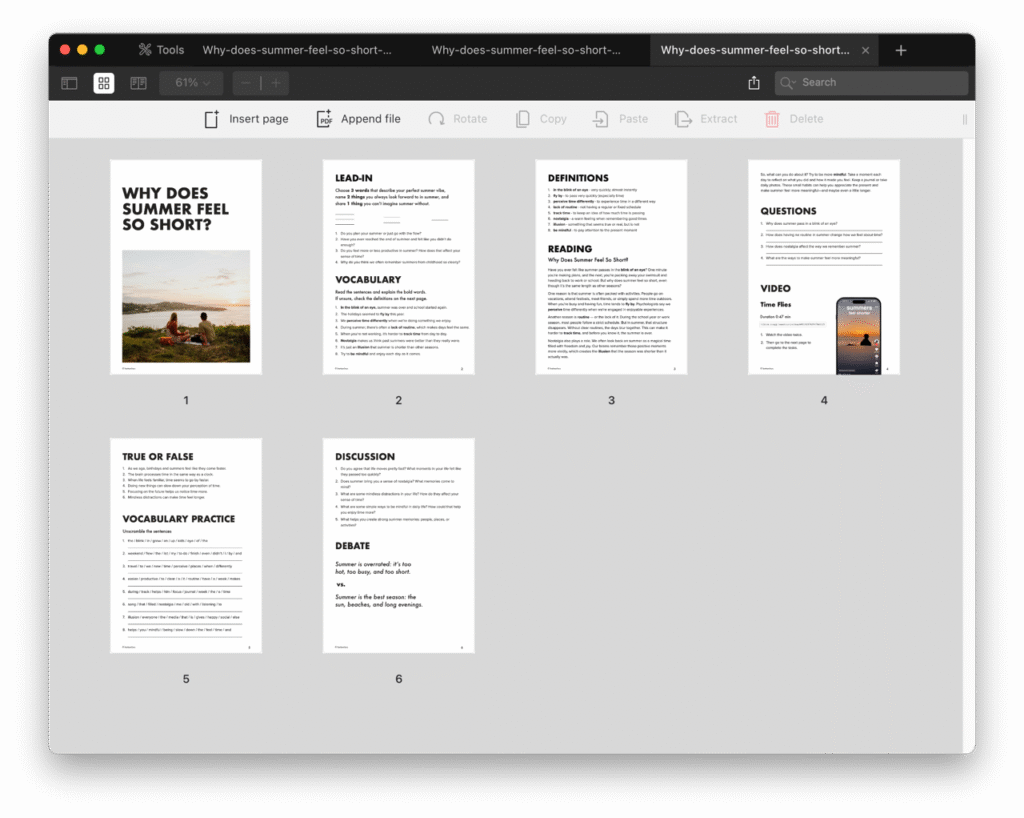
Vocabulary
- in the blink of an eye
- fly by
- perceive time differently
- lack of routine
- track time
- nostalgia
- illusion
- be mindful
Contents
- Lead-in
- Vocabulary
- Reading
- Questions
- Video
- True or false
- Discussion
- Vocabulary practice
- Debate
Open with the warm-up where students pick three words describing their perfect summer, name two things they look forward to, and share one thing summer needs. Then move to the four discussion questions about planning summers and childhood memories. The question about reaching the end of summer without doing enough usually resonates with students.
The vocabulary section introduces eight terms through example sentences. Students read each sentence and explain the bolded words before checking definitions. Make sure they understand the difference between “illusion” and “perception” since both relate to experiencing reality differently.
The reading explains three reasons summer feels short: packed activities, lack of routine, and nostalgia. Students read once, then answer four comprehension questions that require them to explain concepts in their own words. This pushes them to process ideas more deeply than just locating information.
The video is under a minute but covers similar ground from a different angle. Play it twice, then students complete the true/false statements. The video mentions how new experiences slow down time perception while familiar routines speed it up. After checking answers, use the discussion questions to personalize the content. Students talk about their own mindless distractions, what creates strong summer memories, and practical ways to stay mindful.
The vocabulary practice uses sentence unscrambling with all eight target terms. This is harder than fill-in-the-blank because students need to understand both grammar and meaning. Check answers together and have students read complete sentences aloud.
End with the debate. Split the class into two groups: one argues summer is the best season, the other says it’s overrated. Give groups five minutes to prepare arguments, then run the debate.
