
Why Do We Wear Heels
This B2 lesson explores the history and cultural meaning of high heels. Students learn vocabulary like “femininity,” “status symbol,” and “objectification,” then read about how heels evolved from Persian soldiers to modern fashion. The activities include a video about a man who wears heels daily and discussions about gender, comfort, and who we dress for.
Lesson overview
- Learn vocabulary related to fashion history, gender roles, and social expectations
- Read about the surprising origins of high heels from ancient Greece to today
- Watch a video challenging gender norms through fashion choices
- Discuss fairness, confidence, and pressure in modern fashion culture
| Level | Vocabulary | Video Length | Lesson Time |
| B2 / Upper-Intermediate | 10 words | 1:16 min | 60min |

Vocabulary
- Femininity
- Stirrups
- Status symbol
- Nobles
- Practical reasons
- Stilettos
- Glamour
- Feminist
- Objectification
- Beauty standards
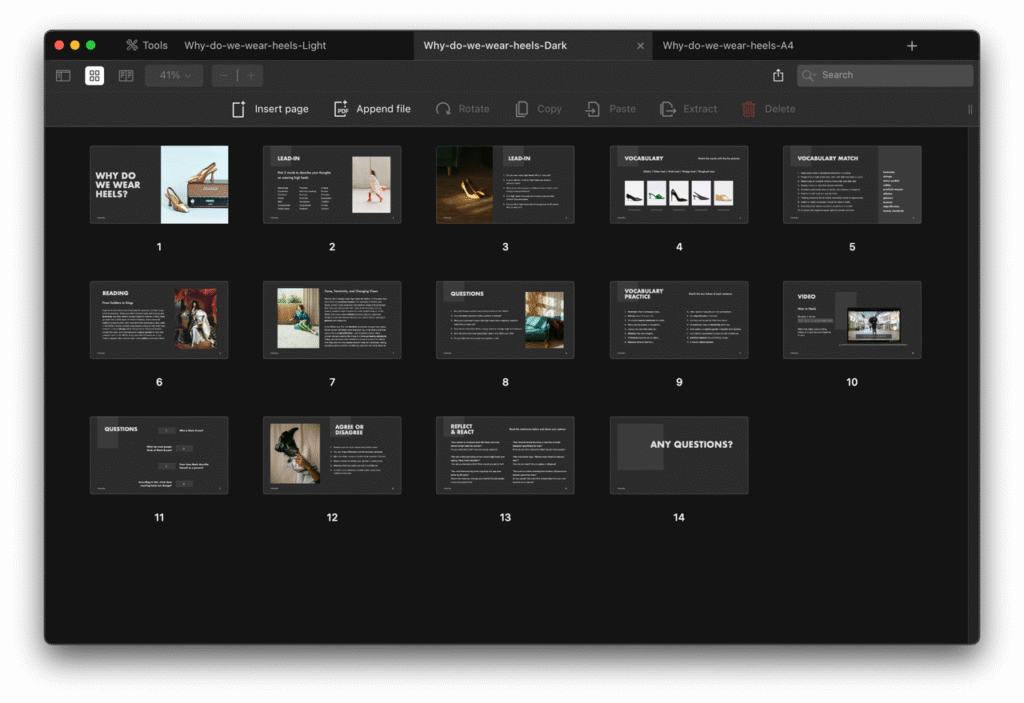
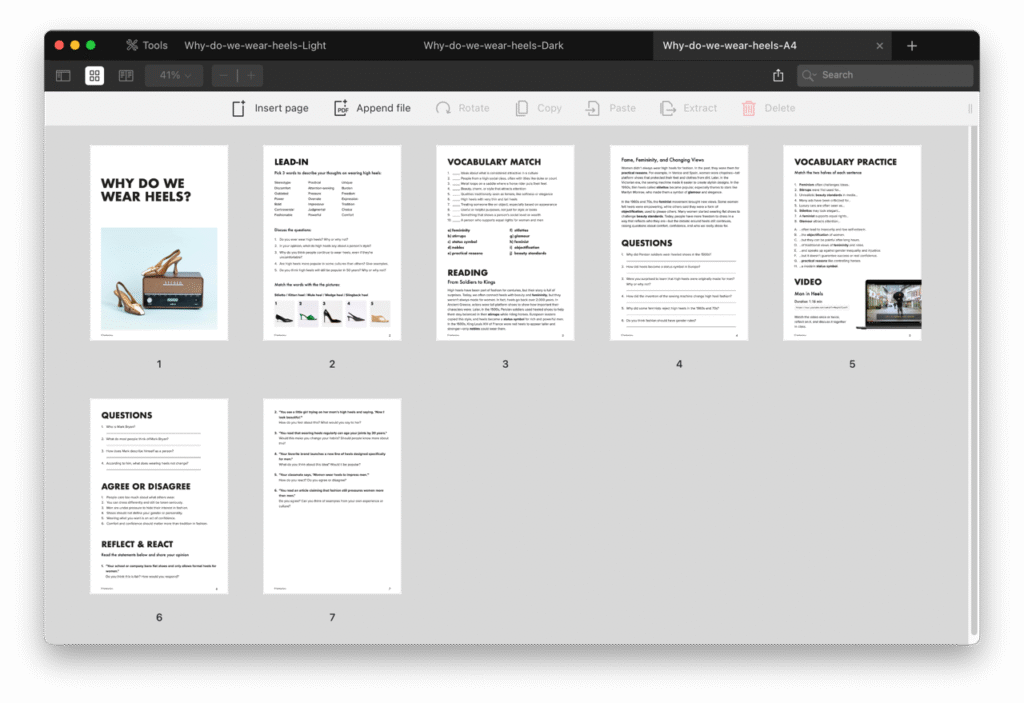
Contents
- Lead-in
- Vocabulary
- Reading
- Questions
- Vocabulary Practice
- Video
- Questions
- Agree or Disagree
- Reflect & React
Start with the word cloud where students pick three words that describe their thoughts on high heels. Options range from “power” and “freedom” to “discomfort” and “burden.” This shows you the range of opinions in your class before diving deeper. The lead-in questions ask about personal choices and cultural differences, which gets students talking about their own experiences.
The picture matching introduces five heel types like stiletto, wedge, and kitten heel. Students might not know all these terms, so checking pronunciation helps. The vocabulary matching covers the reading content with words like “stirrups” and “nobles” for the historical section, plus “objectification” and “feminist” for the modern debate.
The reading has two sections. The first covers ancient Greece through King Louis XIV and explains that heels started as practical footwear for soldiers and became a status symbol for men. Most students are surprised by this. The second section traces women’s heel history through chopines, stilettos, and the feminist movement’s complicated relationship with heels. The six comprehension questions check understanding and ask for personal reactions, like whether fashion should have gender rules.
The vocabulary practice matches sentence halves using the key words in context. Phrases like “unrealistic beauty standards” and “the objectification of women” connect to the social themes in the reading.
The video is just over one minute and features Mark Bryan, a man who wears heels and skirts while maintaining a traditional masculine career. Students watch once or twice and then discuss four questions about who he is, how people react, and what wearing heels doesn’t change about him. This video works well because it challenges assumptions students might have formed during the reading.
The agree or disagree statements touch on pressure, seriousness, and confidence in fashion. Statement three about men hiding interest in fashion connects back to Mark Bryan’s story. The reflect and react section gives six scenarios and students share opinions. The situation about a company banning flat shoes is based on real incidents and usually sparks strong reactions. The little girl comment about heels making her beautiful raises questions about what messages children absorb. The brand launching heels for men ties back to the historical fact that heels were originally men’s footwear.
