
Why Billionaires Buy Bunkers

This C1 lesson examines why ultra-wealthy people invest in apocalypse bunkers through reading, discussion, and a creative sales pitch activity. Students learn advanced vocabulary like “accelerationism,” “wealth-hoarding,” and “decommissioned missile silo” while analyzing the psychology and irony behind doomsday prepping. The lesson includes an article about billionaire survival plans, comment analysis, and presentations about fictional hideaways.
Lesson overview
- Learn 12 advanced terms related to survival, economics, and collapse scenarios
- Read and analyze an article about billionaire bunker investments
- Discuss ethical questions about who deserves safety during catastrophes
- Present a sales pitch for an apocalypse hideaway using lesson vocabulary
| Level | Vocabulary | Reading Time | Lesson Time |
| C1 / Advanced | 12 words | 1182 words, 6 min | 60-80 min |
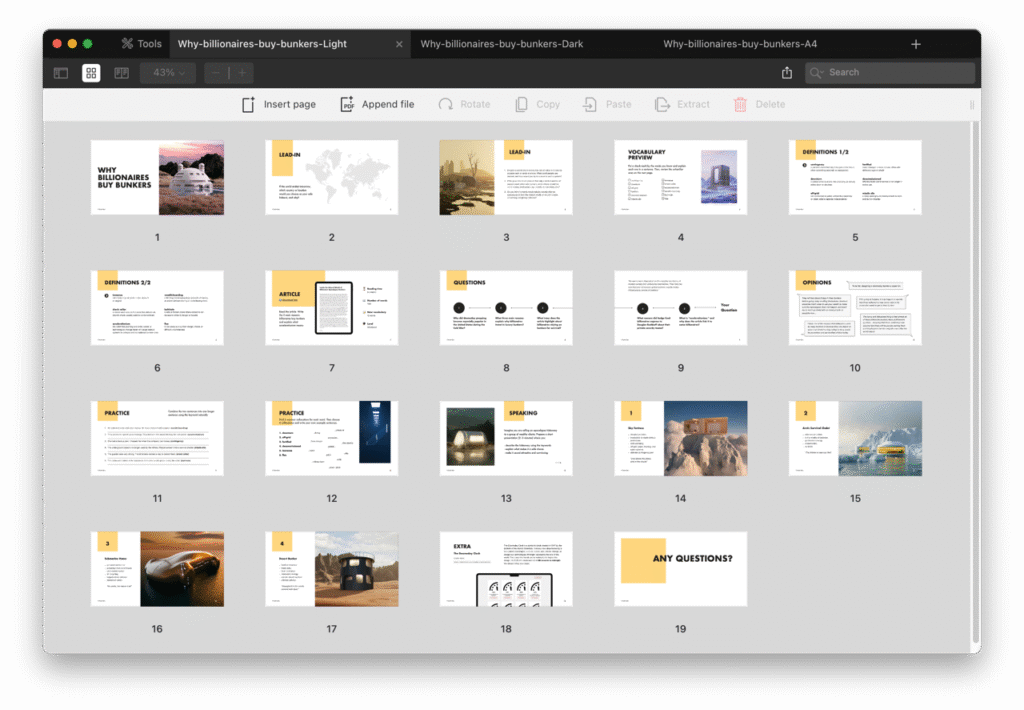
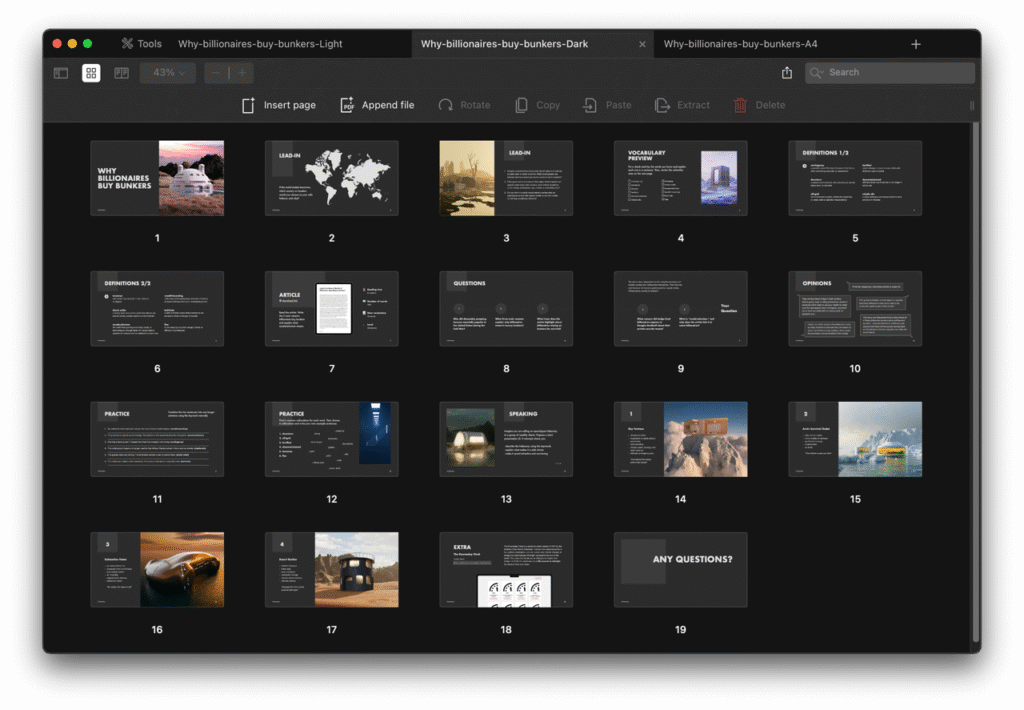
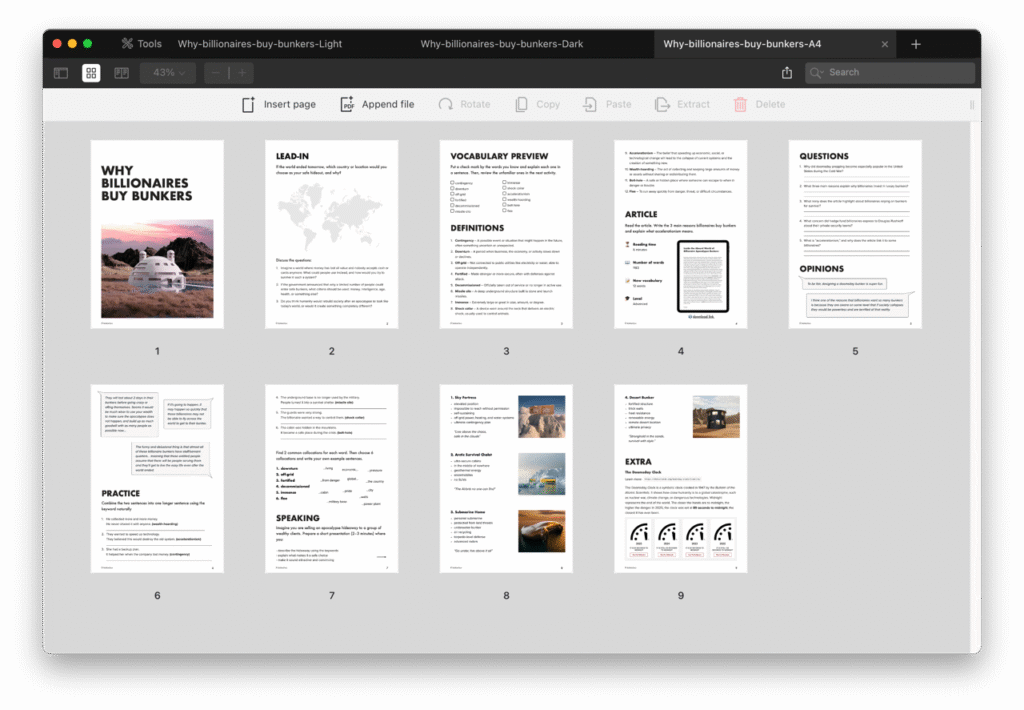
Vocabulary
- contingency
- downturn
- off-grid
- fortified
- decommissioned
- missile silo
- immense
- shock collar
- accelerationism
- wealth-hoarding
- bolt-hole
- flee
Contents
- Lead-in
- Vocabulary preview
- Definitions
- Article
- Questions
- Opinions
- Practice
- Speaking
- Extra
Open with the hypothetical question about where students would hide if the world ended tomorrow. This gets them thinking about survival and safety. Move to the three lead-in scenarios about currency collapse, bunker selection criteria, and rebuilding society. These questions set up the critical thinking needed for the article. Students discuss in small groups and share their reasoning.
Pre-teach vocabulary before reading. Go through the checklist where students mark which words they know. Then review definitions for “contingency,” “downturn,” “off-grid,” “fortified,” “decommissioned,” “missile silo,” “immense,” “shock collar,” “accelerationism,” “wealth-hoarding,” “bolt-hole,” and “flee.” Make sure everyone understands “accelerationism” since it’s a complex concept. It means pushing change faster to collapse current systems and replace them with new ones.
Give students 6 minutes to read the article. It’s about 1,183 words and discusses three main reasons billionaires buy bunkers: fear of economic collapse, desire for control, and belief that money can buy safety. After reading, students write the three main reasons and explain what accelerationism means. Then they answer comprehension questions. Why did doomsday prepping become popular during the Cold War? What irony does the article highlight about billionaires needing complex society to maintain their wealth?
Show the comment section where real people respond to billionaire bunkers. Some think it’s fun to design them. Others say billionaires would go crazy in two days. One comment points out that billionaires assume servants will still work for them after the apocalypse. Students discuss which comments they agree with and why. This reveals different perspectives on wealth, power, and survival.
The first practice exercise has students combine two short sentences into one longer sentence using a keyword naturally. For example, “He collected more and more money. He never shared it with anyone” becomes “His wealth-hoarding meant he collected more and more money and never shared it with anyone.” The second practice finds collocations like “economic downturn,” “off-grid living,” and “fortified walls.” Students write six example sentences using these collocations.
The speaking task is a sales pitch for an apocalypse hideaway. Show four options: Sky Fortress, Arctic Survival Chalet, Submarine Home, and Desert Bunker. Each has specific features and a tagline. Students pick one and prepare a 2-3 minute presentation describing the hideaway, explaining what makes it safe, and making it sound attractive. They should use lesson vocabulary like “contingency,” “fortified,” and “off-grid.” This combines creativity with vocabulary practice.
Wrap up with the Doomsday Clock info. It’s a symbolic clock showing how close humanity is to catastrophe. In 2025, it was set at 89 seconds to midnight, the closest ever. Students discuss what this means and if they think the fear is justified. The timeline link lets interested students explore more at home.
