
Who Creates Social Norms?

This B2 lesson asks where social norms come from and whether old ones still make sense today. Students listen to two audio clips about evaluating norms, learn vocabulary like “transgress,” “embedded,” and “outdated,” and debate real examples like tipping culture and small talk in business meetings. It’s a lesson that gets people talking because everyone follows social rules they’ve never really questioned.
Lesson overview
- Learn twelve vocabulary words about social norms through synonym matching and context
- Listen to two audio clips about how norms are created, enforced, and challenged
- Identify the odd word out in sets of four to sharpen understanding of key vocabulary
- Debate whether specific social norms like tipping and offering your seat are still relevant
| Level | Vocabulary | Listening Time | Lesson Time |
| B2 / Upper-Intermediate | 12 words | 3:50 min | 60-90 min |
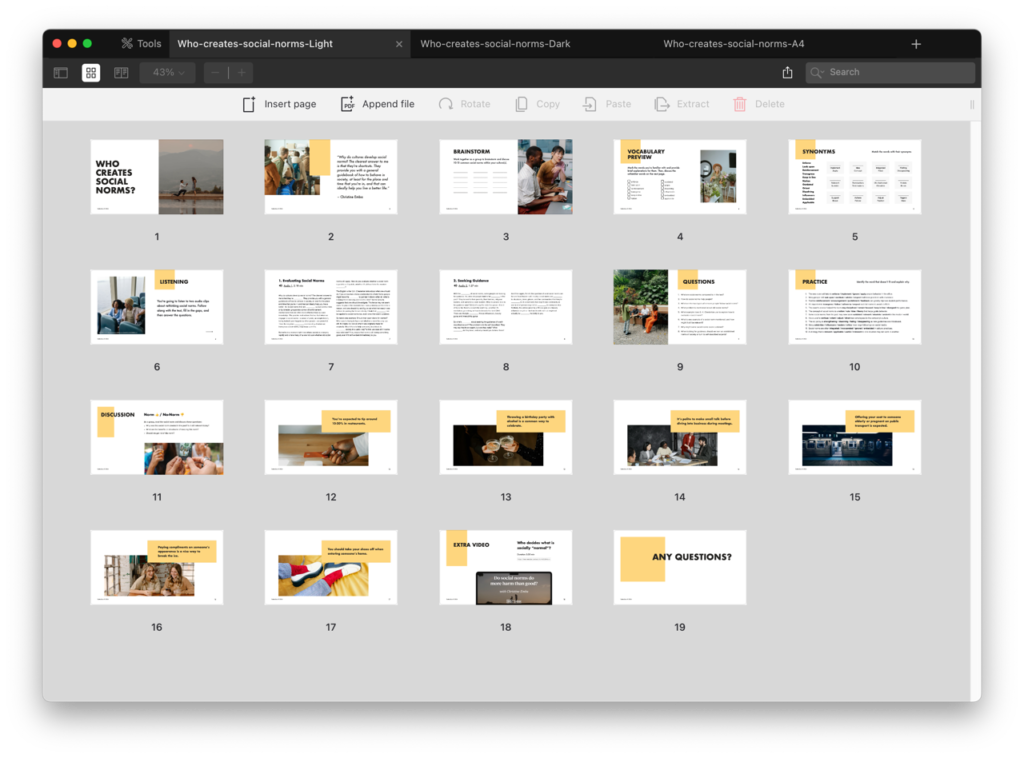

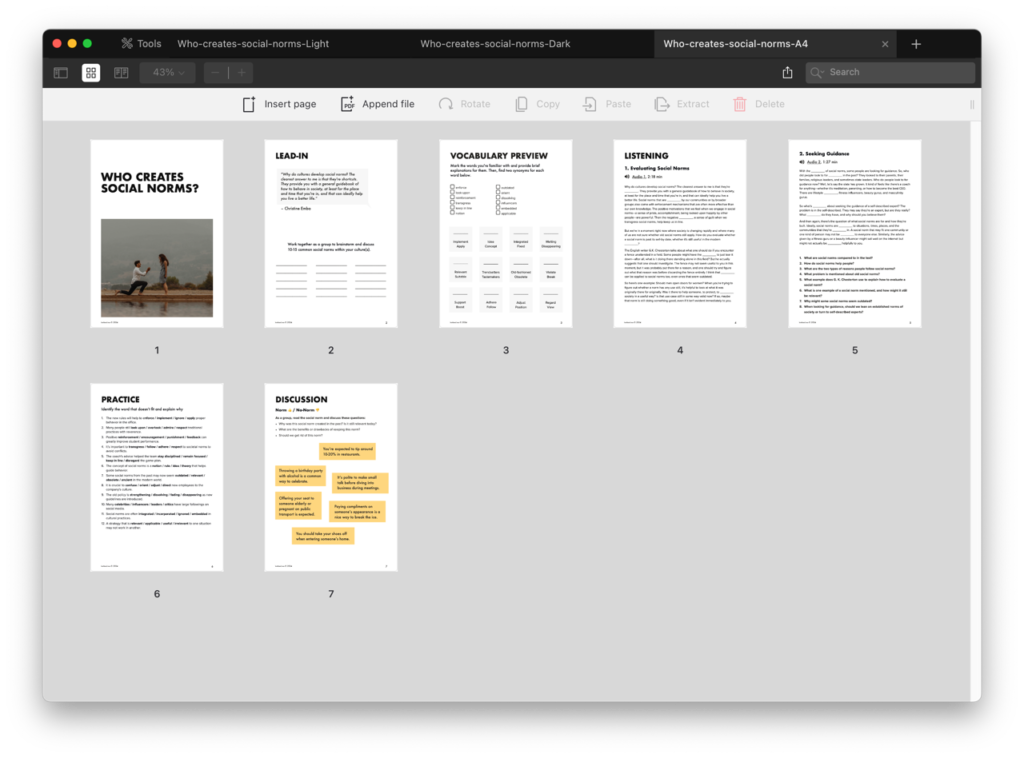
Vocabulary
- Enforce
- Look upon
- Reinforcement
- Transgress
- Keep in line
- Notion
- Outdated
- Orient
- Dissolving
- Influencers
- Embedded
- Applicable
Contents
- Lead-in
- Brainstorm
- Vocabulary preview
- Synonyms
- Listening
- Questions
- Practice
- Discussion
- Extra video
Open with the Christine Emba quote about social norms being shortcuts. Read it together and ask students if they agree. Then do the brainstorm activity where the group lists ten to fifteen social norms from their own cultures. This works well because classes with mixed nationalities will produce very different lists, and even students from the same country often disagree about what counts as a norm. Write everything on the board so you can refer back to it during the debate later.
Move into the twelve vocabulary words. Students first mark which ones they know, then do the synonym matching to learn the rest. “Transgress,” “keep in line,” and “embedded” tend to need the most attention at B2 level. Use clear examples tied to the lesson theme, like “If you transgress a social norm, people might judge you” or “Some rules are so embedded in our culture that we follow them without thinking.” Once the vocabulary is covered, start the listening section.
There are two audio clips with gap-fill exercises. The first clip runs about two minutes and covers why social norms exist and how to evaluate whether they’re still useful. The G.K. Chesterton fence analogy is the key idea here, so make sure students understand it before moving on. The second clip is shorter and talks about where people look for guidance now that traditional authority figures are less dominant. Play each clip twice, letting students fill in blanks on the first listen and check answers on the second. After both clips, go through the eight comprehension questions as a class or in pairs.
The odd-one-out vocabulary exercise is a smart review activity. Students look at four words per question and pick the one that doesn’t fit. This pushes them beyond simple definitions into understanding how words relate to each other. Finish with the “Norm or No-Norm” debate. Six real social norms appear one at a time: tipping, birthday parties with alcohol, small talk before meetings, offering your seat, complimenting appearance, and removing shoes in someone’s home. For each one, students discuss why it exists, whether it’s still useful, and whether it should go. These get heated fast, so give each norm a few minutes before moving to the next.
