
What Is the ‘Gen Z Stare’?
This B2 lesson explores the “Gen Z stare” and generational communication differences. Students learn vocabulary like “mandatory,” “formative years,” and “soft skills,” then watch a video explaining why Gen Z developed this blank expression. Activities include discussing small talk habits, comparing generational traits, and researching Gen Z slang terms.
Lesson overview
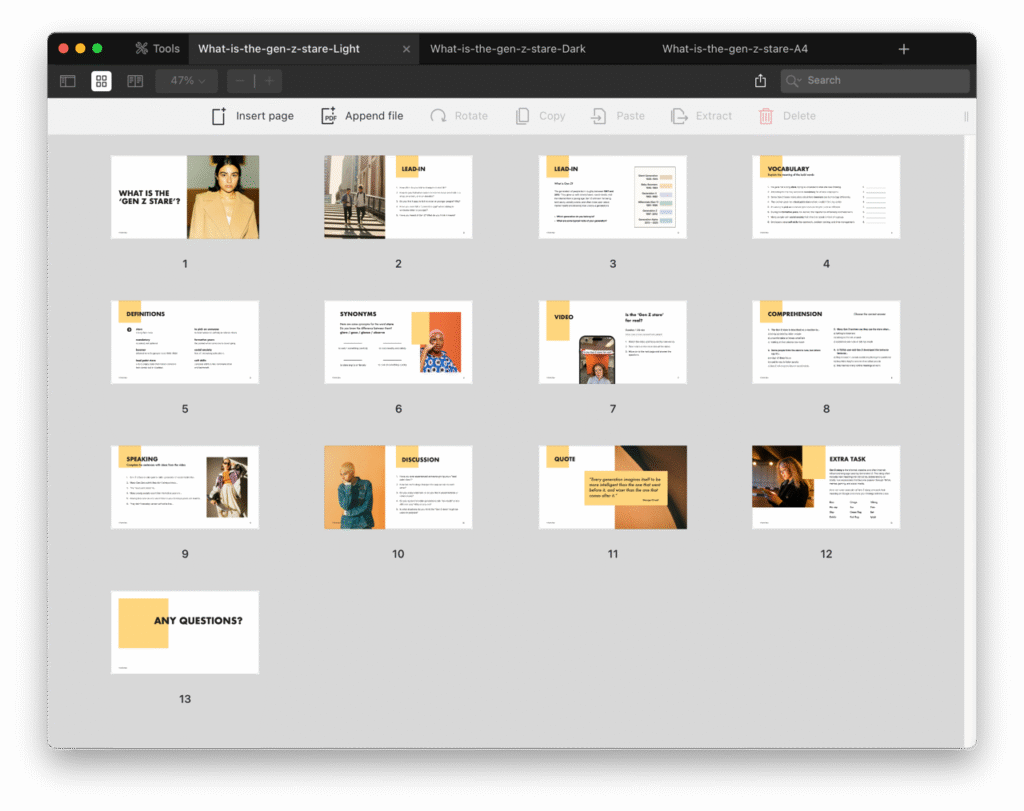
- Practice vocabulary for discussing generational behavior
- Watch a video explaining the Gen Z stare as a response to uncomfortable small talk and pandemic isolation
- Discuss whether small talk is necessary and how technology changed face-to-face communication habits
- Research Gen Z slang terms like rizz, no cap, and slay, then share meanings with the class
| Level | Vocabulary | Video Length | Lesson Time |
| B2 / Upper-Intermediate | 12 words | 1:55 min | 60 min |
Vocabulary
- Stare
- Mandatory
- Boomer
- Lead paint stare
- To pick on someone
- Formative years
- Social anxiety
- Soft skills
- Gaze
- Glare
- Glance
- Observe
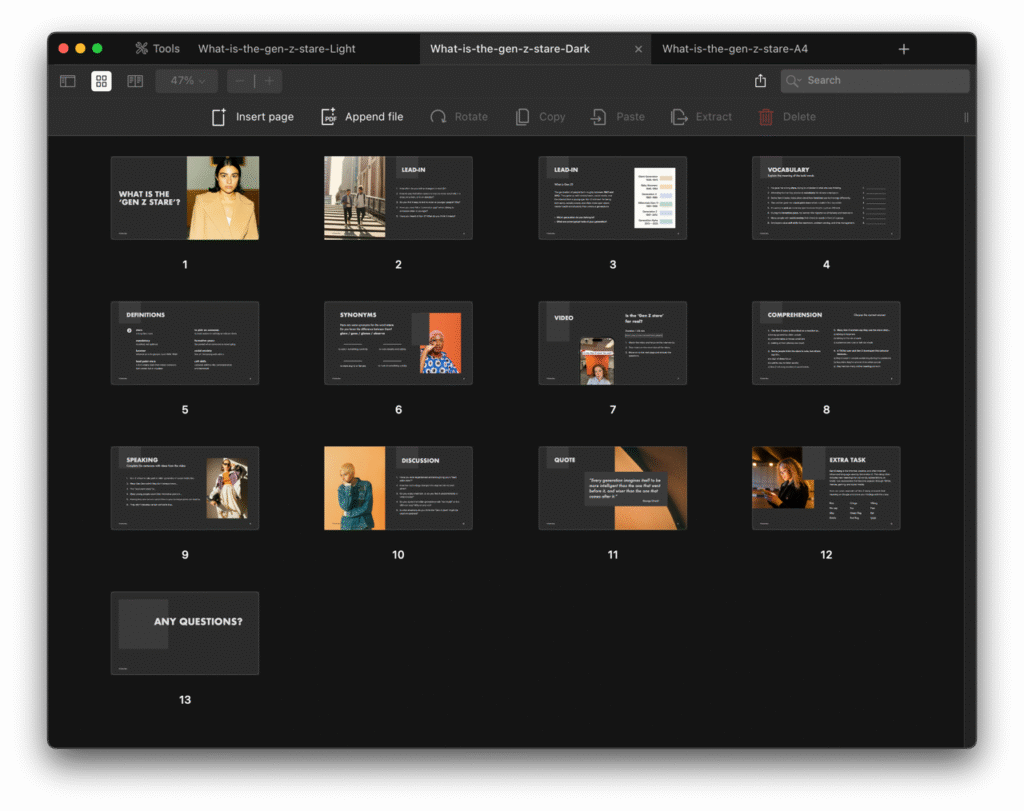
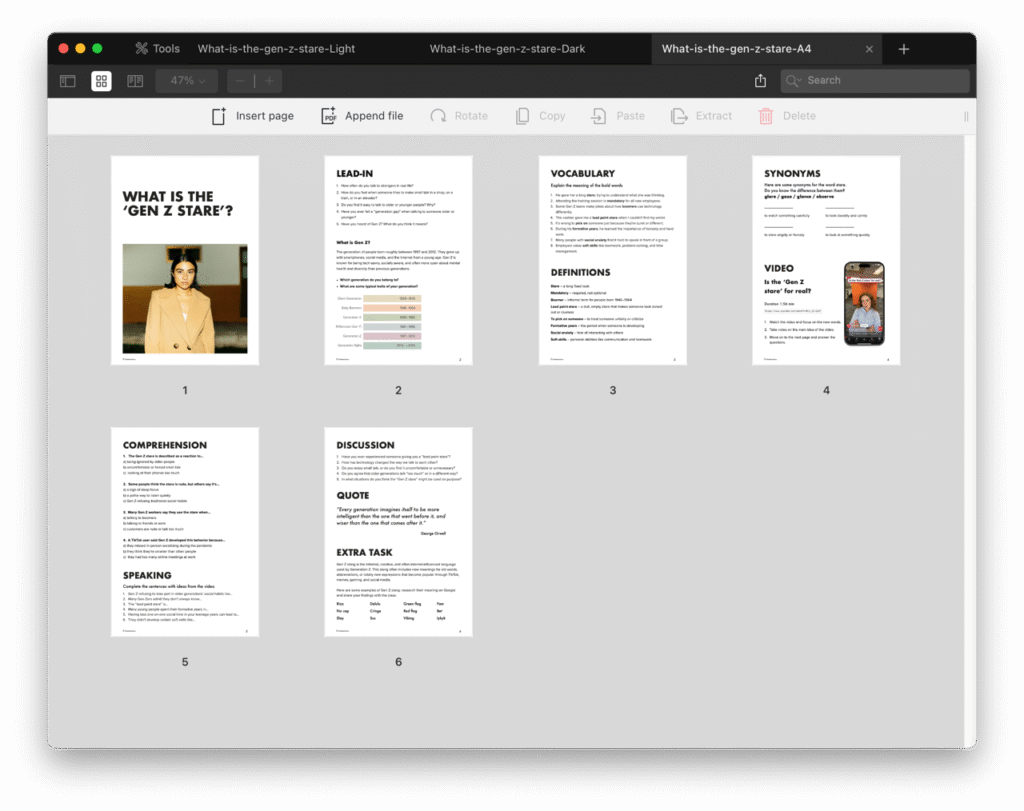
Contents
- Lead-in
- Vocabulary
- Video
- Comprehension
- Speaking
- Discussion
- Quote
- Extra task
Start with the lead-in questions about talking to strangers and feeling generation gaps. Question 5 asks if students have heard of Gen Z, which transitions into the definition box. Read it together, then discuss which generation students belong to and typical traits. This personalizes the topic before diving into the Gen Z stare concept.
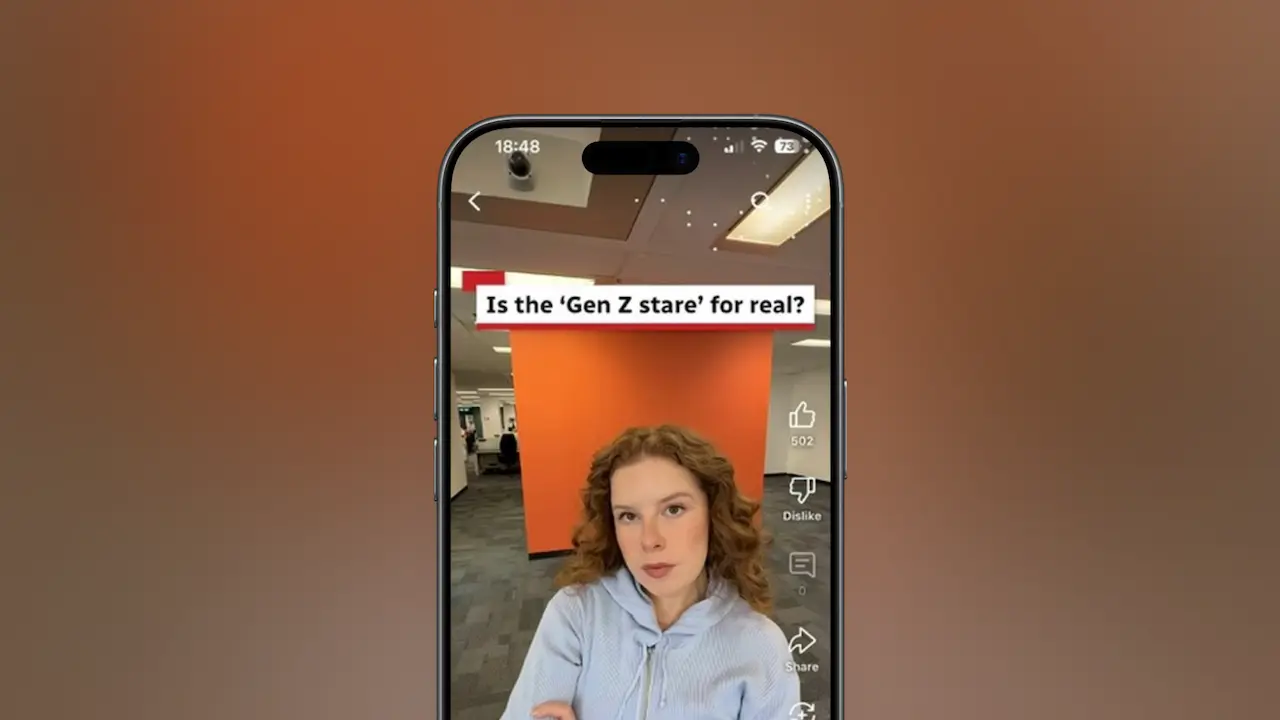
Move to vocabulary. Students explain bold words from sentences, then check definitions. Words like “formative years” and “soft skills” are useful beyond this lesson topic. The synonyms section asks students to distinguish between glare, gaze, glance, and observe. Do this together and provide example sentences to clarify differences. Then play the video. It’s under two minutes and explains the Gen Z stare as a reaction to forced small talk and a result of pandemic isolation affecting social development.
After watching, students answer four multiple-choice comprehension questions. Check answers together, then move to the speaking task where students complete sentences with ideas from the video. This requires recall and paraphrasing, not just yes/no answers. The discussion questions work well in pairs or small groups. Question 3 about enjoying small talk often divides students between those who find it friendly and those who see it as performative. Question 5 about when the stare might be used on purpose gets students thinking critically about social dynamics.
The George Orwell quote about every generation thinking itself smarter provides a nice reflection point. Ask if students agree and whether this applies to how Gen Z views boomers or how boomers view Gen Z. The extra task has students research Gen Z slang terms. Assign different terms to different students or pairs, give them five minutes to look up meanings, then share with the class. This keeps energy high and adds humor to the end of the lesson.
If time allows, ask students whether their generation has specific slang or expressions that older people don’t understand. This connects the Gen Z slang research back to their own experience and reinforces the lesson theme about generational communication gaps.
