
What is Mpox?

This B2 lesson covers mpox, how it spreads, and what people can do to protect themselves. Students read a 1000-word article, learn medical vocabulary like “contagious,” “lesion,” and “transmitted,” and discuss public health topics. It works especially well with students who followed the COVID-19 pandemic closely and already have opinions about vaccines and government responses.
Lesson overview
- Learn twelve medical vocabulary words through reading, scanning, and unscrambling activities
- Read an article about mpox and answer comprehension questions about symptoms and prevention
- Practice using health-related vocabulary in original sentences with context clues
- Discuss public health topics like contagious diseases, precautions, and emergency responses
| Level | Vocabulary | Lesson Time |
| B2 / Upper-Intermediate | 20 words | 60-80 min |
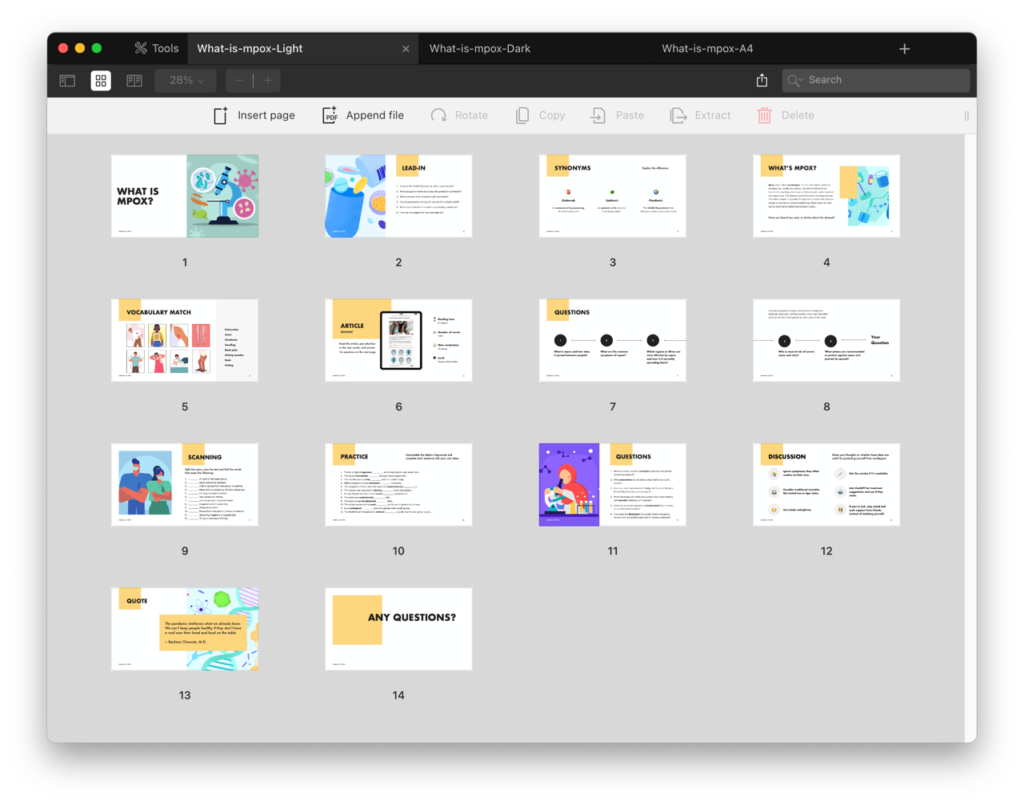
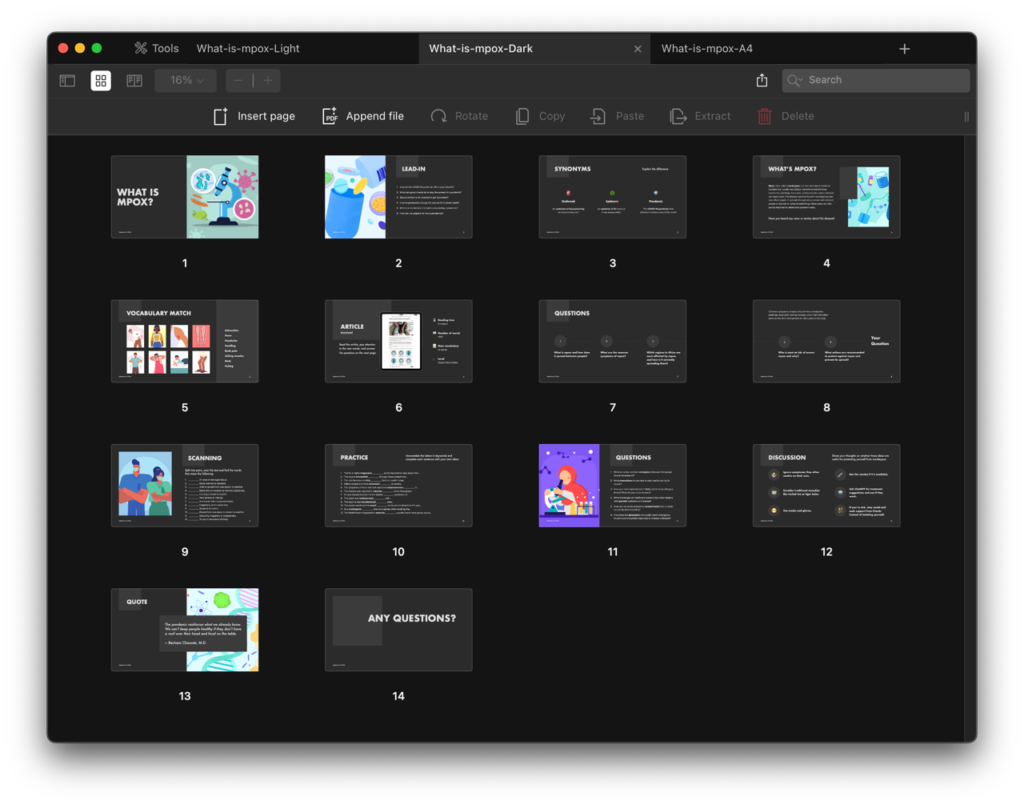
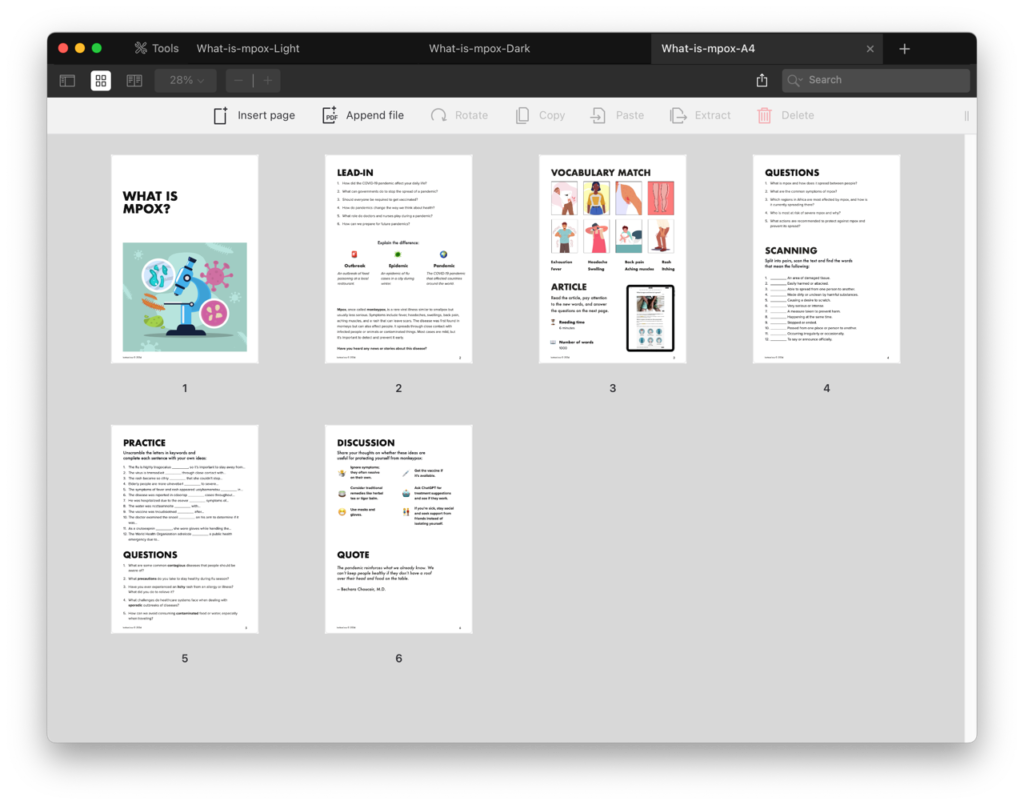
Vocabulary
- exhaustion
- fever
- headache
- swelling
- back pain
- aching muscles
- rash
- itching
- contagious
- transmitted
- itchy
- vulnerable
- simultaneously
- sporadic
- severe
- contaminated
- discontinued
- lesion
- precaution
- declare
Contents
- Lead-in
- Synonyms
- What’s mpox?
- Matching
- Article
- Comprehension questions
- Scanning
- Practice
- Questions
- Discussion
- Quote
Start with the lead-in questions about COVID-19 and pandemics. B2 students lived through it and usually have plenty to say about how it changed their lives. After a few minutes of discussion, move to the synonyms slide where students explain the differences between outbreak, epidemic, and pandemic. This is worth spending time on because many students use these words interchangeably. Use the examples on the slide and ask students to think of one more example for each term.
Introduce mpox with the short overview text. Read it together and check if anyone has heard news about the disease. Then do the symptom vocabulary matching with the eight pictures showing exhaustion, fever, rash, and so on. After that, students read the full 1000-word article. Give them about eight to ten minutes for this. The article covers what mpox is, how it spreads, who is most at risk, and what precautions to take. Let students read quietly and underline words they don’t know before moving to the comprehension questions.
The scanning exercise comes next. Students work in pairs to find twelve words in the article that match the given definitions. Words like “vulnerable,” “contagious,” “sporadic,” and “precaution” are all in there. This is a good skill-building activity because it forces students to read carefully rather than skim. After scanning, move to the unscramble and sentence completion task. Students unscramble jumbled letters to find the keyword, then finish each sentence with their own ideas. This pushes them from recognition into active production.
Wrap up with the discussion questions and the opinion activity about ways to protect yourself from mpox. The opinion slide includes some deliberately questionable suggestions like “ask ChatGPT for treatment” and “ignore symptoms,” which should spark good debate. Students evaluate each idea and explain whether it’s useful or not. The closing quote about health and basic needs ties the lesson back to bigger public health questions and works well as a final reflection prompt.
