
What Is a Budget?
This B2 lesson explores personal budgeting fundamentals through video content and practical scenarios. Students learn essential financial vocabulary, understand the 50-30-20 budgeting rule, and practice applying money management principles to real-life situations involving competing financial priorities.
Lesson overview
- Practice vocabulary for personal finance and budget planning
- Learn practical budgeting strategies including the 50-30-20 rule
- Develop critical thinking about financial goals and spending priorities
- Discuss real-world budgeting challenges through case studies and debates
| Level | Vocabulary | Video Length | Lesson Time |
| B2 / Upper-Intermediate | 8 words | 4:45 min | 60 min |
Vocabulary
- broke
- budget
- keep track of
- allowance
- set aside
- keep handy
- figure out
- prioritize
Contents
- Lead-in
- Vocabulary match
- Video
- Questions
- Comprehension
- Vocabulary practice
- Speaking
- Debate
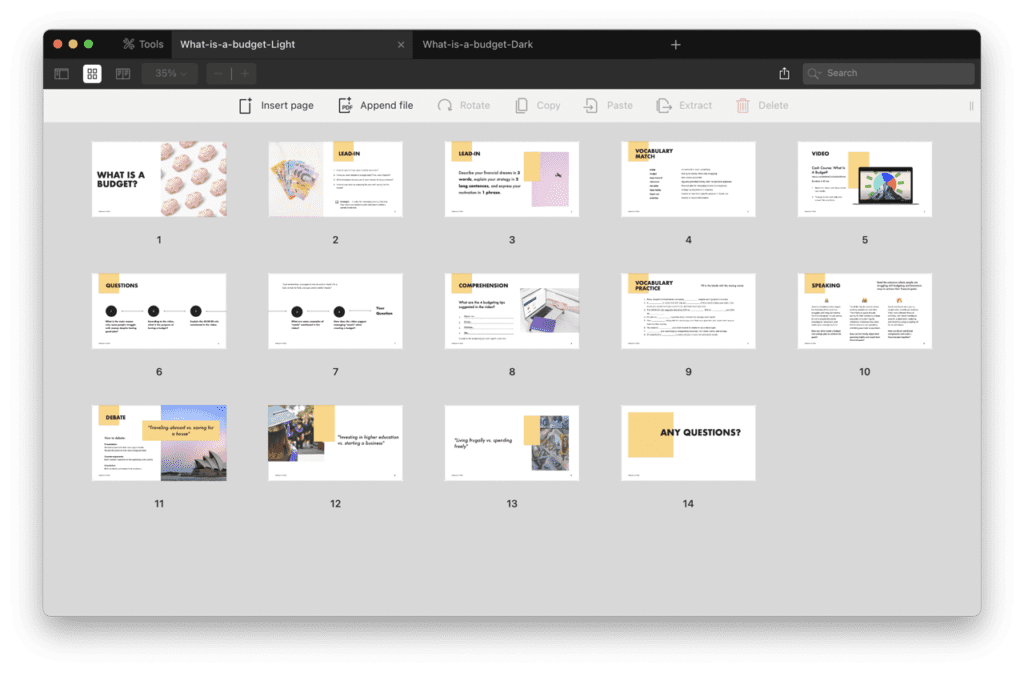
Begin with the lead-in questions on page 2 about personal money management. These get students reflecting on their own financial habits before introducing formal budgeting concepts. The definition box at the bottom provides vocabulary you can highlight now or return to later.
Page 3 has a creative speaking activity where students describe their financial goals in exactly three words, explain their strategy in two sentences, and give their motivation in one phrase. This constrained format encourages precision and keeps sharing quick enough for everyone to participate.
Page 4 presents core vocabulary through matching. Have students work individually first, then check in pairs before class review. Drill phrases like “keep track of” and “set aside” since phrasal verbs can be tricky at this level.
The video on page 5 runs about 4:45 and is the lesson’s centerpiece. Preview the comprehension questions on pages 6-7 first so students know what to listen for. Play the video once without stopping, then have students discuss questions in small groups. The video explains why people struggle financially despite good incomes, introduces the 50-30-20 rule, and distinguishes needs from wants. Page 8 asks students to complete four budgeting tips from the video.
Page 9 provides gap fills where students insert vocabulary into sentences about budgeting. This prepares them for freer speaking ahead.
The case studies on page 10 present three realistic budgeting scenarios. Assign each group one scenario to discuss, then have them present recommendations to the class.
Pages 11-13 introduce debate topics comparing financial priorities: traveling versus saving for a house, education versus starting a business, frugal versus free spending. Page 11 explains debate structure with presentation, counter-arguments, and conclusion phases. These work as pair activities or class presentations. The topics have merit on both sides, pushing students to think critically about financial trade-offs.
Wrap up by asking which budgeting tips students might actually try in their own lives.
