
What If Your Phone Is Gone?

This C1 lesson examines phone security through a personal account of losing an iPhone at LAX airport. Students learn advanced vocabulary like “impervious,” “mnemonic device,” and “sidetrack,” then read about backup failures, password disasters, and recovery strategies. The activities include comprehension questions, vocabulary nuance exploration, phone theft perspective-taking, and analyzing street snatch videos.
Lesson overview
- Build sophisticated vocabulary related to data security, memory techniques, and preventive measures
- Read a detailed personal narrative about losing a phone and the cascading problems that followed
- Analyze the difference between physical loss and data exposure through discussion questions
- Practice perspective-taking by thinking like a phone thief to understand security vulnerabilities
| Level | Vocabulary | Reading Time | Lesson Time |
| C1 / Advanced | 10 words | 1400 words, 8 min | 60 min |

Vocabulary
- mourn
- oopsy-daisy
- en route
- misplaced
- testimony
- tangible
- sidetrack
- mnemonic device
- incessantly
- impervious
Contents
- Lead-in
- Vocabulary
- Definitions
- Article
- Comprehension
- Discussion
- Practice
- Video
- Speaking
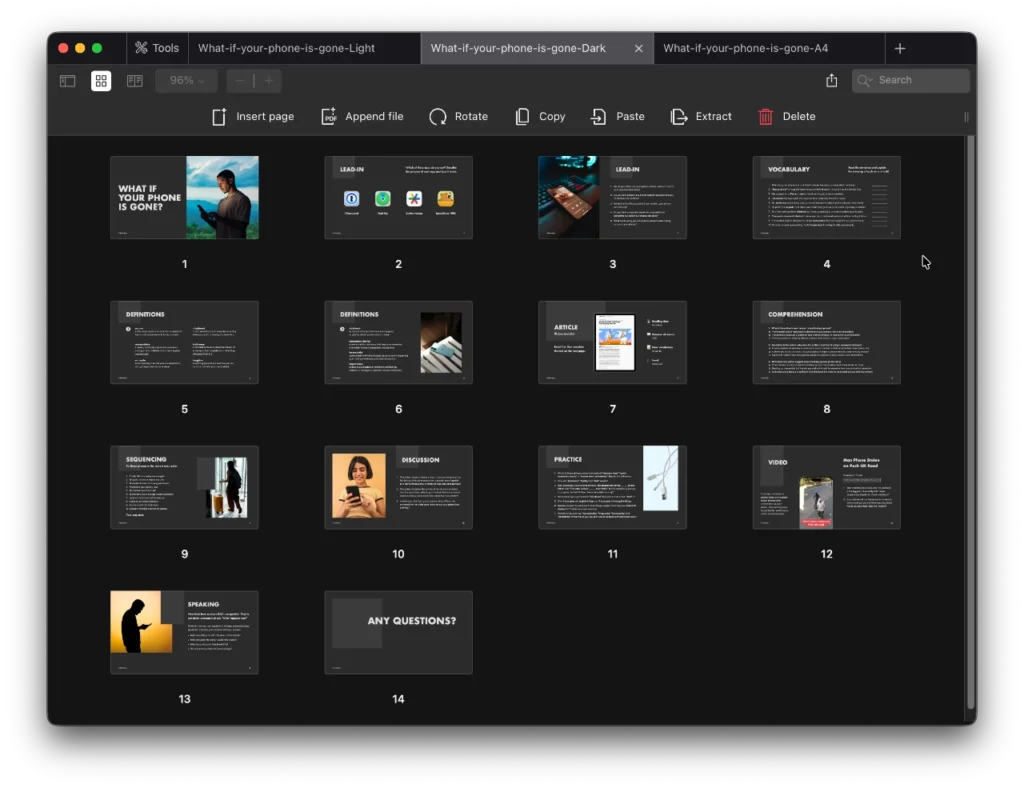
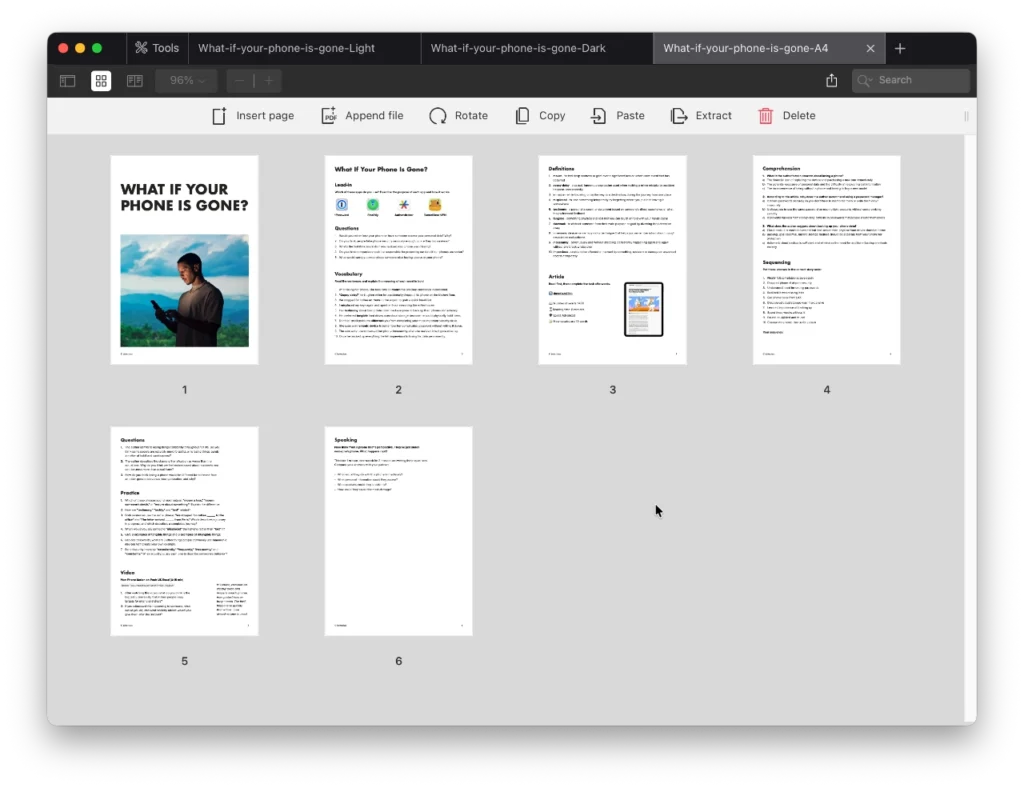
Open with the app recognition activity on slide 2. C1 students should know apps like 1Password, Find My, and VPN services, but they may not articulate exactly how they work. This warm-up reveals gaps in their security knowledge before the vocabulary section. The lead-in questions explore whether people take phone security seriously enough and what losing a phone versus having data accessed means psychologically.
The vocabulary section introduces ten advanced terms that appear throughout the article. Make sure students understand “mnemonic device” since memory techniques become important for password security. “Impervious” appears at the article’s conclusion when the author finally feels protected against future loss. “Tangible” versus cloud storage creates a key distinction in backup strategies.
The article runs about 1400 words and tells the complete story of dropping an iPhone at LAX, spending three weeks without it, and learning painful lessons about backup, password management, and two-factor authentication. The author’s honest tone about mistakes makes the advice more credible. She admits keeping all passwords in a Notes file labeled “Passwords” and not memorizing essential login information. C1 students can handle the length and pick up on the ironic contrast between her irrational optimism and constant history of losing things.
The comprehension questions test whether students understood the main concern (data exposure, not device cost), why password managers help, and why backup methods should be separate from phones. The sequencing activity on slide 9 asks students to order ten phrases chronologically, which tests detailed reading and logical thinking about the timeline.
The discussion questions push deeper analysis. Question 2 asks why embarrassment about carelessness feels worse than actual harm, which explores psychology beyond the practical security tips. Question 3 compares generational responses to phone loss, connecting to how digital natives versus older users store different types of information.
The practice section on slide 11 explores vocabulary nuances. Students explain when to say “mourn a loss” versus “mourn about something,” distinguish “misplaced” from “lost,” and rank intensity adverbs. These precision exercises suit C1 level where subtle distinctions matter.
The phone snatch video runs only 15 seconds but shows shocking street theft in London. Criminals on bikes grab phones from pedestrians so quickly victims can’t react. After watching, students discuss vulnerabilities and what advice they’d give victims. The final speaking activity flips perspective entirely. Students think like thieves for one minute, then speak for two minutes about what they’d do with a stolen phone, what data they could access, and how to cause maximum damage. This uncomfortable exercise reveals security gaps more effectively than passive discussion.
