
What Does Aging Really Feel Like?

This B2 lesson explores what aging really feels like through an age-simulation suit video. Students learn vocabulary like “cognitive load,” “muscle loss,” and “impaired vision,” then discuss stereotypes, physical challenges, and emotional aspects of growing older. The activities include opinion ladders, error correction, and reflection on attitudes toward aging.
Lesson overview
- Build vocabulary related to physical changes, vision problems, and mental effort
- Watch a reporter experience an age-simulation suit and discuss what made tasks difficult
- Practice forming complex opinions using a three-step ladder structure
- Explore stereotypes and discuss how society treats older adults
| Level | Vocabulary | Video Length | Lesson Time |
| B2 / Upper-Intermediate | 10 words | 1:27 min | 60 min |
Vocabulary
- Replicate
- Muscle loss
- Impaired vision
- Off balance
- Cognitive load
- Stave off
- Retain skills
- Take proactive steps
Contents
- Lead-in
- Vocabulary
- Definitions
- Preview discussion
- Video
- Comprehension
- Discussion
- Practice
- Opinion ladder
- Wrap up
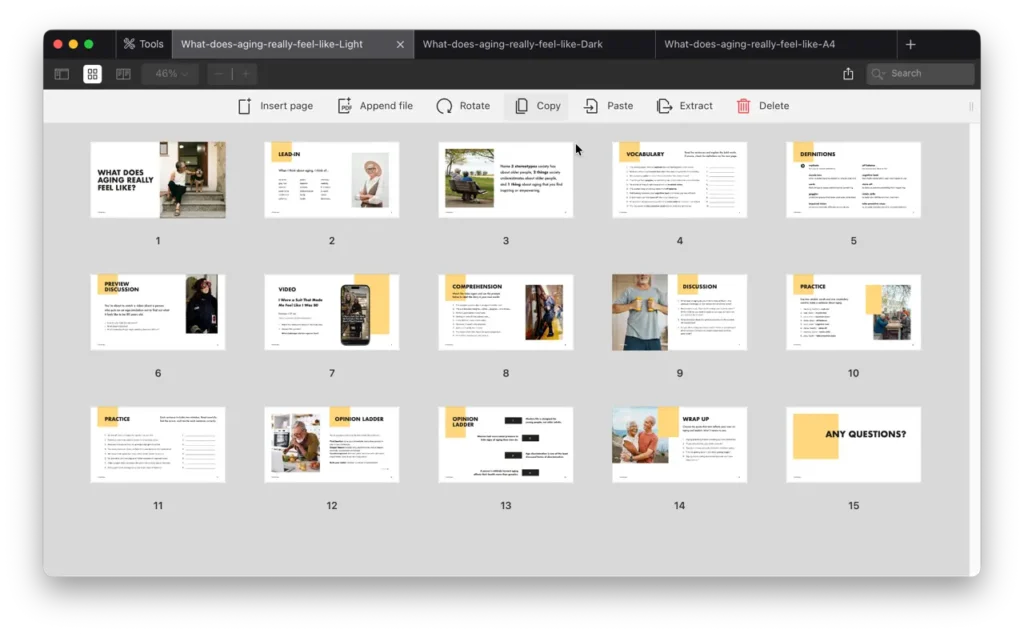
Start with the word cloud on slide 2. Students choose words that come to mind when they think about aging. This reveals their assumptions before the lesson challenges them. The next activity asks for three stereotypes, two underestimated qualities, and one inspiring aspect. B2 students can handle this structured reflection, and it sets up the critical thinking they’ll need later.
The vocabulary section introduces ten useful phrases. Words like “replicate” and “stave off” appear in health discussions often, so they’re worth practicing. Students read sentences first, then check definitions. Make sure they understand “cognitive load” since it comes up in the video and connects to multitasking conversations.
Before watching, ask students to predict what an age-simulation suit looks like and what it does. The video runs 1:27 minutes and shows a reporter wearing weights, goggles, and cords that restrict movement. Play it twice. First viewing focuses on main challenges. Second viewing uses the sentence starters on slide 8 for detailed retelling. Students notice both physical struggles like climbing stairs and mental pressure like crossing streets quickly.
The discussion questions connect the video to real life. Question 2 references the researchers’ advice to “train for what you want to retain,” which gives students a concrete action to consider. The opinion ladder activity on slides 12-13 teaches a three-step structure for building arguments. Students give a reaction, explain their reasoning, then add a counterpoint. This works well for topics like age discrimination and social pressure about appearance.
