
What Do You Do For a Living?
This B1 lesson helps pre-intermediate students talk about jobs and careers using everyday English. Students learn job vocabulary, practice asking “What do you do for a living?” and discuss work preferences through a video-based lesson. The lesson builds confidence in describing occupations and understanding simple career conversations.
Lesson overview
- Practice asking and answering questions about jobs and occupations
- Learn essential job vocabulary through matching and speaking activities
- Explore work preferences using “this or that” comparison exercises
- Discuss career goals and paths using simple timeline structures
| Level | Vocabulary | Video Time | Lesson Time |
| B1 / Intermediate | 10 words | 1 min | 60 min |
Vocabulary
- Artist
- Flight attendant
- IT specialist
- Personal trainer
- Delivery driver
- Barista
- Security guard
- Tour guide
- Nurse
- YouTuber
Contents
- Lead-in
- This or that
- Vocabulary match
- Speaking
- Timeline
- Video
- Practice
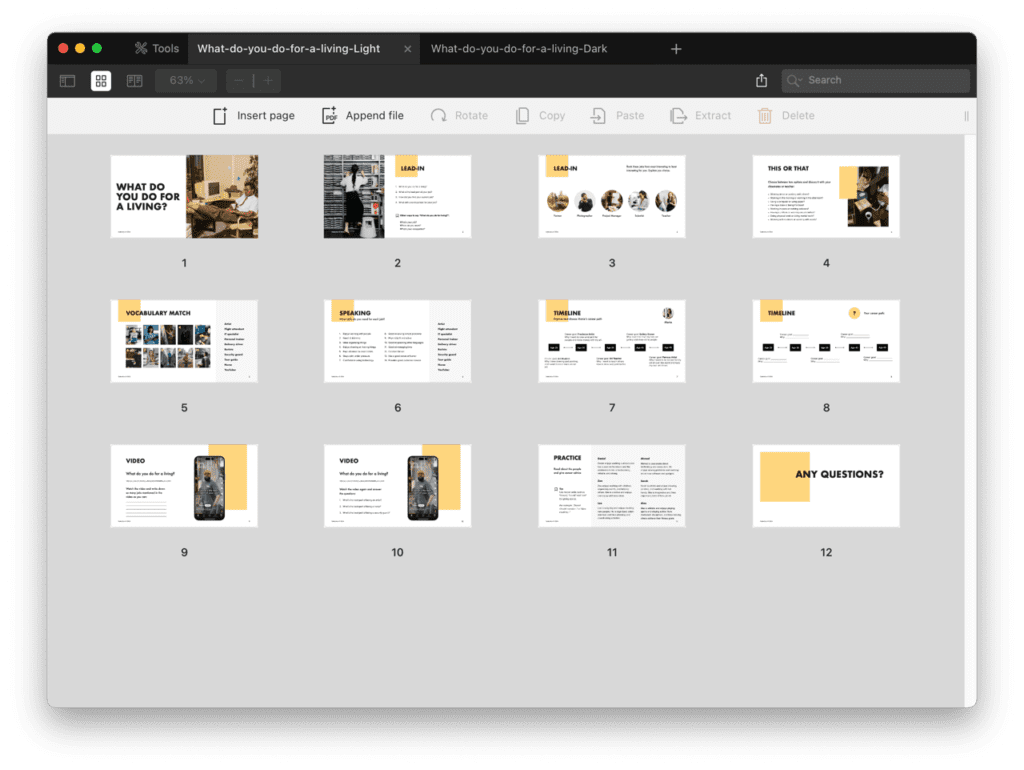
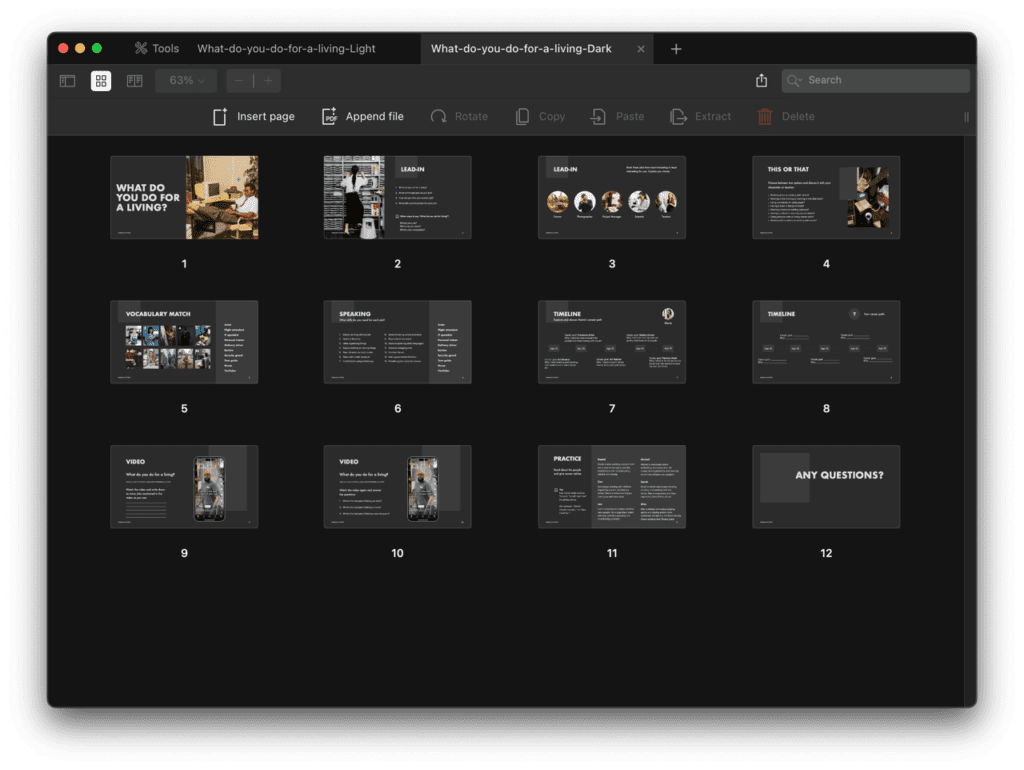
Start with the lead-in questions on page 2. Get students talking about their own work or study situations—what they do, what they like about it. This warms everyone up before you bring in new vocabulary.
Page 3 has a job ranking activity. Students look at five jobs (farmer, photographer, project manager, scientist, teacher) and order them from most to least interesting. Good opportunity for simple comparative language. Listen for errors you can circle back to later.
The vocabulary matching on page 5 introduces ten job titles with pictures. Do the matching together, then use page 6 to practice describing what skills each job needs. The “this or that” activity on page 4 works as pair work—students explain their work style preferences to each other.
Pages 9-10 are the main event: a video activity. Play the short YouTube clip twice. First time, students just list the jobs they hear. Second time, they answer comprehension questions about what people like about their work. Real people talking about real jobs, pitched at a level B1 students can follow.
Wrap up with the career timeline activity on pages 7-8. Students look at Maria’s career path as a model, then sketch out their own. This pulls together the vocabulary and structures from the lesson. For homework, they can write a short paragraph about their career goals using the timeline as a starting point.
