
Weaponized Incompetence
This B2 lesson examines weaponized incompetence, when people pretend they can’t do tasks to avoid responsibility. Students learn vocabulary like “manifest,” “delegate,” and “ableist,” then watch a video explaining how this behavior harms relationships. The activities include discussing gender roles, analyzing real examples, and debating fairness in household responsibilities.
Lesson overview
- Learn advanced vocabulary related to incompetence, responsibility, and household labor
- Watch a video defining weaponized incompetence and how it differs from genuine lack of skill
- Discuss gender roles in household tasks and how expectations are changing
- Practice matching collocations and using phrases in context about domestic responsibilities
| Level | Vocabulary | Video Length | Lesson Time |
| B2 / Upper-Intermediate | 12 words | 4:36 min | 60 min |


Vocabulary
- Incompetence
- Mainfest
- Ignorance
- Accrue
- Call out
- Ableist
- Moron
- Immature
- Infantile
- Delegate
- Oppression
- Finite
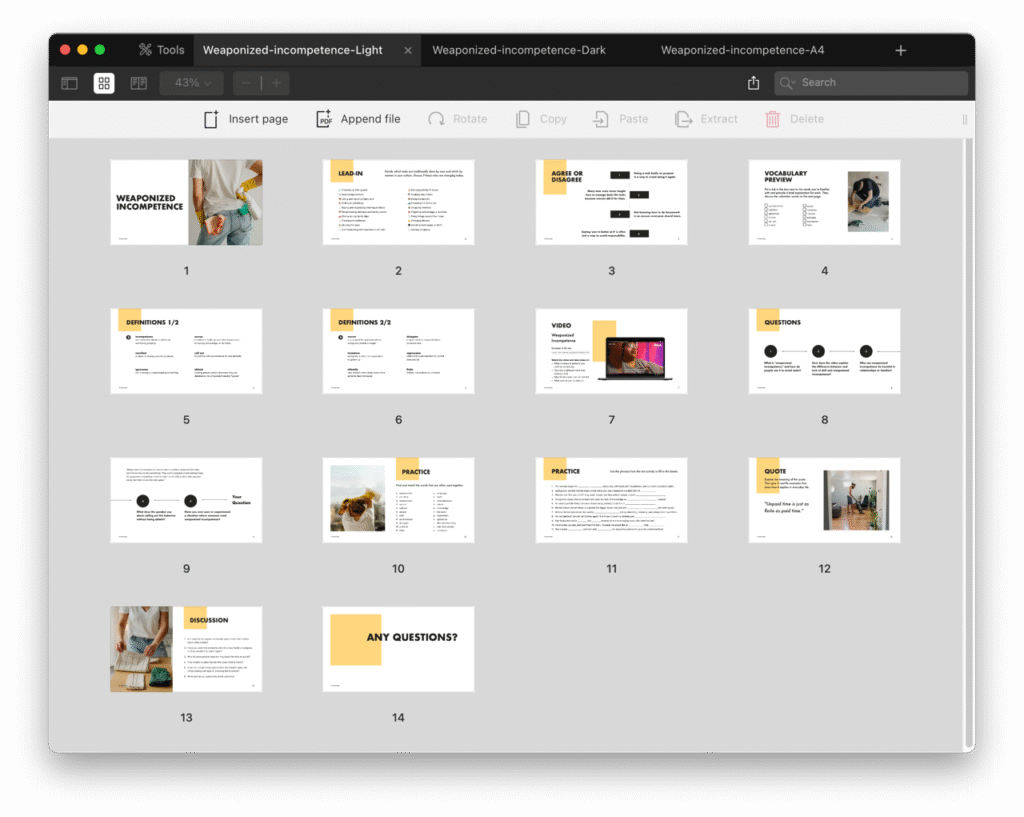
Contents
- Lead-in
- Agree or disagree
- Vocabulary preview
- Definitions
- Video
- Questions
- Practice
- Quote
- Discussion
Start with the lead-in where students categorize tasks by traditional gender roles in their culture. The emoji list includes everything from cleaning bathrooms to managing finances. Students discuss whether these patterns are shifting, which usually reveals generational differences. Some cultures show more change than others, making this a rich comparison activity.
The agree or disagree statements set up the video’s main ideas. Statement two about men never learning tasks because women did them touches on learned helplessness. Statement four about “you’re better at it” being an excuse gets students thinking about manipulation tactics before they see examples in the video.
The vocabulary preview uses the tick box format so students self-assess first. Words like “incompetence” and “delegate” are useful across contexts, while “ableist” and “oppression” connect to social justice themes. “Moron” and “infantile” are strong terms, so note that these are harsh and informal. The video uses direct language, which is why these appear in the vocabulary list.
The video is about four and a half minutes and defines weaponized incompetence with examples. Students take notes on what it means, how it differs from real lack of skill, why it’s harmful, and what to do about it. The comprehension questions check understanding of the definition and ask students to distinguish between genuine inability and strategic incompetence. Question five personalizes the topic by asking if they’ve witnessed this behavior.
The collocation matching helps students see how these words combine naturally. “Weaponized incompetence” appears twice because it’s the core phrase. “Manifest itself” and “accrue knowledge” are useful verb combinations. The fill-in-the-blanks practice uses these collocations in sentences about real situations, like someone unplugging a fridge or shrinking clothes on purpose. The quote about unpaid time being finite prompts discussion about how invisible labor consumes energy just like paid work does.
The discussion questions push students to explore fairness, motivation, and appreciation for invisible work. Question one about earning more money versus doing more chores usually sparks debate. Question six asks what task they personally avoid, which adds honesty and humor to the conversation.
