
Vision Boards
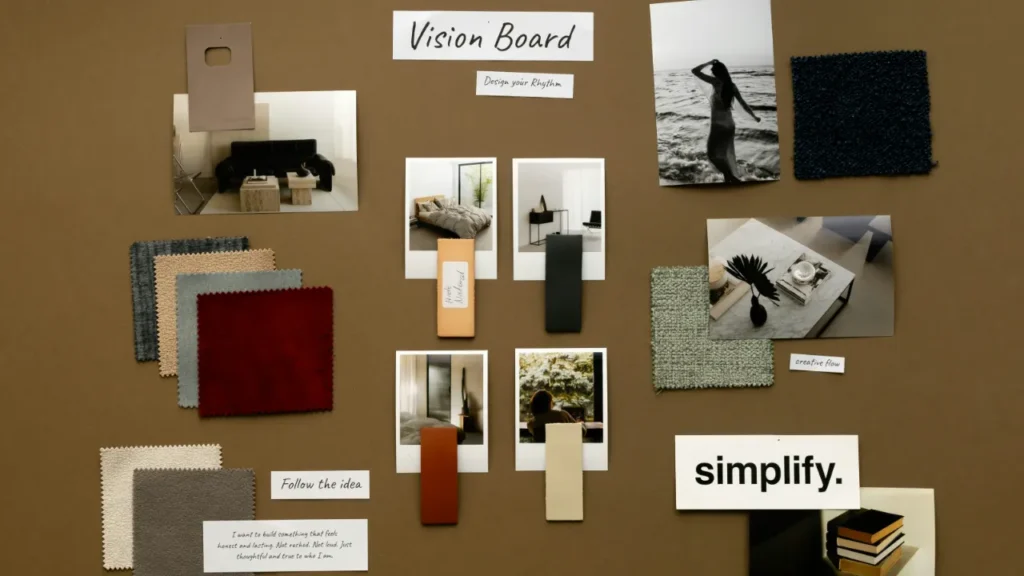
Most people have heard of vision boards, but the science behind them is more complicated than it looks. This B1 lesson looks at why imagining your perfect future can actually work against you. Students read a short article, practice ten goal-setting vocabulary words, and discuss what really keeps people moving toward their goals.
Lesson overview
- Practice vocabulary for goal setting through matching and gap-fill exercises
- Read an article about how vision boards help and hurt goal achievement
- Discuss personal goals and motivations using sentence completion prompts
- Complete a homework task creating a real vision board to present next class
| Level | Vocabulary | Reading Time | Lesson Time |
| B1 / Intermediate | 10 words | 305 words, 5 min | 60 min |
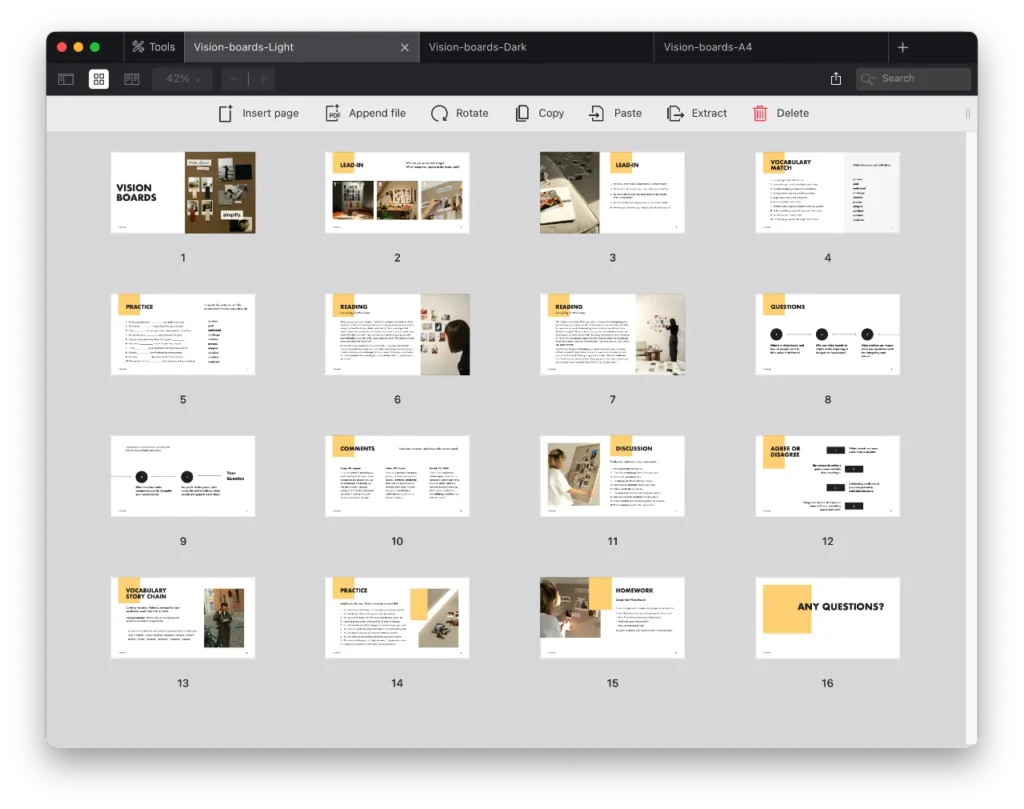
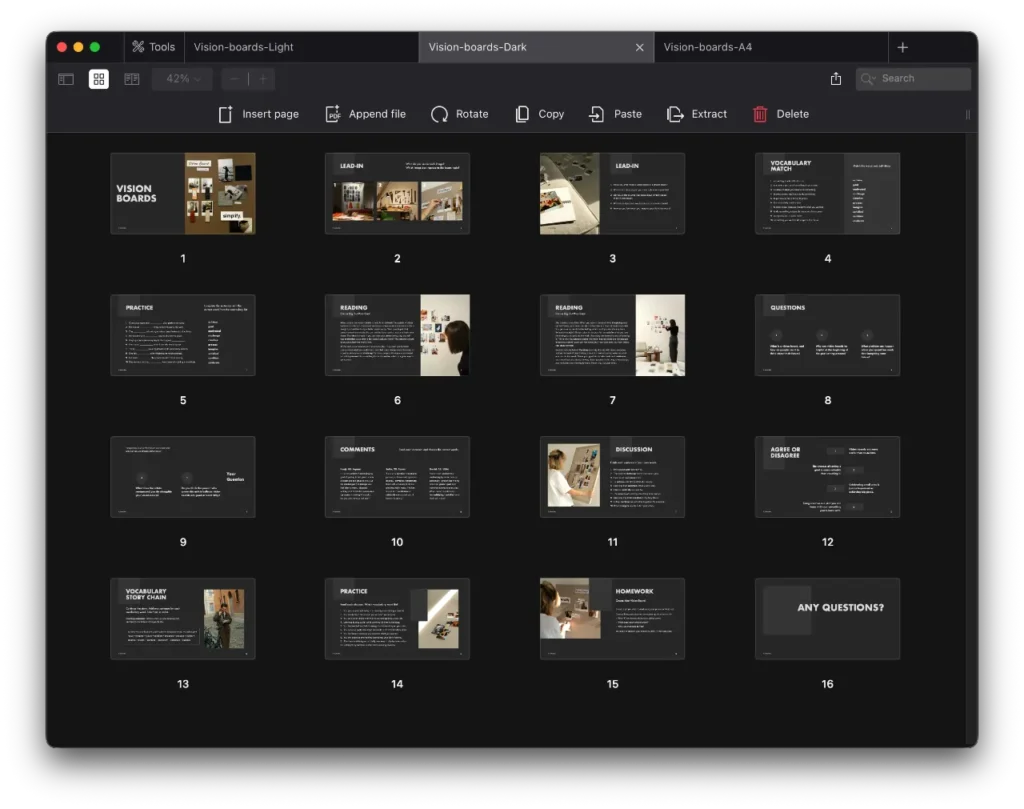
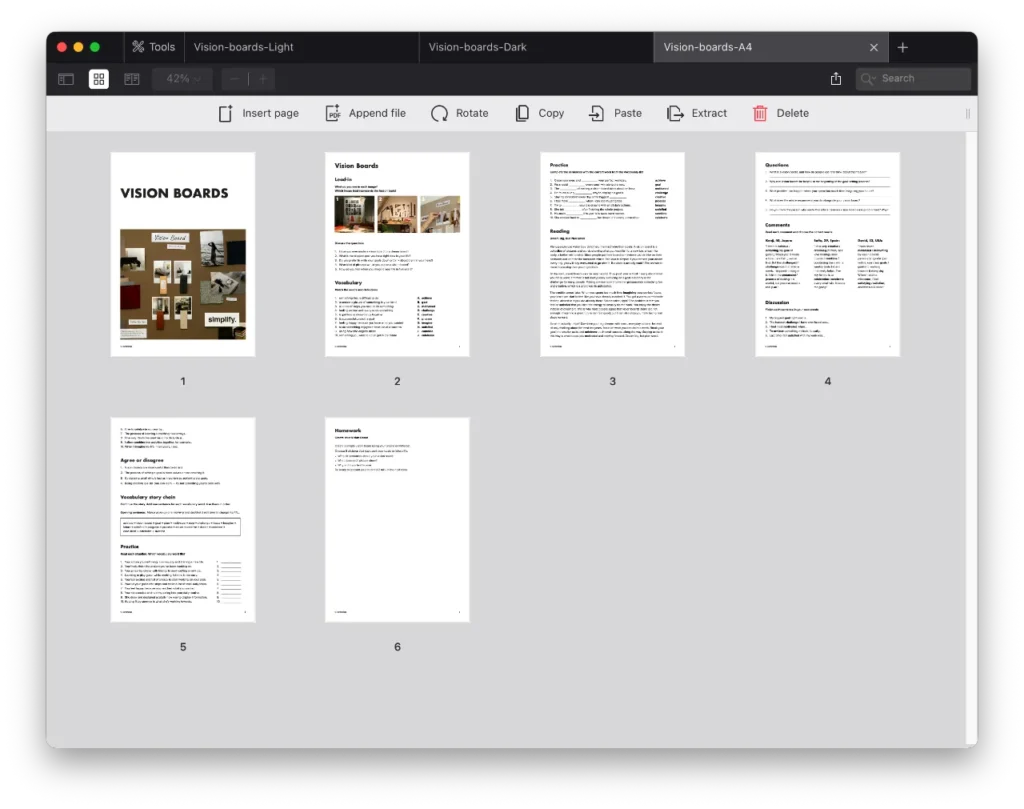
Vocabulary
- achieve
- goal
- motivated
- challenge
- creative
- process
- imagine
- satisfied
- combine
- celebrate
Contents
- 3 Pictures
- Lead-in
- Vocabulary Match
- Practice
- Reading
- Questions
- Comments
- Discussion
- Agree or Disagree
- Vocabulary Story Chain
- Practice (Scenario Match)
- Homework
Start the lesson with the three images on slide one. The images show a fashion mood board, a workshop tool board, and a goals vision board: they look similar at first glance but serve very different purposes. Ask students what they see in each one and which best fits the lesson topic. Most students will recognize the third image, but the first two get them thinking about what a vision board actually is. Follow up with five lead-in questions. Keep this stage light and conversational. Students at B1 level usually have strong opinions about goals, and the warm-up questions are easy enough for everyone to answer.
Move to the vocabulary matching activity on slide three. There are ten words and ten definitions. Students work alone first, then check with a partner. Go over answers together before moving to the gap-fill on slide four. The sentences on that slide are the same ones from the reading, so they act as a useful preview. This order works well because students arrive at the article already knowing the vocabulary in context.
Set the reading task on slides five and six. The article is short and at the right level for B1 students, so one silent read is usually enough. Students then answer the five comprehension questions on slides seven and eight. Question five asks for an opinion, which makes a good discussion starter. Question four is a good check for whether students understood the main argument: that vision boards need to be combined with action.
The comments activity on slide nine gives students practice choosing the correct word form, which is a common B1 weakness. After checking answers, use the sentence completion activity on slide ten as a speaking task in pairs. These prompts are personal and open-ended, so students tend to stay on task. The agree or disagree statements on slide eleven work well as a quick whole-class discussion before the vocabulary story chain.
Close with the homework task on slide fourteen. Give students a moment to look at it and ask questions. The task asks them to create a vision board and write ten sentences about it. Encourage them to use the lesson vocabulary in those sentences.
