
Using the Phone

This A2-level lesson helps pre-intermediate students learn essential phone vocabulary and communication skills. Students explore smartphone features, practice common phone expressions, and discuss everyday mobile phone use. Through interactive vocabulary exercises and practical dialogues, learners gain confidence talking about technology in English.
Lesson overview
- Practice essential phone vocabulary like apps, charger, and ringtone
- Learn common phrases for making calls and taking messages
- Develop speaking skills through phone-related discussions and activities
- Explore everyday smartphone problems and solutions
| Level | Vocabulary | Lesson Time |
| A2 / Pre-Intermediate | 15 words | 60 min |
Vocabulary
- Camera
- Screen
- Apps
- Lock button
- Volume button
- Case
- Charger
- Cable
- Earphones
- Take a selfie
- Text
- Call
- Answer
- Hang up
- Ringtone
Contents
- Lead-in
- Phone vocabulary
- Vocabulary match
- Vocabulary practice
- Dialogues
- Reading 1
- Reading 2
- Phone problems
- Guess the app game
- Writing
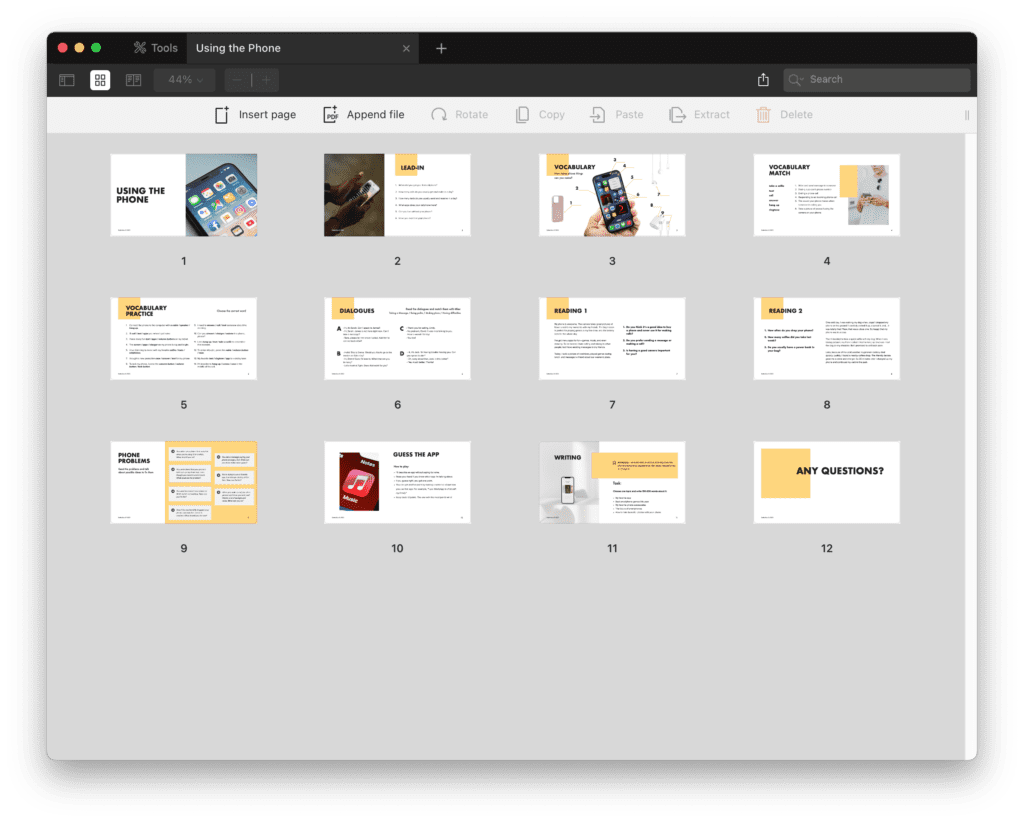
Start with the lead-in questions on page 2 to get students talking about their phone habits. This 5-minute warm-up helps you see what phone vocab they already have while getting them interested in the topic. Move to the visual vocab exercise on page 3 where students identify nine phone components. Give them 3 minutes in pairs before checking answers together.
The vocab match on page 4 introduces key phone verbs. Students connect terms like “text,” “call,” and “take a selfie” with definitions. Follow this with the practice exercise on page 5 where they pick the right words in context. These controlled activities build basic phone vocab at the A2 level. For the dialogues on page 6, have students read and sort four phone conversations into categories. This gets them ready for real communication scenarios.
Pages 7-8 have two short readings about phone experiences. Use these for comprehension practice and to kick off discussion questions. Students connect the texts to their own lives, which helps the language stick. The phone problems activity on page 9 works great as pair work where students discuss solutions to common issues like low battery or app crashes. This practical problem-solving gets everyone talking.
Wrap up with “Guess the App” on page 10, a fun game where you describe apps and students figure out which one you mean. Give points for correct answers and complete sentences about app usage. This reinforces vocab through play. The optional writing task on page 11 can be homework, letting students pick topics that interest them most.
