
Urban Gardening
This B1 lesson introduces urban gardening and how people grow food in small city spaces. Students learn vocabulary like “harvest,” “sustainable,” and “trial and error,” then watch a video about Alessandro, who transformed his London front yard into a vegetable garden. The activities include identifying plants, discussing connection to nature, and researching different garden types.
Lesson overview
- Learn vocabulary related to gardening, growing food, and environmental sustainability
- Watch a video about a man who grows organic produce in his city front yard
- Practice identifying common garden plants from basil to tomatoes
- Discuss why urban gardening helps people reconnect with nature and live sustainably
| Level | Vocabulary | Video Length | Lesson Time |
| B1 / Intermediate | 10 words | 3:33 min | 60 min |
Vocabulary
- Passion
- Seed
- Harvest
- Front yard
- Produce
- Organic
- Chemicals
- Sustainable
- Space
- Trial and error
Contents
- Lead-in
- Vocabulary match
- Reading
- Video 1
- Questions
- Video 2
- True or false
- Vocabulary practice
- Questions
- Discussion
- Speaking
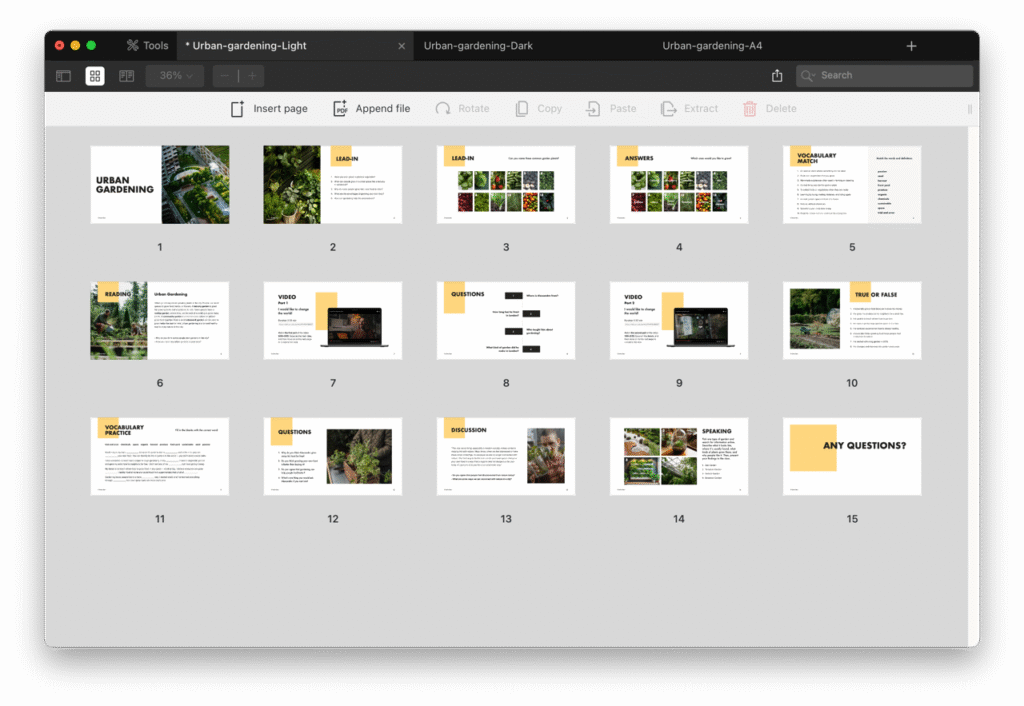
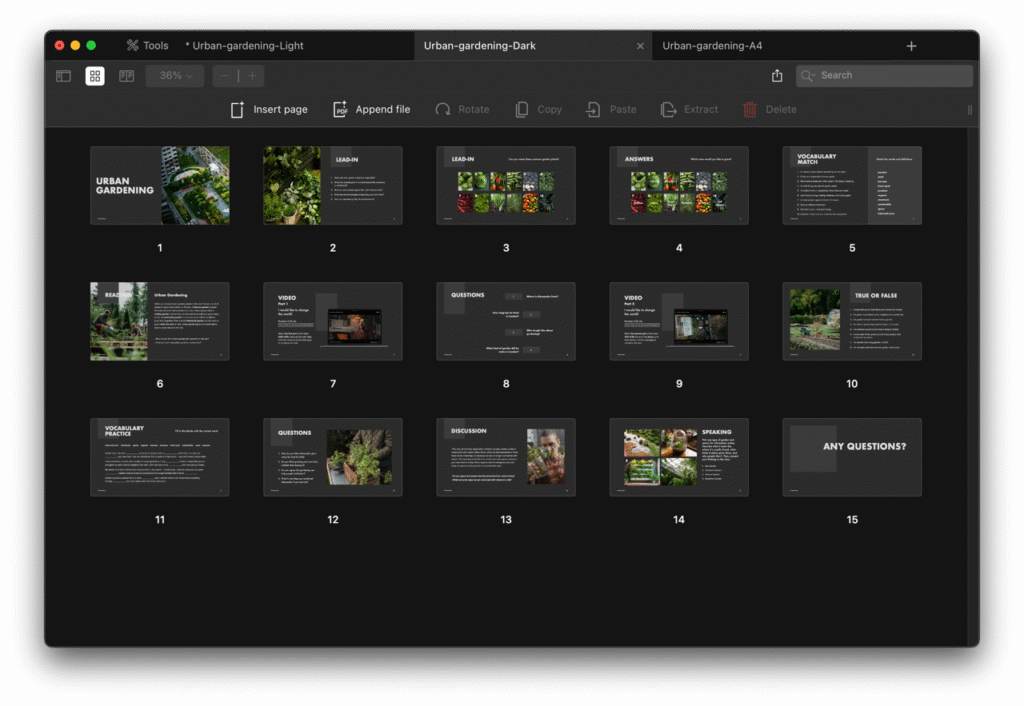
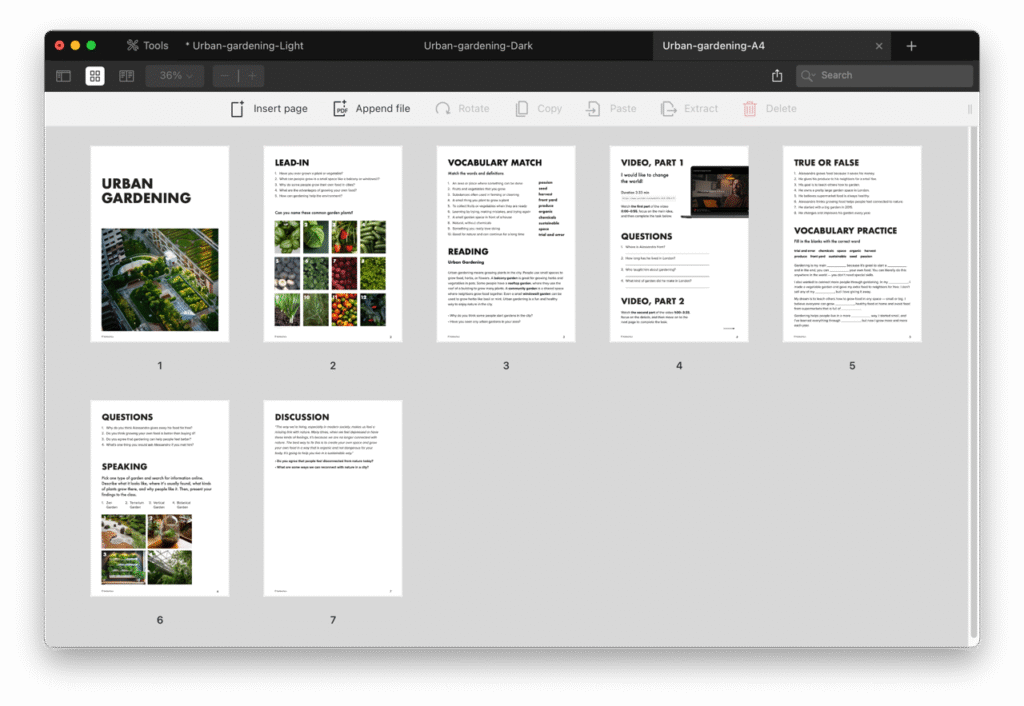
Start with the lead-in questions about growing plants and why people garden in cities. Question four about advantages gets students thinking about benefits before they see specific examples in the video. The plant identification shows twelve common garden plants. Students name things like mint, garlic, and cucumbers. After checking answers, ask which ones they’d like to grow to personalize the vocabulary.
The vocabulary matching covers gardening terms and broader concepts. “Harvest” and “seed” are specific to growing food, while “sustainable” and “organic” connect to environmental themes. “Trial and error” describes the learning process Alessandro mentions in the video. Go through these before the reading so students recognize them in context.
The short reading explains four urban garden types: balcony gardens, rooftop gardens, community gardens, and windowsill gardens. This gives students a framework for the different scales of urban growing. The two discussion questions check understanding and activate personal knowledge about gardens in their area.
The video is divided into two parts. The first section from zero to fifty-five seconds introduces Alessandro, where he’s from, and how his grandfather taught him gardening. Students watch for main ideas and answer four basic questions. The second section from one minute to three and a half minutes goes deeper into his motivation and methods. The true or false activity checks details like whether he sells produce (false, he gives it away) and whether he started with a big garden (false, he started small).
The vocabulary practice has students fill in blanks using the ten words from the matching activity. This reinforces the words in a connected passage about Alessandro’s approach. The passage mirrors his message from the video, so students are working with familiar content while practicing new vocabulary.
The four questions after the video push students to analyze and evaluate. Question one asks why Alessandro gives food away for free, which requires inference about his values. Question three about whether gardening helps people feel better connects to the mental health theme he discusses. The discussion section uses a quote from Alessandro about disconnection from nature and depression. Students discuss whether they agree and what ways people can reconnect with nature in cities. This usually generates thoughtful conversation because most students have experienced feeling disconnected.
The speaking task gives four garden types and students research one online, then present findings to the class. Zen gardens, terrariums, vertical gardens, and botanical gardens all represent different approaches to bringing plants into human spaces. This extends the lesson beyond just food growing to gardening as a broader practice.
