
Unwritten Work Rules

This B2 lesson covers the unspoken rules that can make or break your reputation at work. Students listen to five short audio clips about workplace behavior, learn 12 useful expressions like “go above and beyond” and “come across as,” and practice turning blunt statements into professional language. It’s a practical business English lesson that always gets people sharing their own work stories.
Lesson overview
- Learn 12 workplace expressions like “stand out,” “boundary,” and “over-deliver”
- Listen to five short clips about unwritten rules and complete gap-fill and ordering tasks
- Practice rephrasing direct statements to sound more collaborative and professional
- Discuss real workplace situations and come up with your own unwritten rules
| Level | Vocabulary | Listening Time | Lesson Time |
| B2 / Upper-Intermediate | 12 words | 2 min | 60-80 min |
Vocabulary
- incompetent
- out of the loop
- find out
- recognize
- stand out
- exceptional
- go above and beyond
- under-promise
- over-deliver
- come across as
- dismissive
- boundary
Contents
- Lead-in
- Vocabulary
- Definitions
- Rule 1 + Notes
- Comments
- Rule 2 + Sequencing
- Questions
- Rule 3 + Predicting
- Agree or disagree
- Rule 4 + Shadowing
- Prefixes
- Rule 5 + Fill in the gap
- Paraphrasing
- Your work rules
- Transcript
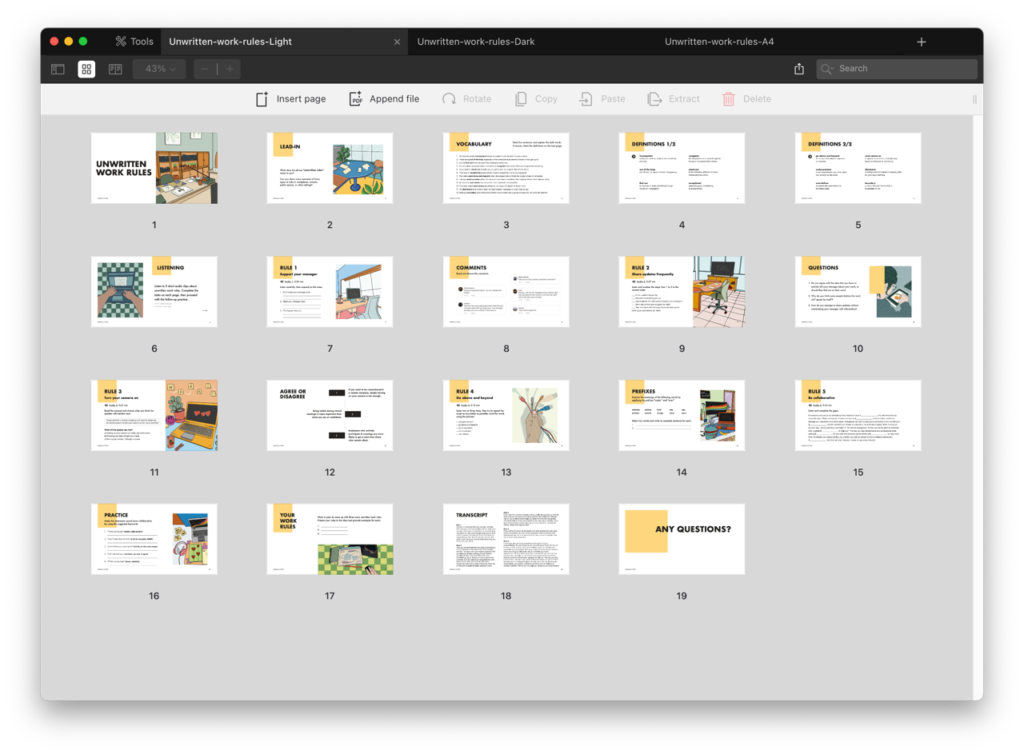
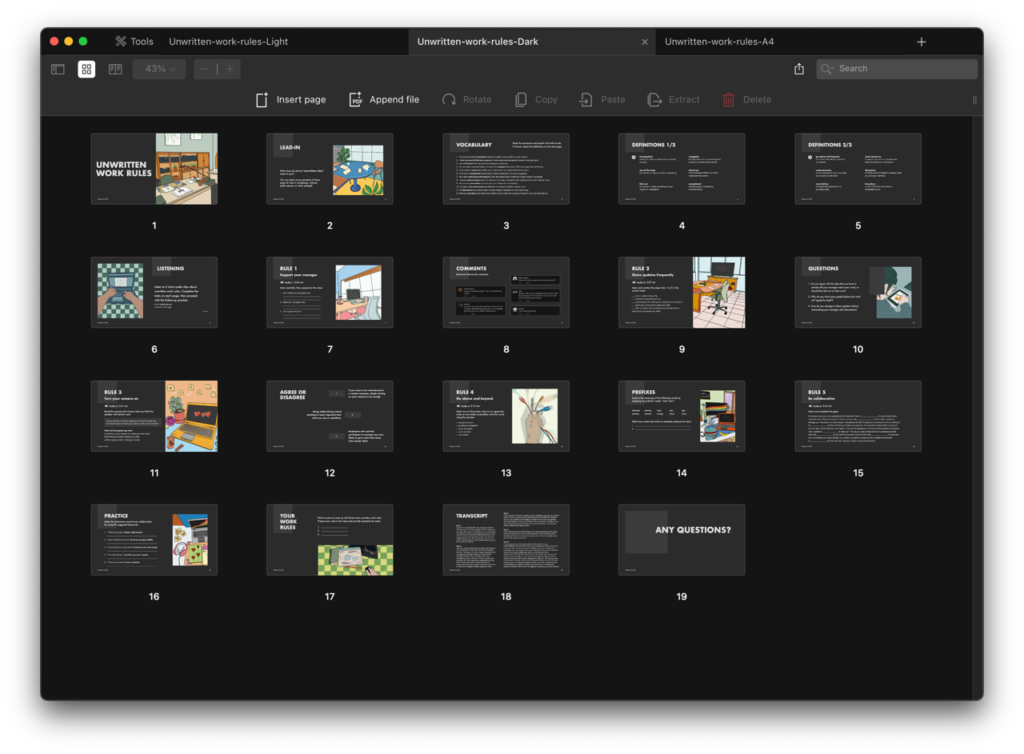
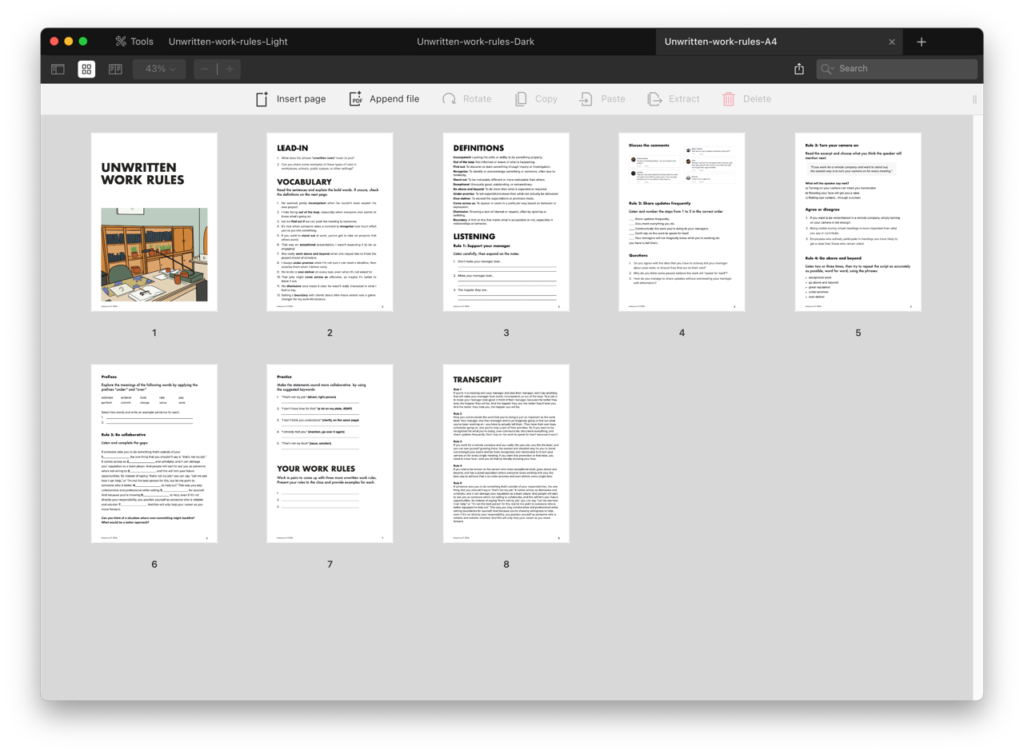
Start with the lead-in question about what “unwritten rules” means. Most B2 students will have opinions here, especially if they’ve worked in offices or dealt with workplace politics. Let pairs chat for a few minutes, then collect examples from the group. You’ll probably hear things like “don’t eat smelly food at your desk” or “always reply to emails within 24 hours.” These real examples set the tone for the rest of the lesson.
Move into the vocabulary on slide 3. Students read the example sentences and try to explain the bold words before checking the definitions. Expressions like “out of the loop” and “come across as” tend to be new for B2 learners, while “find out” and “recognize” are usually familiar. Don’t spend too long here because the listening activities will give students more practice with these words in context.
The five audio clips are short, between 13 seconds and 43 seconds each. Each one has a different task type, so the lesson stays varied. Rule 1 asks students to expand notes, Rule 2 is an ordering exercise, Rule 3 is a prediction task, Rule 4 is a dictation-style repetition, and Rule 5 is a gap fill. Play each clip two or three times. After each rule, use the discussion questions or agree/disagree statements to keep the conversation going. The comments section after Rule 1 works well for reading practice too.
The rephrasing activity on slide 16 is where everything comes together. Students take blunt workplace statements and rewrite them using the suggested keywords. Do the first one together so they see what you’re after. Then let pairs work through the rest. Finish with the final speaking task where pairs create three of their own unwritten work rules. This is a good one to present to the class because students hear each other’s ideas and usually want to debate them.
