
Unusual Pets, Strong Bonds
This B1 lesson explores unusual pets and the emotional connections people form with them. Students learn vocabulary like “special bond,” “emotional support,” and “fall into depression,” then watch a video about Wally, an alligator who helps his owner with mental health. The activities include comparing animals as support pets and writing about personal choices.
Lesson overview
- Learn vocabulary related to pet care, emotional connections, and mental health support
- Watch a video about a man and his emotional support alligator
- Practice describing animal personalities and discussing what makes a good companion
- Develop writing skills by explaining which animal you’d choose as an emotional support pet
| Level | Vocabulary | Video Length | Lesson Time |
| B1 / Intermediate | 8 words | 2:45 min | 60-80 min |
Vocabulary
- Drop your jaw
- Pose no threat
- Pond
- Live on something
- Special bond
- Emotional support
- Fall into depression
- Together day and night
Contents
- Lead-in
- Vocabulary
- Definitions
- Video
- Questions
- True or false
- Discussion
- Vocabulary practice
- Would you rather
- Compare the pets
- Writing
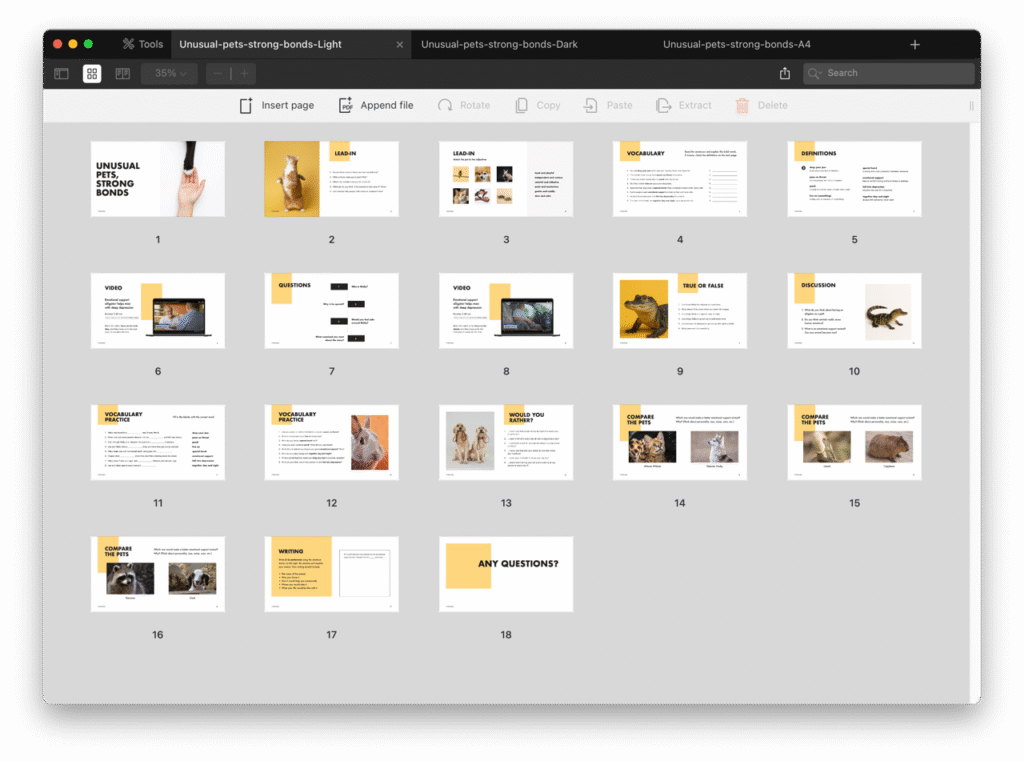
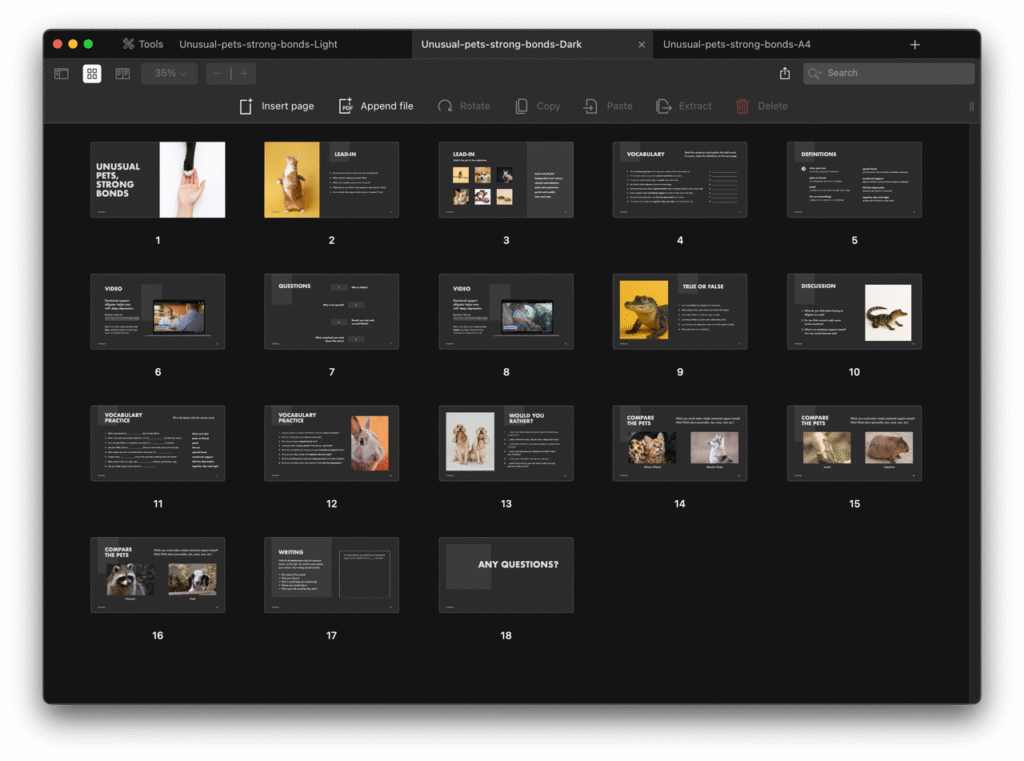
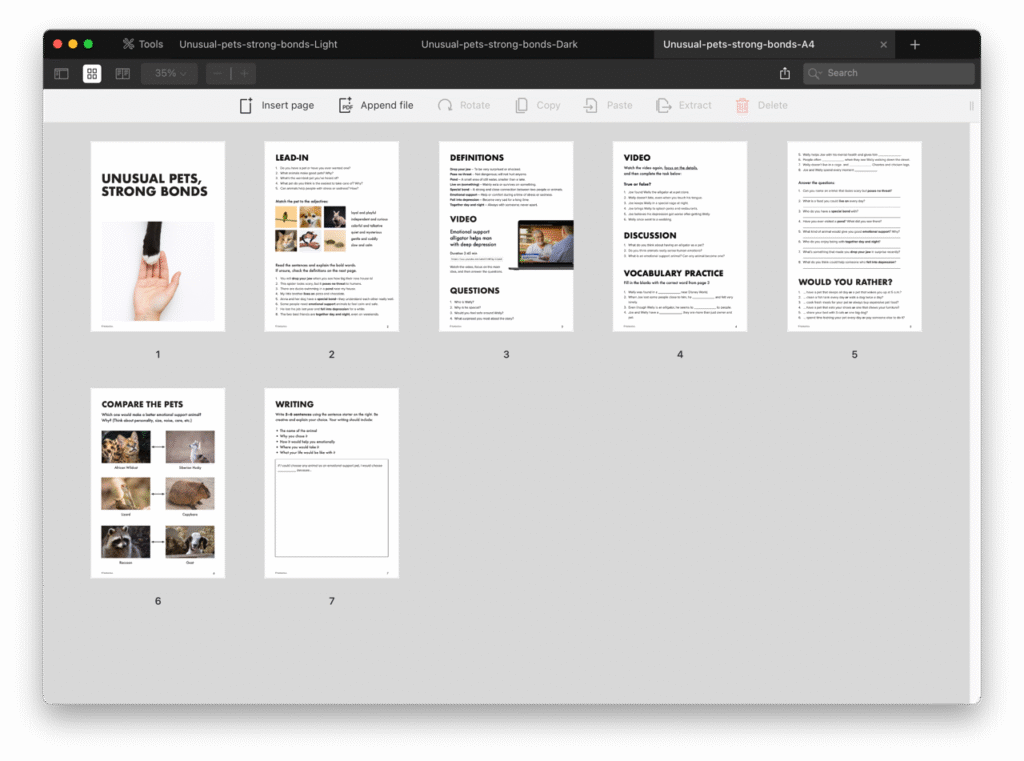
Start with the lead-in questions about pets and stress relief. Question three about the weirdest pet sets up the video nicely because an emotional support alligator definitely qualifies. The matching activity connects pets to adjective pairs like “loyal and playful” for dogs or “slow and calm” for turtles. This gets students thinking about animal personalities before they discuss emotional support.
Go through the vocabulary sentences and have students explain bolded phrases. “Drop your jaw” is an idiom that means extreme surprise, which students will see when people react to Wally in the video. “Fall into depression” is important for understanding Joe’s backstory. “Live on something” in sentence four means surviving mainly on one food, which connects to what Wally eats.
The video is about two and three-quarter minutes and tells the story of Joe and Wally, an alligator who helps Joe cope with depression. Play it once for the main idea and students answer four basic questions about who Wally is and what surprised them. Then play it again for details and students complete true or false statements. Statement three about keeping Wally in a cage is false because Joe mentions Wally sleeps in bed with him, which usually shocks students.
The discussion questions check understanding and opinions. Question two about whether animals sense emotions connects to observations from the video where Wally seems responsive to Joe’s feelings. Question three defines emotional support animals and asks if any animal can become one, which leads into the comparison activities.
The vocabulary practice fills in blanks using the eight key phrases from the lesson. Then students answer personal questions using the same vocabulary, like “Who do you have a special bond with?” or “What made you drop your jaw recently?” This moves the words from passive recognition to active use.
The “would you rather” questions add humor while discussing pet care realities. Students choose between options like sleeping pets versus early risers or cooking fresh meals versus buying expensive food. The three comparison activities show pairs of animals and students decide which would make a better emotional support animal. The African wildcat versus Siberian husky comparison looks at size and energy. The lizard versus capybara considers affection levels. The raccoon versus goat examines trainability and social needs.
The writing task has students complete “If I could choose any animal as an emotional support pet, I would choose ___ because…” in five to six sentences. They explain their choice, how it would help emotionally, where they’d take it, and what life would be like. This personalizes the topic and practices the vocabulary in an extended response.
