
Unlocking the Secrets of Longevity

This fascinating lesson explores Blue Zones and the secrets to living longer, healthier lives for B2 upper-intermediate students. Students examine lifestyle factors that contribute to exceptional longevity through an informative article about the world’s longest-living populations. The lesson combines vocabulary building, reading comprehension, and personal reflection activities to help students apply longevity principles to their own lives.
Lesson overview
- Explore the concept of Blue Zones and centenarian populations
- Learn vocabulary related to health, diet, and lifestyle habits
- Analyze factors contributing to longevity including diet and exercise
- Discuss personal health goals and create a centenarian bucket list
| Level | Vocabulary | Reading time | Lesson Time |
| B2 / Upper-Intermediate | 12 words | 5 min / 974 words | 60 min |
Vocabulary
- life expectancy
- fasting
- centenarian
- longevity
- plant-based
- moderation
- consumption
- spiritual
- well-being
- network
- obese
- incorporate
Contents
- Lead-in 1
- Lead-in 2
- Vocabulary 1
- Vocabulary 2
- Article reading
- Comprehension questions
- Vocabulary practice
- Storytelling
- Discussion
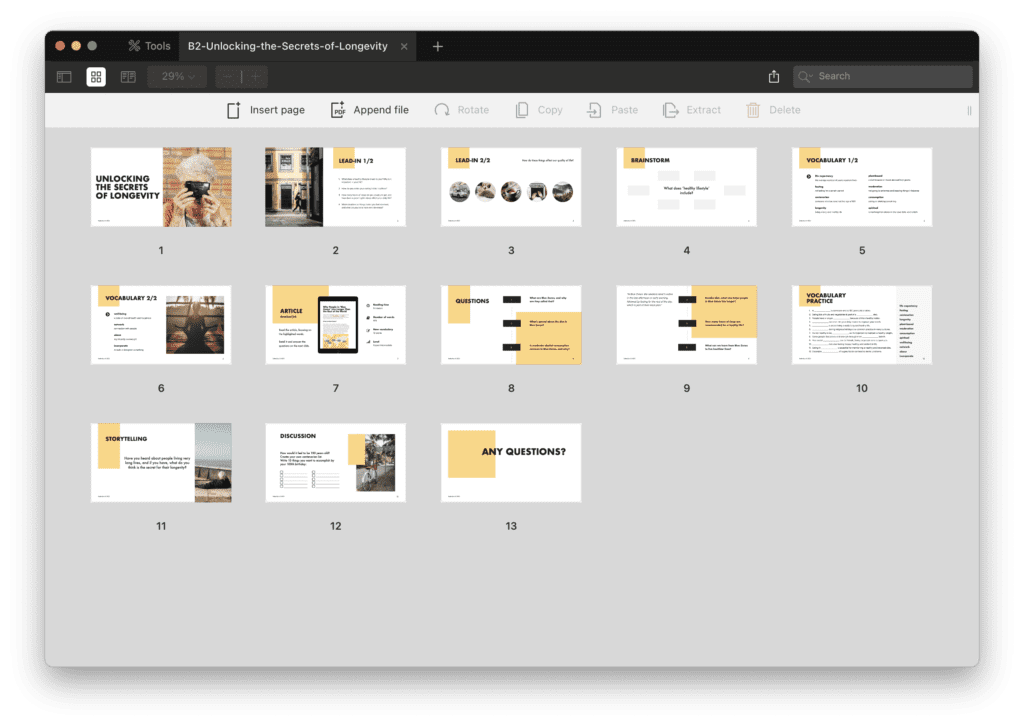
Start with the warm-up questions on pages 2 and 3 to get students thinking about healthy habits and what makes for a good quality of life. These personal questions help them connect what they’re about to learn with their own experiences and attitudes about health. The images on page 3 give them visual prompts for talking about how things like pets, nature, and work affect wellbeing.
Use the brainstorming on page 4 to create a mind map of healthy lifestyle stuff before you introduce the formal vocab. This taps into what they already know and creates context for the new terms. Pre-teach the vocab on pages 5 and 6 using definitions, example sentences, and contexts students come up with themselves to make sure they get it before reading.
Have them read the article individually, telling them to pay attention to the highlighted vocab words. The article’s 974 words, so around 5 minutes of reading. After reading, pair them up to retell the article in their own words. This reinforces what they understood and gets them speaking. Use the comprehension questions on pages 8 and 9 to check if they got it and dig into key concepts like the 80 percent rule, plant-based diets, and social networks.
The vocab practice on page 10 gives them solid reinforcement through gap-fill exercises where they actually apply the new words in meaningful contexts. They can do this solo then check with a partner. The storytelling prompt on page 11 gets them sharing personal knowledge or family stories about living a long time, which creates real communication.
Wrap up with the centenarian list activity on page 12 where students imagine their 100th birthday and write ten life goals they want to accomplish. This creative task makes the lesson personal and gets them talking about goal-setting. Students can share their lists in small groups, explaining their choices and discussing which goals connect to Blue Zone principles. Throughout the lesson, push them to think about how Blue Zone habits could fit into modern city life and which practices feel most doable for them personally.
