
Unexpected Taxi Stories

This B1 lesson uses real travel stories to teach practical taxi and transportation vocabulary. Students learn words like “flat rate,” “meter,” and “get ripped off” through a fun quiz, four short reading texts, and storytelling activities. It is a great choice for students who travel or plan to.
Lesson overview
- Learn twelve useful vocabulary words for taking taxis while traveling
- Read four short stories about funny and frustrating taxi experiences abroad
- Practice comprehension through quizzes, tables, and discussion questions
- Share your own taxi stories using the target vocabulary from the lesson
| Level | Vocabulary | Lesson Time |
| B1 / Intermediate | 12 words | 60-80 min |

Vocabulary
- flat rate
- cab
- change
- pick-up location
- pay in advance
- get ripped off
- meter
- speed limit
- seatbelt
- tip
- detour
- shortcut
Contents
- Lead-in (3 pictures)
- Quiz (12 slides)
- Vocabulary
- Reading (4 stories)
- Comprehension
- Questions
- Practice 1
- Practice 2
- Your story
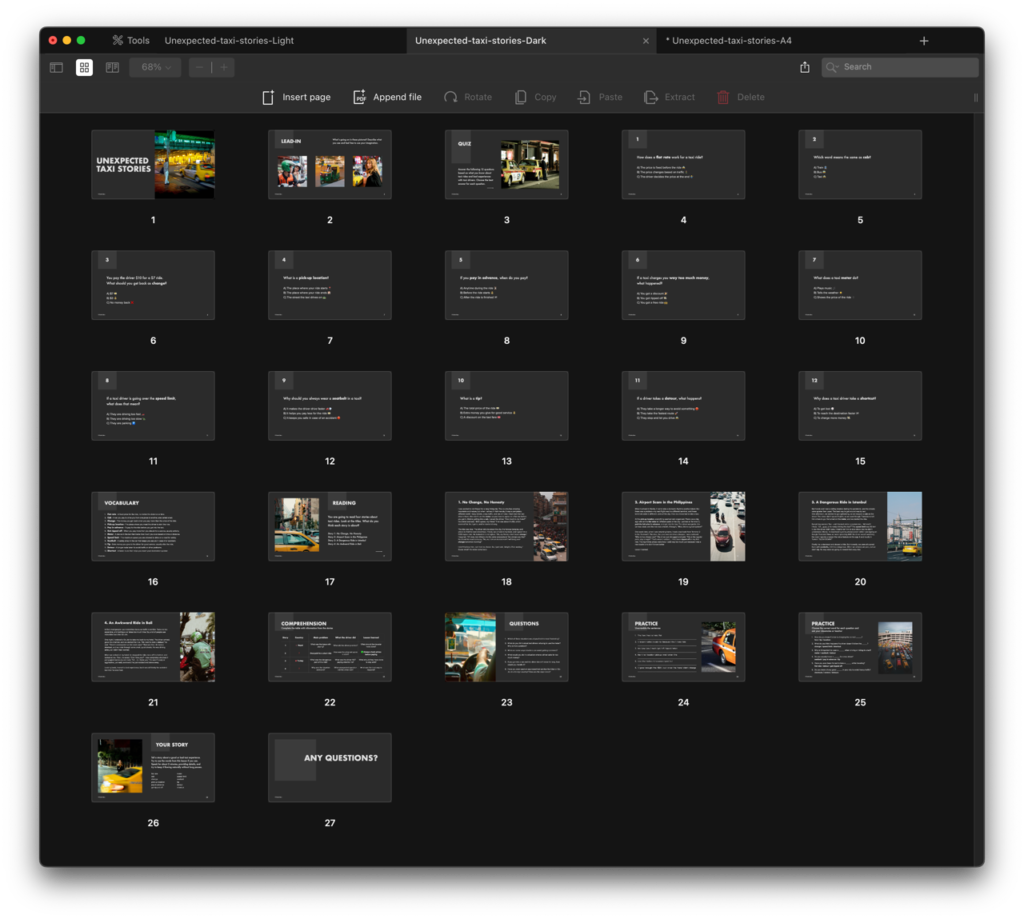
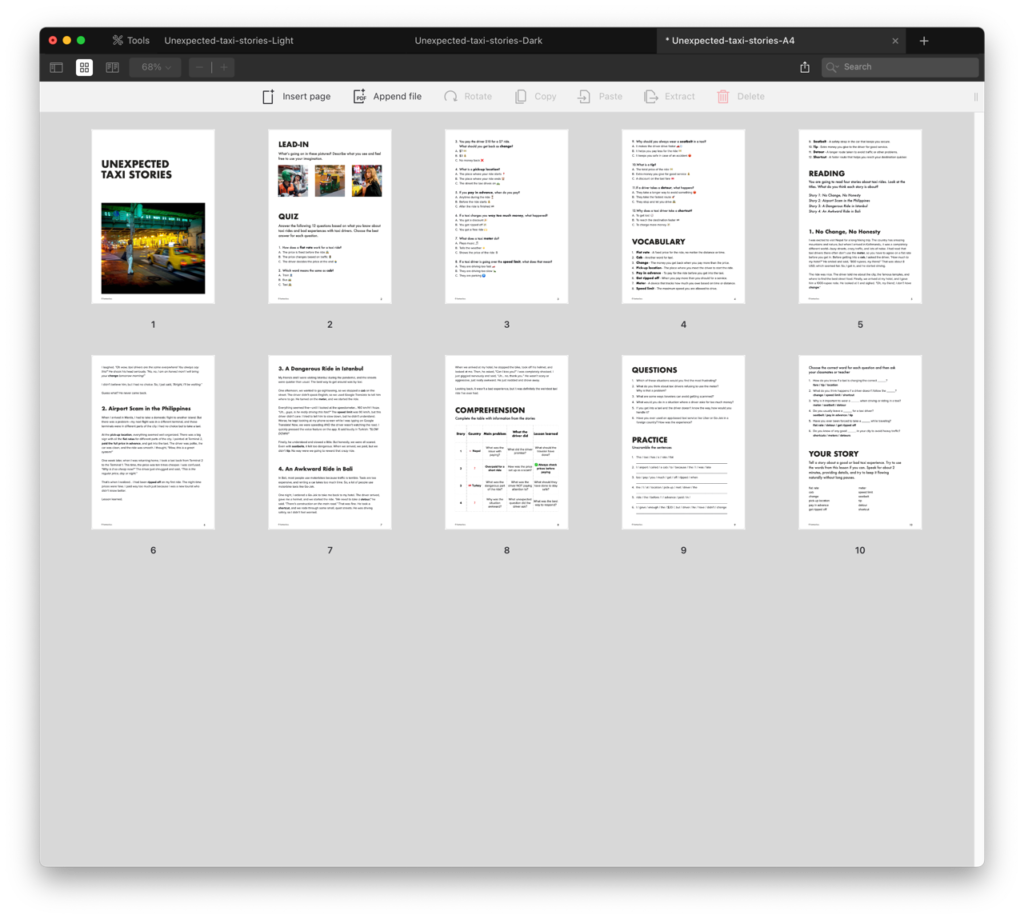
Start with the picture descriptions in the lead-in. Students look at taxi-related images and say what they see. This is low-pressure and gets everyone talking before the lesson picks up pace. From there, go straight into the twelve-question quiz. Each question introduces a key vocabulary word in context. Students pick the best answer, and you confirm together. Do not spend too long explaining here because the full definitions come on the vocabulary slide right after. The quiz works best as a quick, energetic opener.
Once students have the vocabulary list, give them a minute to read through the definitions. Then ask them to predict what each reading story might be about based on the titles alone. “No Change, No Honesty” and “Airport Scam in the Philippines” usually get good guesses. The four stories are short and use simple language, but each one packs in several target words naturally. Have students read one story at a time, then fill in the comprehension table together. The table asks for the country, the main problem, what the driver did, and the lesson learned. This keeps students focused and gives them a clear task while reading.
After the stories, open up the discussion questions. Ask students which situation they would find most frustrating and what they would do differently. These questions connect the reading to personal experience, and B1 students usually have at least one taxi story of their own. The sentence unscramble and word choice exercises on the next slides work well as a quick review before the final speaking task.
End with “Your Story.” Give students a minute to think, then have them speak for about two minutes about a real taxi experience. Encourage them to use at least three or four vocabulary words from the lesson. If someone has never taken a taxi, they can invent a story. This final activity pulls everything together and gives you a clear picture of what students picked up.
