
Understanding Sleep & Dreams
Lesson overview
This B2 upper-intermediate lesson investigates sleep patterns, napping habits, and the science behind dreams. Students watch an educational video about the benefits and drawbacks of daytime naps while learning vocabulary related to sleep cycles and alertness. The lesson encourages personal reflection on sleep habits through discussions about dream recall, bedtime routines, and cultural practices like siesta tradition.
Lesson overview
- Examine scientific research on napping and monophasic sleep patterns
- Practice vocabulary for describing sleep habits and dream experiences
- Discuss cultural differences in sleep practices around the world
- Explore theories about why humans dream and remember dreams
| Level | Vocabulary | Video Length | Lesson Time |
| B2 / Upper-Intermediate | 15 words | 2:17 min | 60-80 min |
Vocabulary
- Long stretch
- A drop in alertness
- Single bout
- To take nap
- Double-edged sword
- Struggle
- Sleepiness
- Hardwired
- REM
- Sleep debt
- Power nap
- Circadian rhythm
- Nightmare
- Daydream
- Lucid dream
Contents
- Lead-in
- Speaking
- Discussion
- Vocabulary
- Vocabulary practice
- Question
- Video
- True or false
- Reading
- Discussion
- Speaking
- Extra words
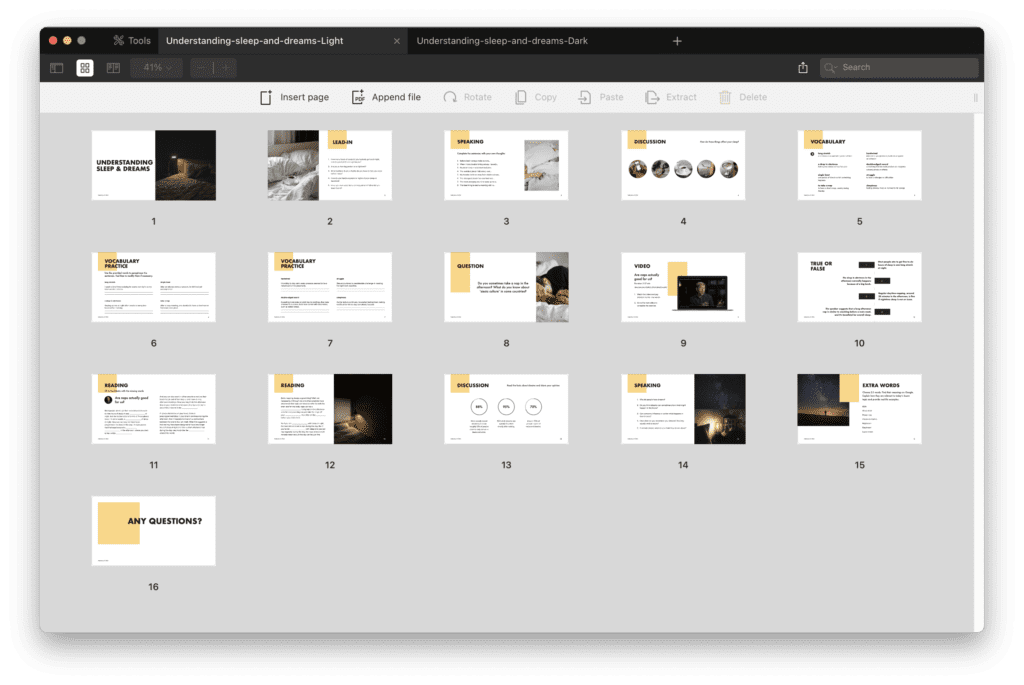
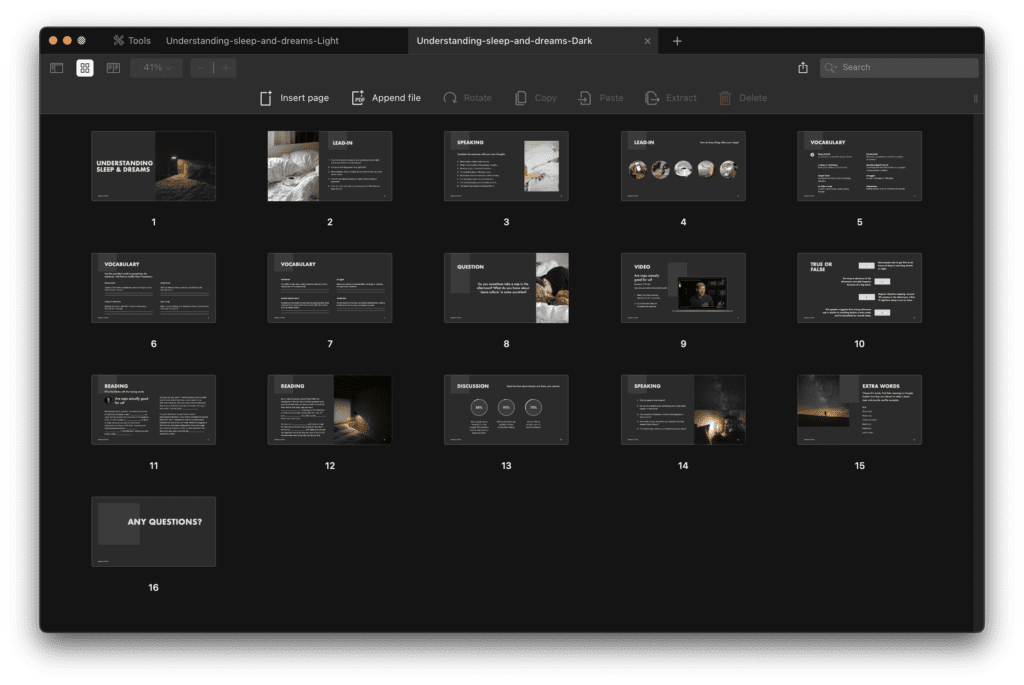
Start with the lead-in questions on page 2 to get students talking about their sleep habits. The sentence completion activity on page 3 works well in pairs or small groups. Students usually have good stories about weird places they’ve fallen asleep or strange dreams.
Before the vocabulary on pages 5-7, use the visual discussion on page 4 about what affects sleep quality. The vocabulary exercises use paraphrasing, so students have to do more than just match definitions. Let them work through these on their own before checking answers together.
Page 8 introduces siesta culture as a lead-in to the video. Have students share what they know about how different cultures handle rest and work schedules. Play the video from page 9 once for the gist, then again while students do the true/false exercise on page 10. The gap-fill reading on pages 11-12 reviews the video content and vocabulary—works fine individually or in pairs.
The dream statistics on page 13 tend to get people talking. Students often have strong opinions about recurring dreams or whether they dream in color. Use the speaking questions on page 14 to dig into dream theories and personal experiences. The extra words activity on page 15 makes good homework or extension work: students research terms like REM sleep or lucid dreaming and share what they found next class.
