
Tricky Plural Nouns

This A2 lesson tackles those plural nouns that don’t follow the usual rules in English. Students practice regular plurals, irregular forms like “children” and “mice,” and tricky nouns that are always plural or always singular. It’s a grammar-focused lesson with plenty of fill-in exercises, a fun video, and a quiz to wrap things up.
Lesson overview
- Learn the rules for regular plurals including -s, -es, -ies, and -ves endings
- Practice irregular plural forms like “teeth,” “sheep,” and “women” in gap-fill exercises
- Understand which nouns take singular or plural verbs, like “news” and “scissors”
- Watch a short video about English plurals and test knowledge with a final quiz
| Level | Vocabulary | Video Length | Lesson Time |
| A2 / Pre-Intermediate | 24 nouns | 1:07 min | 50-60 min |
Vocabulary
- Man ➞ Men
- Woman ➞ Women
- Mouse ➞ Mice
- Tooth ➞ Teeth
- Foot ➞ Feet
- Child ➞ Children
- Ox ➞ Oxen
- Sheep ➞ Sheep
- Fish ➞ Fish
- Deer ➞ Deer
- Series ➞ Series
- Species ➞ Species
- Scissors
- Trousers
- Pajamas
- Jeans
- Glasses
- Tights
- Shorts
- News
- Politics
- Mathematics
- Physics
- Economics
Contents
- Odd one out
- Regular plurals
- Irregular plurals 1/2
- Practice 1
- Practice 2
- Irregular plurals 2/2
- Practice 3
- Questions
- Video
- Quiz
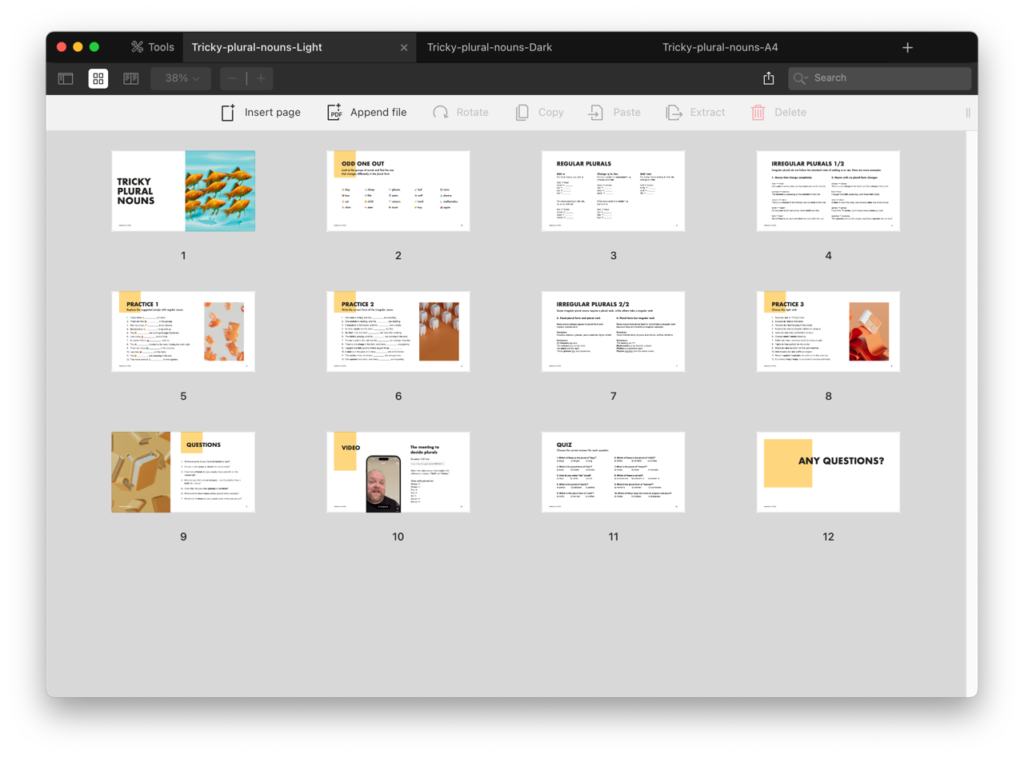
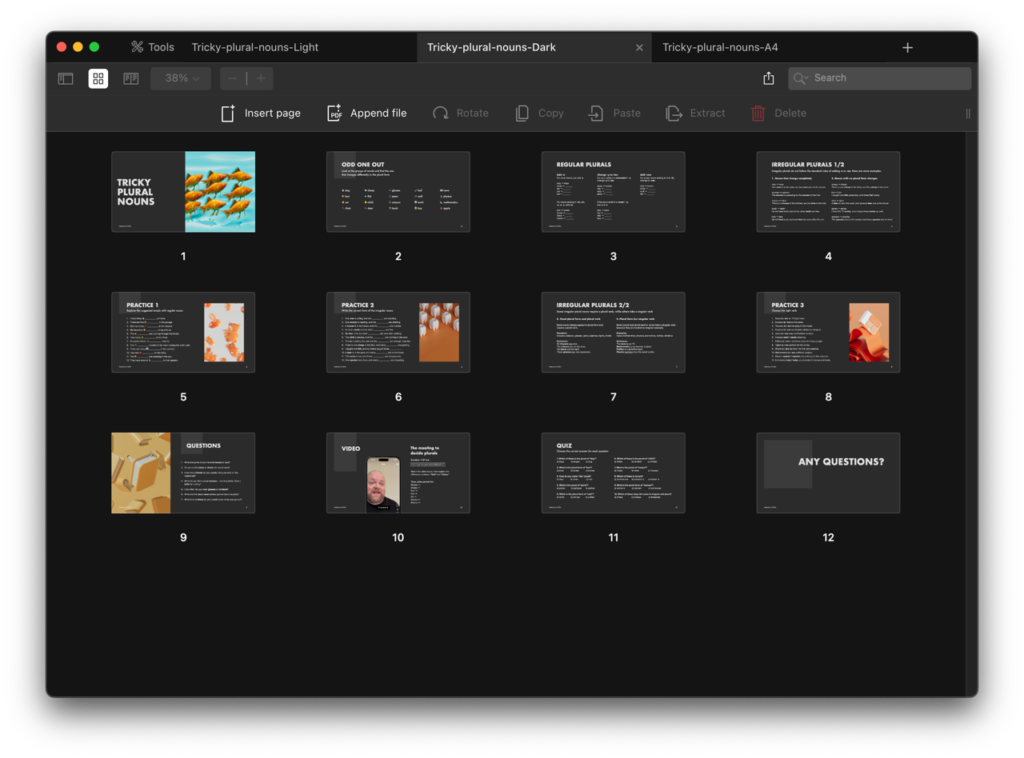
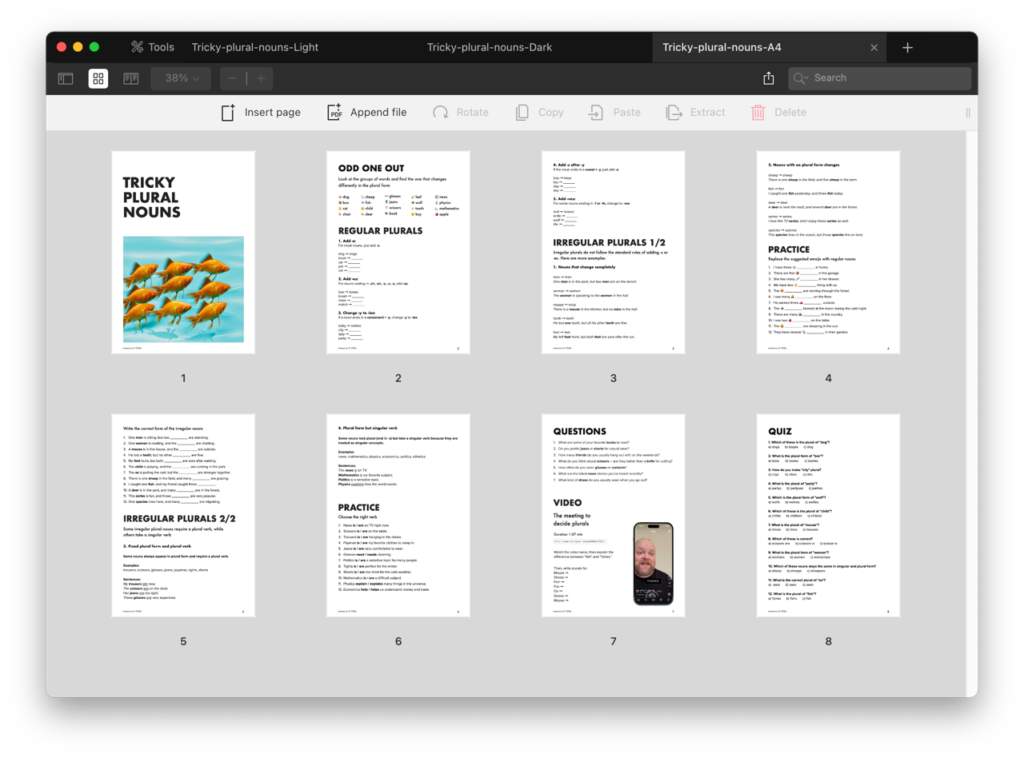
Open with the odd one out activity on slide 2. Students look at groups of words and find the one that forms its plural differently. This works well in pairs and shows you right away how much your students already know about plural nouns. Don’t explain the rules yet. Let them guess and make mistakes first.
Walk through the regular plural rules on slide 3 together. The four categories are clear: add -s, add -es, change -y to -ies, and change -f to -ves. Have students fill in the blanks as you go. Then move to irregular plurals on slides 4 and 5. These are the ones A2 learners find hardest, so take your time here. The two practice exercises give students plenty of repetition. Practice 1 uses emoji prompts for regular nouns, which keeps things light. Practice 2 focuses on irregular forms in sentence context, which is more challenging but helps the words stick.
Slides 7 and 8 cover nouns that are always plural (like “scissors” and “jeans”) and nouns that look plural but take a singular verb (like “news” and “mathematics”). This is where A2 students often get confused, so go through the examples slowly. The verb choice exercise on slide 8 is good for drilling this point. After the practice, use the discussion questions on slide 9 to get students using plurals in natural conversation.
End with the short video about how English plurals were decided. It’s only about a minute long and gets a good laugh. Then finish with the quiz on slide 11. You can do it as a team competition to keep the energy up at the end of class.
