
Tourists, Go Home
This B2 lesson looks at overtourism and why residents in popular cities are pushing back against mass tourism. Students watch a video about protests in Barcelona, learn vocabulary like “infrastructure,” “restrict,” and “tourist tax,” and discuss real case studies from Venice, Lisbon, and Thailand. It’s a topic that sparks strong opinions, especially with students who’ve experienced overcrowded destinations firsthand.
Lesson overview
- Learn ten vocabulary words related to tourism, protests, and city management
- Watch a news video about anti-tourism protests in Barcelona and discuss key questions
- Analyze three real case studies of how countries have managed overtourism
- Play a competitive vocabulary game using target words in original sentences
| Level | Vocabulary | Video Length | Lesson Time |
| B2 / Upper-Intermediate | 10 words | 3:22 min | 60 min |
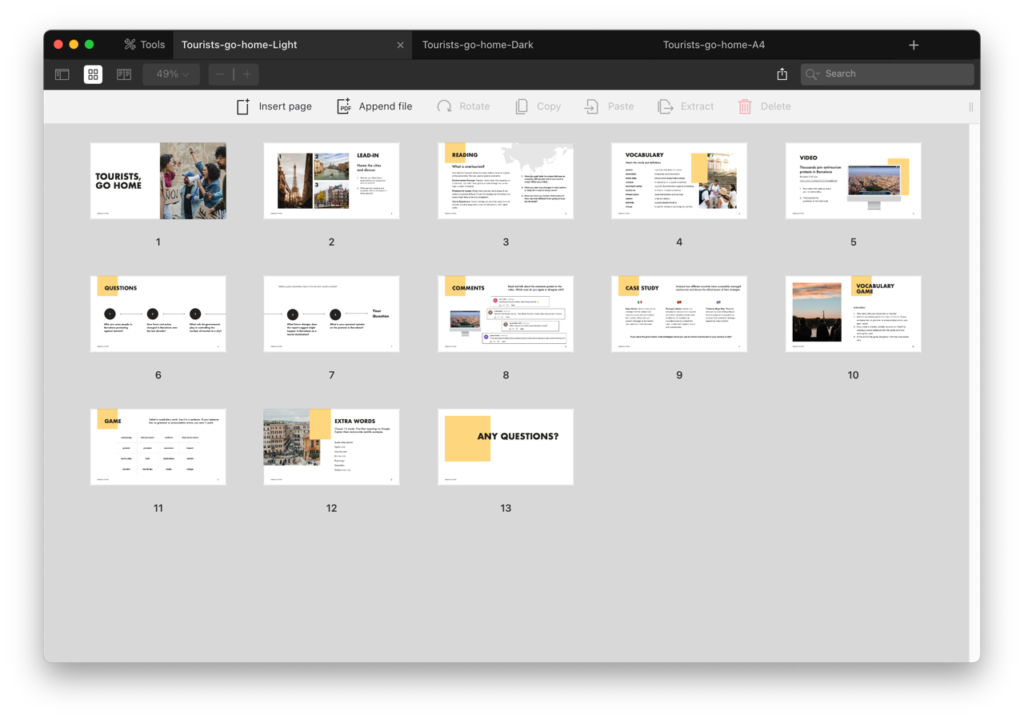
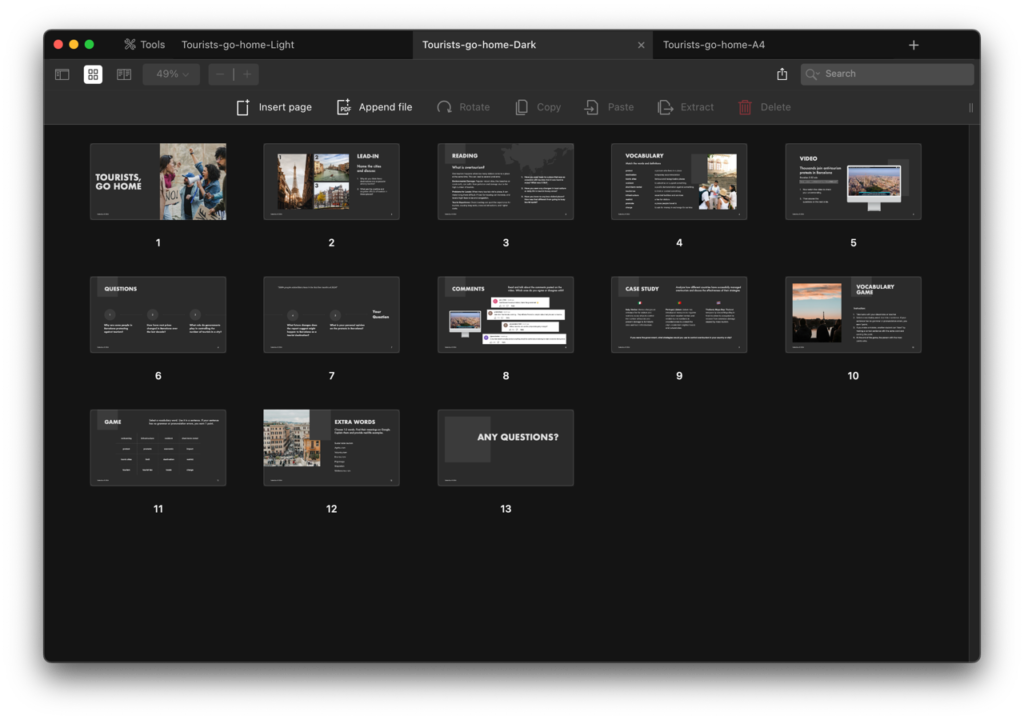
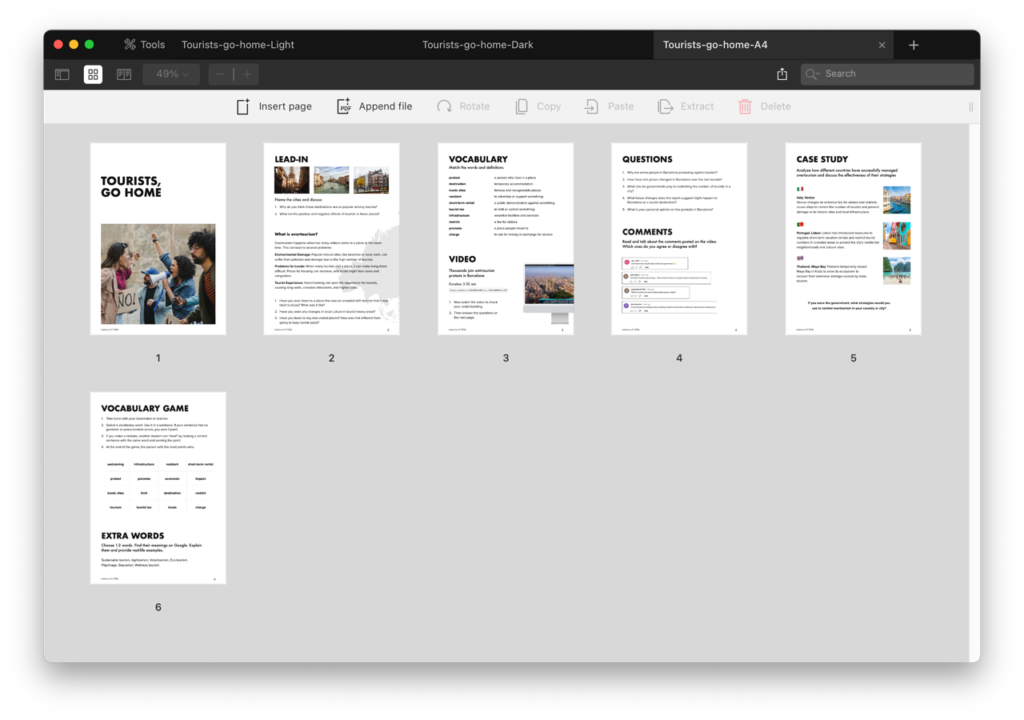
Vocabulary
- Protest
- Destination
- Iconic sites
- Resident
- Short-term rental
- Tourist tax
- Infrastructure
- Restrict
- Promote
- Charge
Contents
- Lead-in
- Reading
- Vocabulary
- Video
- Questions
- Comments
- Case study
- Vocabulary game
- Extra words
Open with the lead-in photos of popular tourist cities. Students name each one and discuss why these places attract so many visitors. This naturally leads into the positives and negatives of tourism, which sets up the reading text about overtourism. The short explanation covers three problem areas: environmental damage, problems for locals, and a worse experience for tourists themselves. After reading, the three follow-up questions ask students to share personal experiences with crowded destinations. Most B2 students have a story about a holiday spot that was too packed to enjoy.
Cover the ten vocabulary words through the matching activity. Words like “protest,” “destination,” and “iconic sites” are probably familiar, but “infrastructure,” “short-term rental,” and “tourist tax” might need extra attention. Use quick examples tied to tourism so the words stick. Something like “Airbnb is a short-term rental” or “Barcelona introduced a tourist tax” connects the vocabulary to the lesson topic right away.
Play the Barcelona protest video next. At three and a half minutes, it’s a good length for B2. Students answer five comprehension questions afterward, including one they write themselves. The question about 33 million visitors in five months usually gets a strong reaction. Spend a few minutes on the video comments section too. Students read real YouTube comments and say which ones they agree or disagree with. This is a low-pressure way to practice expressing opinions because they’re responding to someone else’s ideas rather than coming up with everything from scratch.
The case studies section is where the lesson gets more analytical. Students look at how Venice charges entrance fees, Thailand closed Maya Bay to recover, and Lisbon regulated short-term rentals. Discuss whether these strategies actually work and what the trade-offs are. Then ask students what they’d do if they were in charge of managing tourism in their own city. Finish with the vocabulary game. Students take turns choosing a word and using it correctly in a sentence for a point. If they make a grammar or pronunciation mistake, another student can steal the point. This keeps everyone paying attention even when it’s not their turn. The extra tourism words like “staycation” and “voluntourism” make a solid homework task for the next class.
